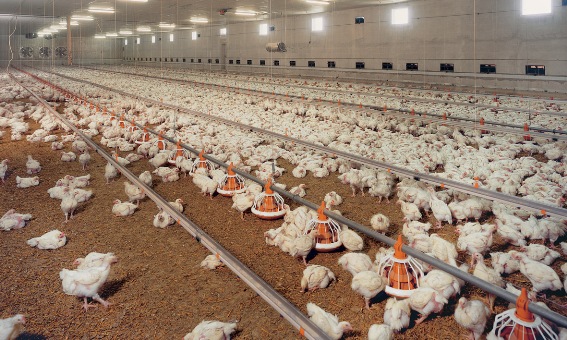

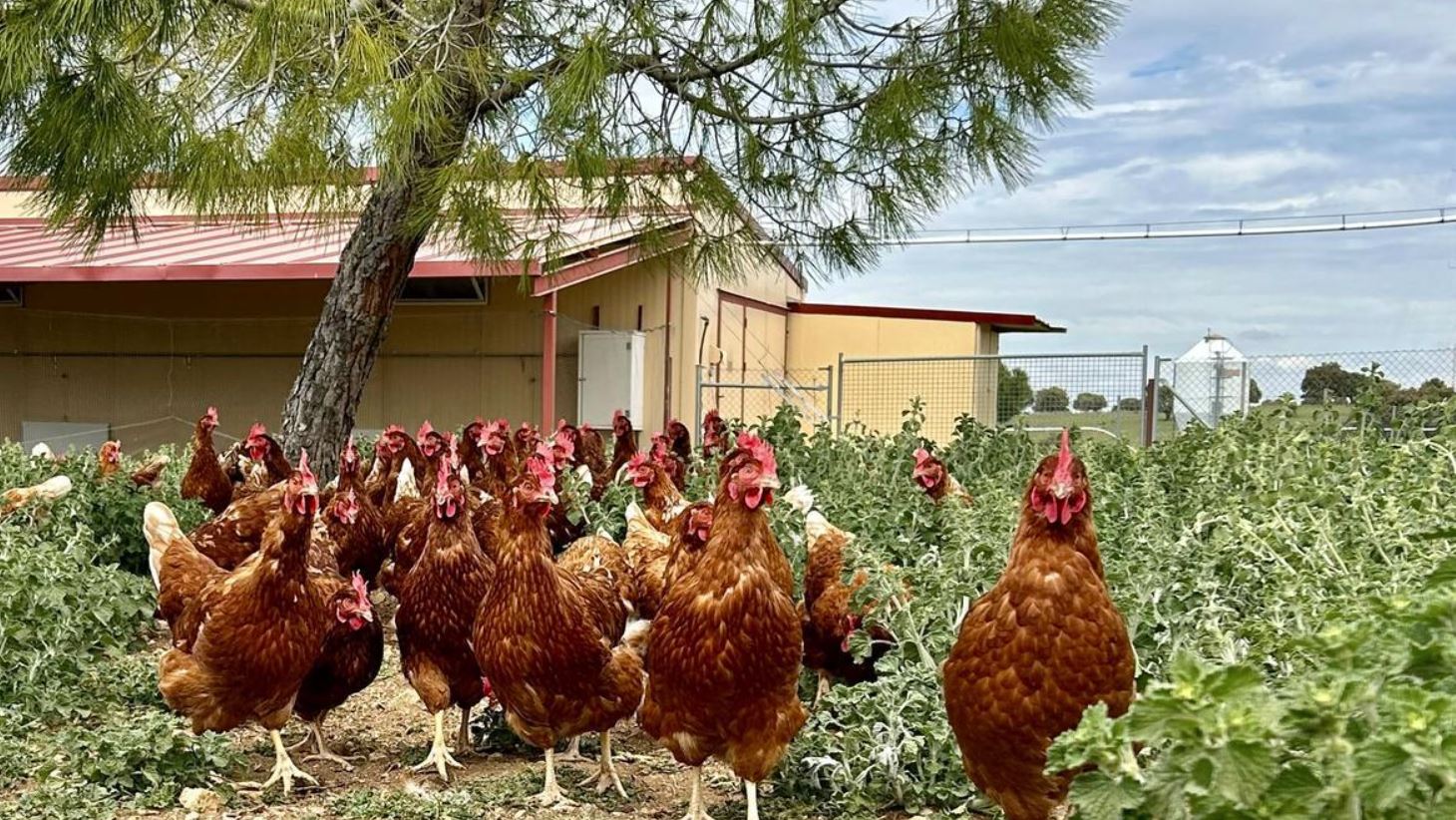
The Catalan poultry sector closed 2024 on an upward trend, in a year that consolidates the recovery begun in 2023 after three years of below-par profitability. Once again, increased demand, cost containment and the absence of significant health issues have allowed the sector to consolidate its stability, while it looks with concern at the legislative changes proposed by Brussels on animal welfare and the agreement between the European Union and Mercosur.
According to Joan Anton Rafecas, President of the FAC, the Federació Avícola Catalana, the organisation representing poultry meat and egg producers in Catalonia, the current stability allows companies to consolidate their market position and focus on confidently facing the new technological, social and legislative challenges ahead.

“Legislative changes must be compatible with maintaining production levels in Catalonia and in the European Union.”
“The FAC opposes new EU legislative initiatives that entail a loss of competitiveness for companies.”
“6.2% of eggs produced in 2023 come from free-range hens and 3.3% from organic production.”
Joan Anton Rafecas, who has been working in poultry farming since 1974, was re-elected as President of the FAC in 2021
NeXusAvicultura (Q): How did the Catalan poultry sector close the year 2024?
Joan Antoni Rafecas, President of the FAC (FAC): In 2024, the Catalan poultry sector achieved a positive close, consolidating the recovery begun in 2023 after several years of very tight profitability. Thanks to increased demand, cost containment and the absence of significant health issues, we have been able to maintain stability and strengthen our market position.
Q: What factors have contributed to this stability and what are the prospects for the immediate future?
FAC: Primarily, demand for poultry meat and eggs continues to grow, driven both by higher household consumption and by the recovery of international tourism. In addition, the reduction in raw material costs has helped contain production costs. Looking ahead to 2025, we expect the sector to continue along this path of stability, although we are closely monitoring the legislative and commercial challenges, as well as the intensive ongoing monitoring of flock health, in coordination with CESAC, across the entire poultry stock, all of which could affect our competitiveness overnight.
Q: Could you detail the legislative challenges that concern the sector?
FAC: The European Commission is planning concerning reforms on animal welfare, covering stocking densities on broiler farms, a possible total ban on all types of cages, and live animal transport, among other areas, which do not always take into account the geographical and climatic differences within the European Union. The Federació Avícola Catalana (FAC) considers that these measures, if not applied prudently, could harm the competitiveness of companies. We have long been working on progressive improvements in poultry welfare, but these must be implemented in a way that does not jeopardise profitability.
Q: Beyond the planned reforms, what impact does the agreement between the European Union and Mercosur have?
FAC: The agreement with Mercosur represents an additional detriment to European standards and puts Catalan producers, their competitiveness and their future prospects at risk. Consumers should be aware that the Mercosur agreement entails, in the short term, an increase in poultry products arriving from outside the EU. Although the European Union maintains the strictest standards throughout the entire production chain, competition from products with lower welfare requirements, different production conditions and lower costs is a source of concern for the sector.
Q: How is the sector engaging with the authorities to defend its interests?
FAC: During 2024, the FAC has maintained contacts with the new Minister of Agriculture, Livestock, Fisheries and Food, Òscar Ordeig, to convey the sector’s main demands. We are seeking to improve institutional representation in Madrid and Brussels, promote a better public perception of animal-origin products, reduce the bureaucracy affecting livestock production and establish support measures for the conversion of laying hen farms to cage-free systems.
free-range egg production has increased by 64%, while organic production has decreased by 20% .
Q: Could you outline the key figures for the poultry sector in Catalonia to illustrate its significance?
FAC: The poultry sector accounts for 13.6% of Catalonia’s total agricultural output and is the second most significant within livestock meat production, behind only the pig sector. In 2023, poultry meat production reached 357,000 tonnes, 0.3% more than in 2022. Broilers account for 70.5% of that production and turkeys for 17.8%.
Poultry meat production in Catalonia by province
| Region | Total carcass weight (thousand tonnes) | % |
|---|---|---|
| Catalonia | 357,063 | 100% |
| Barcelona | 105,319 | 29.5% |
| Girona | 21,911 | 6.1% |
| Lleida | 122,521 | 34.3% |
| Tarragona | 107,310 | 30.1% |
Within the broiler sector in Spain, Catalonia is the leading producer by number of head, with 24% of the total, and the second by volume, with 21%, with Andalusia being the top producer.
- As regards eggs, Catalonia, with a total laying flock of 4 million hens, produced 99.2 million dozens in 2023, 3.4% less than in 2022, but 2.3% more than in 2021. Some 6.2% of eggs produced in 2023 come from free-range hens and 3.3% from organic production. These two systems have shown the greatest variation over the past year; specifically, free-range egg production increased by 64%, while organic production decreased by 20% compared to the previous year.
Hen egg production for human consumption in Catalonia by province
| Region | Total carcass weight (thousand tonnes) | % |
|---|---|---|
| Catalonia | 357,063 | 100% |
| Barcelona | 105,319 | 29.5% |
| Girona | 21,911 | 6.1% |
| Lleida | 122,521 | 34.3% |
| Tarragona | 107,310 | 30.1% |
- Fresh poultry meat consumption in Catalan households stands at 13.7 kg per person per year (12.4 kg of chicken and 1.3 kg of turkey), and eggs feature in 98% of shopping baskets.
Q: Could you summarise the FAC’s short- and long-term objectives?
FAC: Our objective is to ensure the long-term sustainability of poultry farming in Catalonia and to continue offering high-quality products. To that end, we are working to secure the primary form of sustainability that must be guaranteed — that of Catalan poultry farmers — while also strengthening the competitiveness of our companies, improving public perception of poultry-origin foods and ensuring that new regulations are implemented in a realistic manner, adapted to the specific characteristics of the sector.
About the FAC
The Federació Avícola Catalana (FAC), with nearly 50 years of history and more than 260 members, represents the poultry meat and egg sector before the Administration and society. Its mission is to defend a production model aligned with the high quality standards of the European Union and to safeguard the competitiveness and sustainability of a strategically important sector for the Catalan economy.
For more information:
-. News about the FAC and poultry farming in Spain published by NeXusAvicultura.com
-. Federació Avícola Catalana (FAC)