
THE EGG SECTOR ESTIMATES THE COST OF CAGE ELIMINATION AT 2.3 BILLION EUROS
“The economic impact of converting farms to cage-free systems will represent total investments of more than 2.3 billion euros for Spanish egg producers“, according to the Interprofessional Organisation for Eggs and Egg Products (INPROVO) in a presentation delivered on 27 June 2024 at the “European Poultry Conference” in Valencia.
- The Spanish poultry sector is calling on the European Commission to ensure that, in developing its legislative proposal on the improvement of Animal Welfare, financial support for affected sector operators is included, along with exit schemes for poultry farmers who do not wish to continue their activity
- INPROVO estimates a minimum transition period of 15 years for a gradual transition, in order to avoid potential market and price distortions
- Producing a dozen eggs under a barn system will be 17% more expensive than in cages, and 31% more expensive in the case of free-range. Switching exclusively to alternative systems will result in a regulatory cost overrun of more than 55% in the EU compared to competing third countries, which is why the sector is calling for protection and reciprocity in trade agreements with third countries to prevent the loss of part of EU production
- Spain has more than 1,500 laying hen farms spread across the country, the majority of which are Spanish-owned family SMEs, generating around 15,000 direct jobs and approximately 60,000 indirect jobs
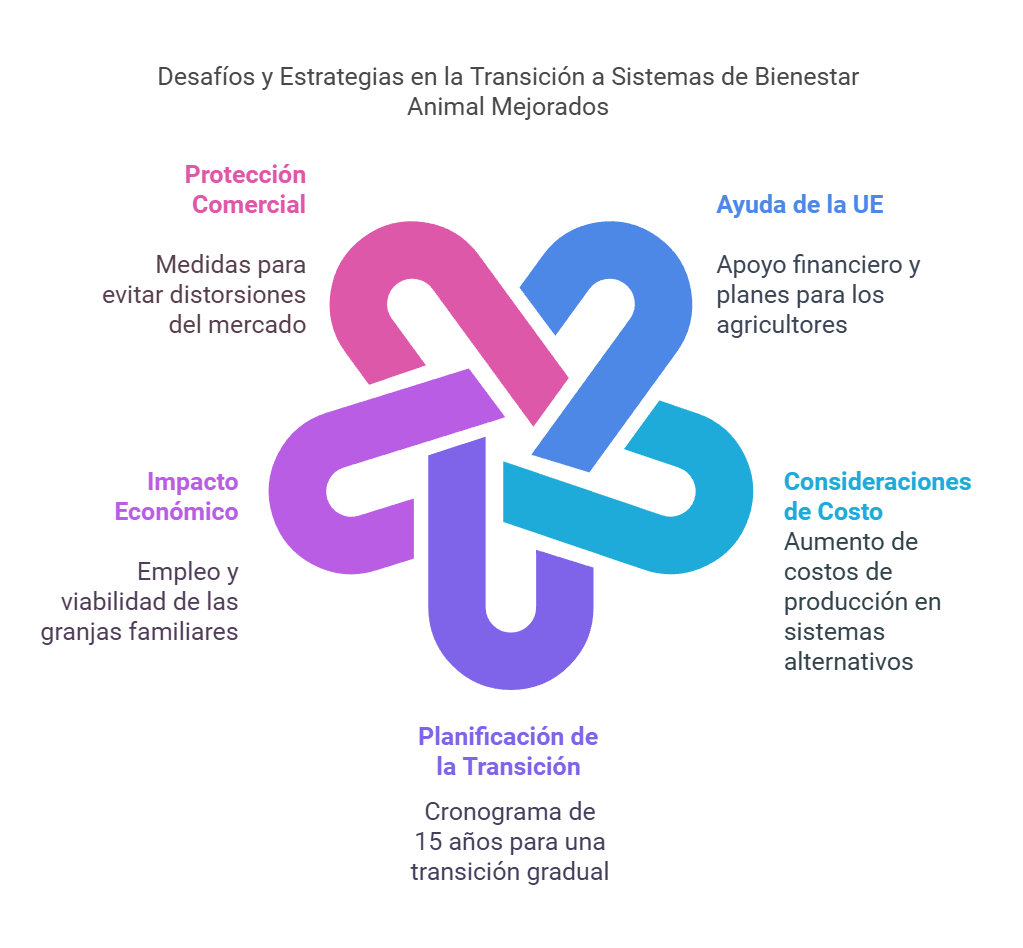
In order to comply with the new regulations, the Spanish poultry sector is calling on the European Commission to incorporate, in the development of its legislative proposal on the improvement of Animal Welfare, financial support through additional funds beyond those already provided for in the CAP budget, proportional to the investments made by poultry farmers.
INPROVO also stresses the importance of carrying out the impact assessment species by species, within an adequate transitional period, and of ensuring that the importation of animal products is aligned with the standards in force in the EU.

Following the independent technical report on the “Economic impact of the EU legislative proposal on Animal Welfare for the laying hen poultry sector” prepared by Dr Carlos Garcés Narro and Dr María Dolores Soler Sanchís, Professors of Animal Production at the Faculty of Veterinary Medicine of the CEU Cardenal Herrera University of Valencia, INPROVO presented today in Valencia, at the XVI Edition of the European Poultry Congress (EPC), its analysis of the socioeconomic consequences for the Spanish laying hen sector of the Animal Welfare improvement measures under consideration by the European Commission, within the framework of the “End the Cage Age“ initiative.

“The need for such substantial investment to carry out the transformation could create financing difficulties for many businesses, compounded by the rising cost of loans due to higher interest rates. It is essential that the forthcoming Animal Welfare legislation for laying hens incorporates, within the same text, corresponding support measures for all affected sector operators, as previously announced by the European Commission and Parliament, in order to make the transition possible without losing part of the productive fabric, which would be extremely difficult to recover,” stated Enrique Díaz Yubero, Director of INPROVO.
INPROVO also highlights, as measures to mitigate the impact of the new regulations, the prohibition on the construction of new cage-based facilities from the moment the new regulation is published, that the transition be carried out gradually, and that an exit scheme with support measures be established for those producers who do not wish to continue their activity.
Regarding the 10-year adaptation period proposed by the European Commission, INPROVO states that this is an insufficient period for the majority of sector operators. Instead, the interprofessional organisation considers a minimum period of 15 years necessary, in order to avoid losing farms with the least financial or credit capacity, which may not have had sufficient time to depreciate their most recent facilities. This would also prevent potential egg supply shortages in the market.
Changes to maximum farm stocking density
Another proposal put forward by the European Commission is the reduction of farm stocking density, from 9 to 5 hens per m2 in indoor spaces, and to 7 hens per m2 where outdoor access is provided.
According to COPA-COGECA, this new measure could result in the number of laying hens declining by 13% across the European Union, falling from the current 379 million birds to a flock of 330 million. Furthermore, production will also be affected by the slight reduction in productivity per laying hen expected under cage-free systems. As a result, the EU would move from being a net exporter to having to import eggs.

INPROVO calculates that this proposal would result in a 44% reduction in bird housing capacity for Spanish farms. To maintain current production levels, investments of 800 million euros would be required, along with the availability of substantial suitable land for construction. In addition, producers would need to navigate complex administrative procedures to obtain permits for new farm installations, resulting in delays to the transition timeline.
For this reason, Spanish poultry sector organisations would view positively the retention of current stocking densities, as the investments required to implement the proposed regulation are disproportionate to the animal welfare benefits they provide, and reducing density is not a decisive factor in improving bird welfare.
Finally, regarding the installation of verandas or winter gardens — which the Commission considers in its report — this may be a feasible initiative in new projects, but would be difficult to incorporate into existing farm facilities and designs.
Increases in production costs
Alternative production systems involve increased costs at virtually every stage of the egg production chain. According to Drs Garcés and Soler, the cost of producing a dozen eggs under a barn system would be 17.3% higher than production in cages, while in the case of free-range, the increase would be 30.9%.
Extrapolating these increases to total national production, the study determines an annual impact of almost 178 million euros resulting from the cage ban.
In the words of Enrique Díaz Yubero, “the rising cost of a staple food in the Spanish diet such as the egg has a significant social impact, as it disproportionately affects the lowest-income households in our country. Every effort must be made to avoid potential supply shortages or significant price increases for eggs that could create imbalances between supply and demand.”
For this reason, the egg sector considers it essential that the transition periods be extended, to allow both producers and consumers to progressively adapt to the changes, thereby avoiding market and price distortions.
Higher regulatory costs
The work of Garcés and Soler also estimates that the transition to alternative production systems will result in an increase in regulatory costs of close to 40% compared to those borne by the main competing third countries, to which must be added a further 16% cost overrun already shouldered by European egg producers using enriched cage systems, which represent the lowest-cost option.
Combining both figures, it is concluded that producing barn eggs in Spain, which would be the most cost-effective option, would entail a regulatory cost overrun of more than 55% compared to competing third countries.
“Spain is an egg-exporting country, not only within the EU but also to third countries, whose markets are based on affordable prices. With the rise in production costs, many of these countries would no longer be able to purchase a basic and essential food for their populations, and would source their eggs from other countries that compete with EU production thanks to significantly lower regulatory costs,” stated Enrique Díaz Yubero.

For this reason, the egg sector requires protection and reciprocity in trade agreements with third countries — measures that would prevent the relocation of EU production to lower-cost countries, and would safeguard food sovereignty with respect to a staple, fresh, and locally produced food such as the egg.
“The measures adopted must guarantee a level playing field in order to maintain fair competition in the market. Otherwise, it would be contradictory to have a system that aims to be a world reference in animal welfare and sustainability, yet ultimately proves economically unviable and leads to the loss of domestic production and the importation of food produced under lower standards and quality requirements that do not meet European regulations. We believe this is not what European citizens are asking for,” stated Díaz Yubero.
Spanish eggs: an international benchmark
The Spanish laying hen sector is one of the most modern, dynamic and demanding in the world. Spain is the third largest producer in Europe, with 12% of total production, behind only France and Germany. Spanish eggs are highly valued beyond our borders and are an international benchmark for innovation, quality, safety and sustainability.
According to estimates from the MAPA, the Spanish egg sector achieved a turnover of 2.301 billion euros in 2023, representing 8.31% of the total value of livestock production, and 3.54% of total agricultural output. In total, 1.139 billion dozens of eggs were produced in Spain.
Spain has more than 1,500 laying hen farms spread across the country, the majority of which are Spanish-owned family SMEs, generating around 15,000 direct jobs and approximately 60,000 indirect jobs, linked to feed mills, cereal production, egg packing centres, transport and distribution, and egg product processing industries.
INPROVO estimates a minimum transition period of 15 years for a gradual transition, in order to avoid potential market and price distortions
INPROVO REPORT on the study “Economic impact of the EU legislative proposal on Animal Welfare for the laying hen poultry sector”