
Deep Learning Applications in Poultry Production: A Guide for Veterinarians
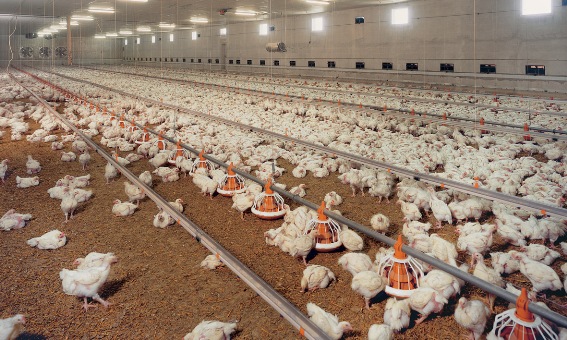
The poultry industry faces constant challenges to optimise production, ensure animal welfare and prevent disease outbreaks. In this context, digital tools based on Artificial Intelligence (AI), and in particular on deep learning, offer new and interesting possibilities. This article presents an overview of how deep learning is being applied in poultry production, with a focus on the areas where veterinarians can find the greatest utility.
What is Deep Learning?
Deep learning is a branch of machine learning that uses artificial neural networks with multiple layers to analyse data and make predictions. These networks learn complex patterns from large amounts of data, enabling them to perform tasks such as image recognition, natural language processing and decision-making.
Deep Learning Applications in Poultry Production
Deep learning is being used in various areas of poultry production to:
- Early disease detection: By analysing images and videos of birds, early signs of disease can be identified, such as changes in behaviour, posture or plumage.
- Growth and uniformity monitoring: Deep learning can assess bird growth and detect developmental disparities, enabling producers to take corrective measures in a timely manner.
- Bird counting: This technology enables the automatic counting of birds in a house, facilitating flock population tracking and the detection of losses.
- Dead bird detection: Rapid identification of dead birds is crucial to prevent the spread of disease. Deep learning can automate this process, reducing the need for manual inspections.
- Weight assessment: Estimating bird weight from images can help optimise feeding and flock management.

Advantages of Using Deep Learning
The implementation of deep learning-based solutions offers numerous advantages for poultry production:
- Greater efficiency: Automation of tasks that previously required intensive labour, such as bird counting or dead bird detection.
- Improved animal welfare: Early detection of health problems, enabling rapid intervention and reducing bird suffering.
- Loss reduction: Prevention of disease outbreaks and production optimisation, resulting in greater profitability.
- More informed decision-making: Data collected and analysed by deep learning systems provide producers with valuable information for decision-making.

How Does It Work in Practice?
The implementation of deep learning solutions on poultry farms generally involves the following components:
- Sensors: Cameras and other IoT (Internet of Things) sensors are installed in poultry houses to collect data. (Note: this installation must be very precise to provide a 360° view of what is happening on the farm with no blind spots.)
- Edge AI Devices: Computing devices with AI processing capability are placed at the network edge (e.g., on the farm itself) to analyse data in real time.
- Digital Platform: A cloud platform centralises data, runs business logic and provides visualisation tools and decision support.
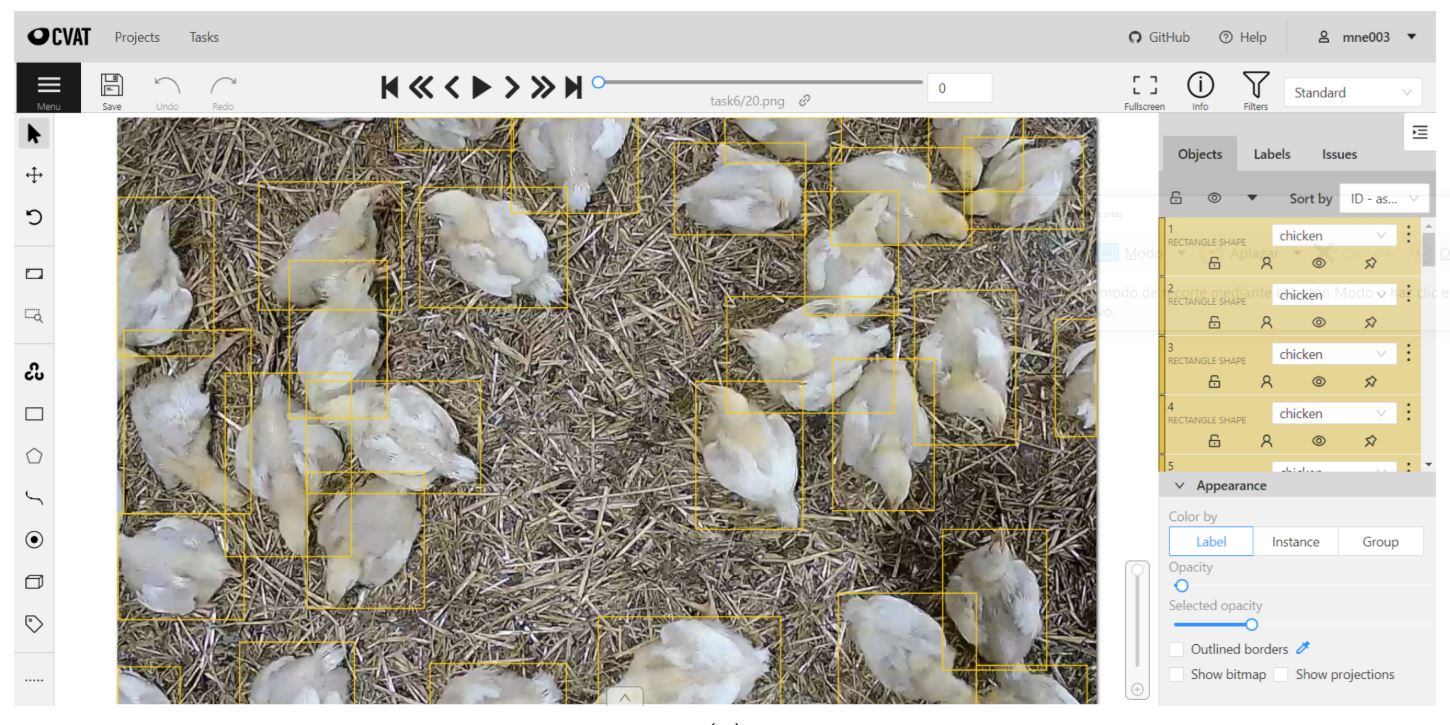
- Deep Learning Models: Deep learning models, previously trained on large datasets, run on Edge AI devices to perform specific tasks, such as broiler detection or image segmentation.

The Role of the Veterinarian
Veterinarians play a fundamental role in the successful implementation of deep learning solutions in poultry production:
- Solution selection: Helping poultry producers and veterinarians choose the most suitable deep learning solutions for their specific needs.
- Results interpretation: Interpreting the results generated by deep learning systems and converting them into practical recommendations for farm management.
- Model validation: Validating the accuracy of deep learning models under real field conditions.
- Training: Training farm personnel in the use and interpretation of deep learning systems.

Concrete Examples of Artificial Intelligence Applied to Poultry Farming:
- Broiler detection: Neural networks such as Faster R-CNN have been used to detect broilers in images with an accuracy of up to 85%.
- Broiler segmentation: Networks such as Mask R-CNN have been used to segment broiler images with an accuracy of up to 90%.
- Broiler counting: Specific neural networks have been developed to count broilers in images, such as LC-DenseFCN, with an accuracy of up to 93.84%.
- Dead bird detection: Models based on YOLOv4 have been used to detect dead birds with an accuracy exceeding 97%.
Key Considerations Prior to Implementing Any AI System in Poultry Farming
Deep learning has the potential to transform poultry production, making it more efficient, sustainable and respectful of animal welfare. However, it is important to bear in mind some key considerations:
- Data quality: The accuracy of deep learning models depends on the quality and quantity of the data used to train them — the well-known “datasets”. No good data? = No good outputs.
- Adaptation to local conditions: Models must be adapted to the specific conditions of each farm, such as bird breed, housing type and management practices.
- Multidisciplinary collaboration: The successful implementation of deep learning solutions requires collaboration between veterinarians, computer engineers and poultry production experts.

Figure 7. Integration with an existing poultry digital platform.
Furthermore, it is important to note that the information coming from these sensor nodes with cameras and AI models should be considered as input data for new and improved decision support modules, developed within the digital poultry farm management system. These modules can focus on determining the number of birds, detecting dead birds, assessing their weight or identifying uneven growth problems. Most of these functions are aimed at the early detection of health problems and the prevention of disease spread.
The next step? Advancing the study and correlation of the thousands of data points that can already be collected on farms at negligible cost
Deep learning offers powerful tools to improve poultry production. Veterinarians, working alongside IoT and AI experts, thanks to their sector knowledge and experience in bird care, are ideally placed to lead the adoption of this technology and maximise its benefits.
The study on which this summary is based, “Developing Edge AI Computer Vision for Smart Poultry Farms Using Deep Learning and HPC“, explores the use of Edge AI and High-Performance Computing (HPC) to develop computer vision models applied to smart poultry farms. Using deep neural networks, algorithms were designed to detect, segment and analyse images of broilers, enabling bird counting, dead bird identification and growth assessment. The models, trained on HPC using AutoML techniques, achieved an accuracy of up to 90% in segmentation and detection. These models were deployed and integrated with an IoT platform for real-time farm monitoring. The combination of computer vision and IoT improves decision-making on poultry farms, facilitating early disease detection and optimising production. The research demonstrates the feasibility of Edge AI to transform poultry management, although improvements in data and models are required to increase accuracy and efficiency.
Source:
-. Stevan Cakic et al. “Developing Edge AI Computer Vision for Smart Poultry Farms Using Deep Learning and HPC“. Sensors 2023, 23, 3002. https://doi.org/10.3390/s23063002
Further reading:
-. Applications of artificial intelligence in poultry farming (use cases on NeXusAvicultura.com)