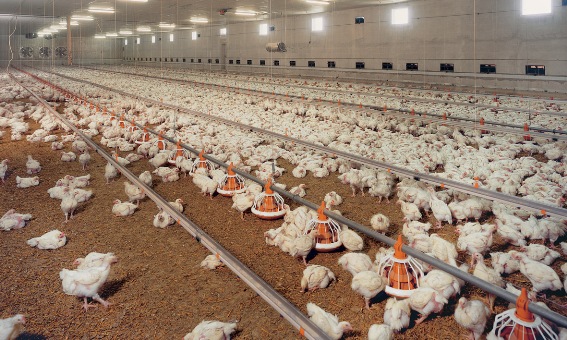


With the perspective gained from having lived through these three decades of progress, I have no doubt that agri-food interprofessional organisations will continue to play an indispensable role in the future of Spanish livestock farming and agriculture. Their capacity to unite efforts, articulate the production chain and respond to social and environmental demands places Spain in an optimal position to consolidate its leadership in an increasingly demanding global landscape. Over these 30 years, they have demonstrated that unity is, without question, the best strategy for meeting the present and future challenges facing our agriculture and livestock sectors.
Three decades ago, Spain took a momentous step towards the modernisation and organisation of its agricultural sector with the creation of the legal framework that made Interprofessional Organisations (IOs) possible. These entities, officially recognised by the Spanish Parliament in 1993, have been a fundamental pillar in the structuring and promotion of the primary sector, contributing significantly to its competitiveness, sustainability and capacity to adapt to global challenges.
The origins of the Agricultural Interprofessional Organisations
The existence of these organisations was formalised in Spain through Law 38/1994, of 30 December 1994, regulating Agri-food Interprofessional Organisations. This piece of legislation was created with the aim of providing a clear framework for the establishment and operation of these entities, recognising the need to better articulate the agri-food value chain. At the time, the Spanish agricultural sector was facing structural challenges: low farm-gate prices, international competition arising from accession to the European Union (then the European Economic Community) and poor coordination between producers, processors and marketers.
The law also provided the basis for organisations to finance themselves through what are known as rule extensions. That is, following an interprofessional agreement supported by a representative majority of the sector, mandatory contributions (levies) are established for all agents involved in the activity. This ensures a stable financing system for research, promotion, quality improvement and animal health defence projects. This financing mechanism proved decisive in driving forward collective initiatives in strategic areas such as technological innovation and professional training within the sector.
What are Interprofessional Organisations?
IOs are non-profit entities that bring together representatives from every link in a specific production chain. The interpretation of what is meant by “every link in the chain” has frequently caused misunderstandings, with sub-sectors of a livestock activity either wishing or not wishing to be included in the relevant interprofessional body. In theory, an interprofessional organisation should encompass every farmer, cooperatives, large integrators, processing industries, distributors and, in some cases, public authorities. Their primary function is to promote understanding and collaboration between these stakeholders, with the aim of improving the efficiency, quality and sustainability of the sector.
The most notable functions of IOs include:
- Promotion and marketing: Development of campaigns to boost consumption of domestic products, both in the home market and abroad.
- Research and innovation: Funding of R&D&I projects to improve production processes and product quality.
- Standardisation and quality: Establishment of rules and standards to guarantee food quality and safety.
- Defence of sector interests: Representation of the sector before public institutions and other international bodies.
- Sustainability: Promotion of environmentally responsible agricultural and livestock farming practices.
The impact of IOs on the Spanish livestock and agricultural sector
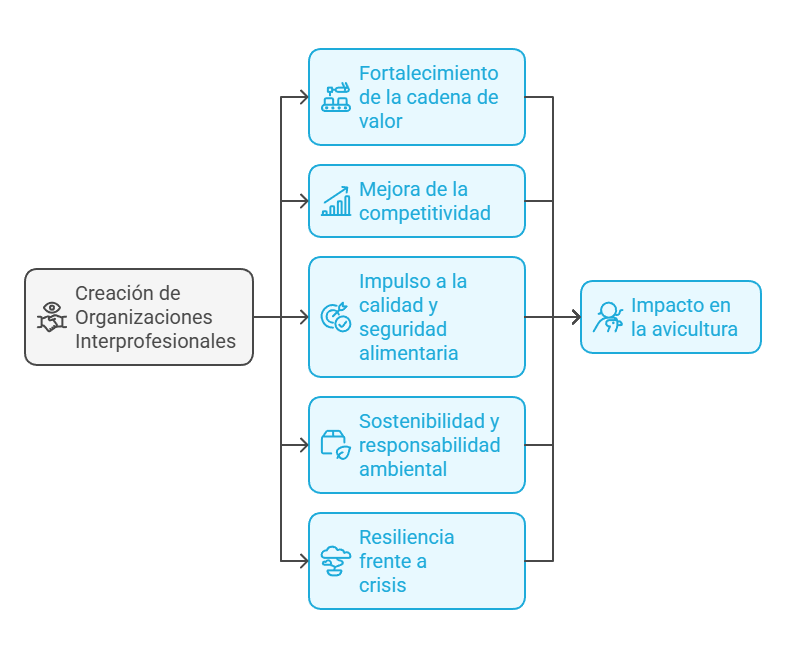
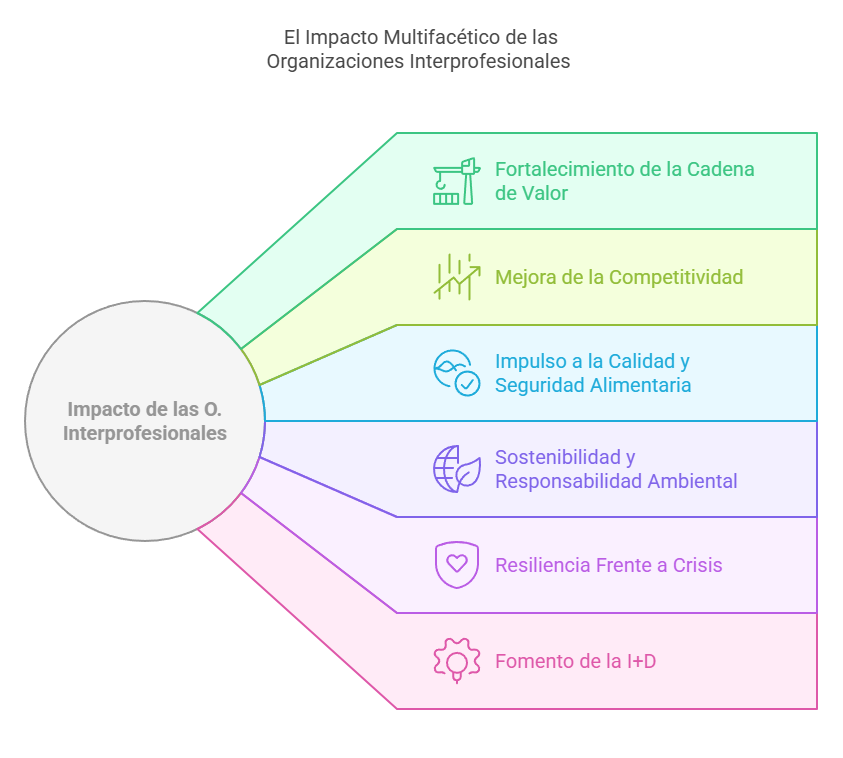
Over these 30 years, Interprofessional Organisations have proven to be a key instrument for the development of the agricultural sector in Spain. Their contribution has translated into tangible benefits for producers, industry and consumers. Below, we examine some of the most notable achievements:
1. Strengthening of the value chain
IOs have succeeded in improving coordination between the different links of the agri-food chain, reducing imbalances and fostering transparency in commercial relations. This has enabled a more equitable distribution of the value generated, benefiting primary producers in particular.
2. Improved competitiveness
Thanks to promotion campaigns and R&D&I efforts, Spanish products have gained presence and recognition in international markets. Notable examples include olive oil, wine, Iberian ham and poultry products.
3. Boost to quality and food safety
IOs have been instrumental in creating quality marks and designations of origin, which guarantee consumers the provenance and specific characteristics of products. This has helped to differentiate Spanish products in an increasingly competitive market.
4. Sustainability and environmental responsibility
Against a backdrop of growing concern over climate change, IOs have promoted more sustainable agricultural and livestock farming practices, encouraging the efficient use of natural resources and the reduction of emissions.
5. Promotion of research
The promotion of R&D has been another of the pillars of interprofessional activity. Through funds collected via rule extension levies, research projects have been financed in critical areas: use of by-products, animal welfare, feed optimisation, more efficient management systems, reduction of antibiotic use, etc. These initiatives, in addition to delivering greater productivity and quality, have laid the foundations for more sustainable production, in line with the objectives set by the European Union’s Common Agricultural Policy (CAP) and the growing consumer demand for sustainability and environmental responsibility.
The role of Interprofessional Organisations (IOs) in the Spanish poultry sector
Poultry farming is one of the sub-sectors that has benefited most from the work of Interprofessional Organisations. Spain is one of the leading producers of broiler meat in Europe, as well as of eggs, and IOs have played a fundamental role in the development and modernisation of this sector.
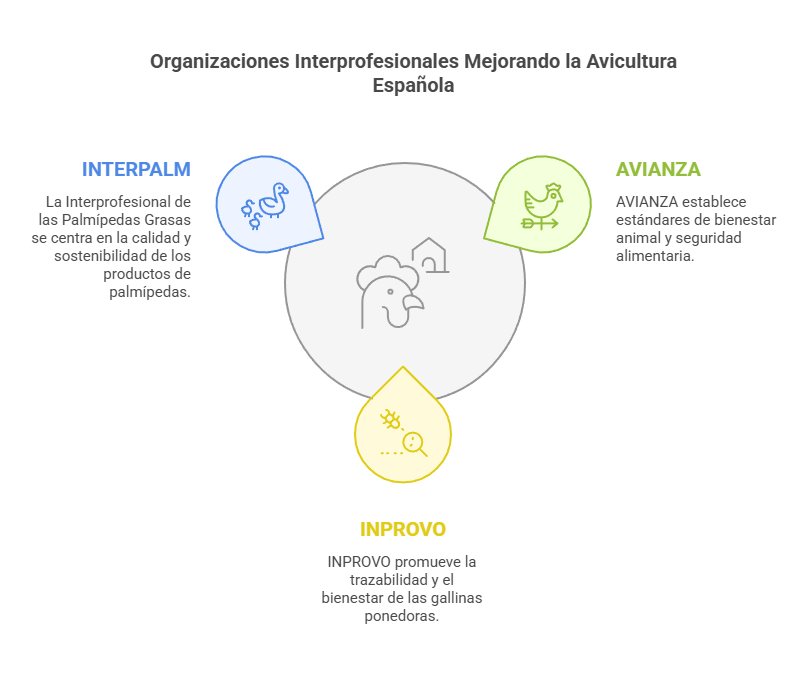
Of the 26 Interprofessional Organisations recognised in Spain, 3 are specific to the poultry sector:
- AVIANZA (Interprofessional Organisation for Poultry Meat in Spain): In my area of specialisation, poultry farming, AVIANZA has worked side by side with companies and farmers in defining production standards that guarantee bird welfare and the food safety of broiler and turkey meat. It has also enhanced the image of Spanish poultry products through international trade fairs and consumer-facing information campaigns.
- INPROVO (Interprofessional Organisation for Eggs and Egg Products): INPROVO, for its part, has been a catalyst for improvement and modernisation in the egg sector. It has led major awareness campaigns on the various production systems (free-range, organic, barn, enriched cage), emphasising food safety and traceability. The organisation has also been deeply committed to raising awareness of laying hen welfare, promoting codes of good practice and supporting the transition to models that are more respectful of animal welfare and the environment. Thanks to its work, the image of the Spanish egg has been strengthened in both domestic and international markets, building consumer confidence in this essential component of the Mediterranean diet.
- The Interprofessional Association for Fatty Waterfowl (INTERPALM) is another organisation that has played a fundamental role in structuring and promoting a specific sub-sector within the Spanish agricultural sector. This interprofessional body, officially recognised in February 2010, represents producers of fatty waterfowl (ducks and geese) and the processing industry, and has focused on the production of high-quality products such as foie gras, magret and other derivatives. Since its creation, INTERPALM has worked to improve the sector’s competitiveness, promoting sustainable practices that respect animal welfare, while championing the excellence and traceability of its products.
In the context of strong animal rights pressure seeking to reduce or even ban the sale of foie gras, one of its main contributions has been the defence of the interests of waterfowl farmers before European institutions, securing a regulatory framework that guarantees the viability and growth of this activity. In addition, INTERPALM has driven promotion and outreach campaigns to raise awareness of the gastronomic and nutritional qualities of products derived from fatty waterfowl, consolidating their position in the domestic and international markets.
Other examples of interprofessional organisations that have become essential agents in driving, defending and positioning each of the productive branches of the Spanish agri-food sector are as follows:
- INTERPORC (Agri-food Interprofessional Organisation for White-coat Pigs): It has implemented international promotion programmes for Spanish pork and has developed animal welfare and antibiotic reduction protocols that are now benchmarks across Europe.
- INLAC (Dairy Interprofessional Organisation): Its initiatives to stabilise the milk market, promote transparency in contracts and drive the differentiation of Spanish dairy products have been essential in strengthening this sector, which is highly sensitive to price fluctuations.
- INTEROVIC (Interprofessional Organisation for Sheep and Goat Meat): It has driven consumer information campaigns in the domestic market and promoted exports to foreign markets, as well as fostering innovation in new presentations of lamb and kid meat.
- INTERCUN (Interprofessional Organisation for the promotion of the rabbit sector): Instrumental in raising the profile of and adding value to rabbit meat, developing marketing strategies, research and quality improvement.
Have these 30 years of Interprofessional Organisations been worthwhile?
Yes, there is certainly room for improvement, but the challenges facing animal production are enormous and global, and without them the future of the Spanish poultry sector would be far less promising.
The 30 years of Agricultural Interprofessional Organisations in Spain are a cause for both celebration and reflection. These entities have proven to be an effective instrument for strengthening the primary sector, fostering collaboration between the different players in the agri-food chain and improving the competitiveness of Spanish products in the global market. Their work has been particularly significant in sub-sectors such as poultry farming, where they have contributed to improving consumer perception of poultry meat and eggs and, consequently, to securing the viability of the Spanish poultry industry.
Looking ahead, IOs have a crucial role to play in adapting the agricultural sector to new global challenges, such as the threats posed by MERCOSUR, and in striving to involve, to an even greater extent, absolutely every link in the poultry and livestock production chain.
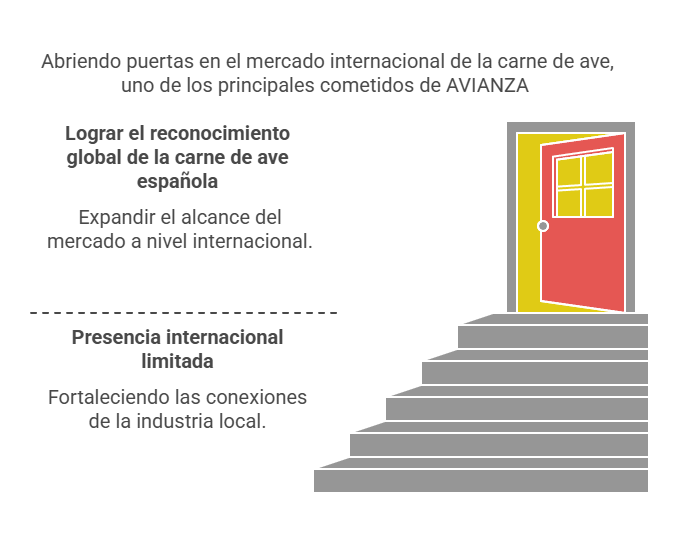
AVIANZA: A commitment to opening international markets for Spanish poultry meat.
Within the landscape of Interprofessional Organisations in Spain, the poultry meat sector is officially represented by AVIANZA (Interprofessional Association for Poultry Meat), created from the former National Association of Broiler Producers (ANPP, which already existed before 1975), and subsequently transformed in February 1999 under Ministerial Order No. 2748 into the Interprofessional Organisation for Broiler Poultry Farming in the Kingdom of Spain (PROPOLLO). AVIANZA not only absorbed PROPOLLO, and previously the ANPP, but in addition to turkey and broiler, subsequently added quail meat. Its primary objective is to foster collaboration between sector players, improve the competitiveness of Spanish poultry meat and promote its consumption in both the domestic and international markets. The Interprofessional Association for Poultry Meat therefore brings together all broiler, turkey and quail processing companies, integrators and producing cooperatives.

AVIANZA has spearheaded key initiatives in areas such as quality, food safety, sustainability and innovation, positioning Spain as one of the European leaders in poultry production. It has also worked actively to defend the sector’s interests before institutions, for example by lodging objections against the absurdity that would be represented for broiler transport by changing the current regulations on animal transport, or against supermarkets compelling integrators to adopt full adherence to the European Chicken Commitment, a complete nonsense. Its work is a clear example of how Interprofessional Organisations can contribute to creating a favourable regulatory framework, improving the image of poultry meat among consumers and driving the internationalisation of Spanish poultry meat.
INPROVO: has succeeded in “turning the tables” on consumer perception of eggs.
Another interprofessional organisation that has left a significant mark on the Spanish poultry sector is INPROVO, the Interprofessional Organisation for Eggs and Egg Products.

Founded in 1996 and recognised as the Egg Interprofessional Organisation in 1998, INPROVO represents all links in the egg value chain, including egg-laying poultry farmers, grading centres, processing industries and distributors. Its work has focused on promoting the consumption of eggs and egg-based products, highlighting the nutritional value of eggs, their versatility and sustainability.
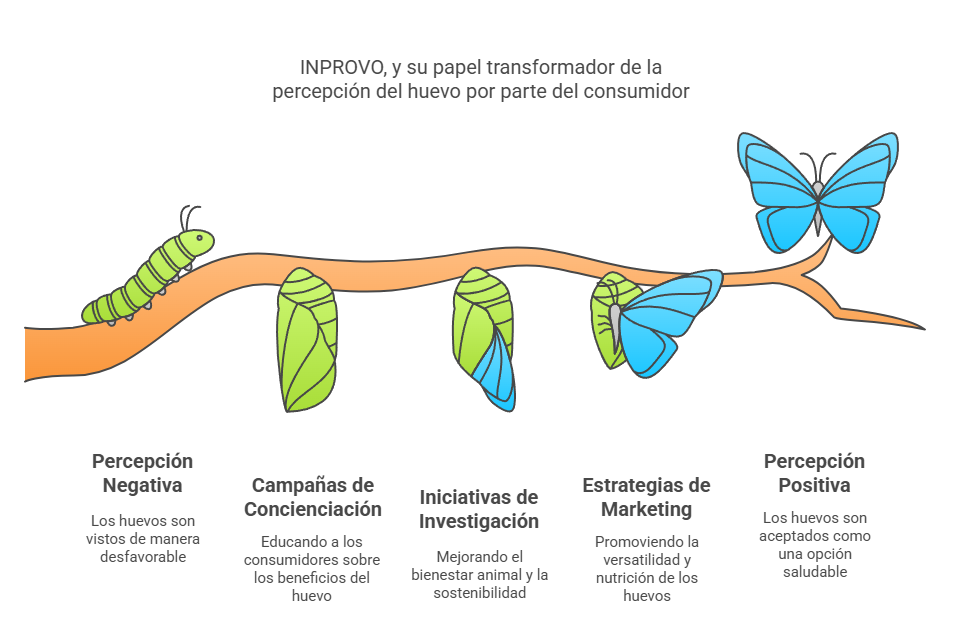
INPROVO has been a pioneer in implementing information and education campaigns aimed at consumers, guaranteeing traceability and high production standards. It has also driven research and innovation projects to improve animal welfare, production efficiency and the reduction of environmental impact. Thanks to its work, the egg sector in Spain has established itself as one of the most modern and competitive in Europe, maintaining a balance between quality, food safety and sustainability.
In 2024 it continued with its egg marketing campaigns, submitted significant representations in response to European animal rights pressure to legally ban all types of cages in poultry farming, and also made a significant contribution to egg-related research.
Federico Castelló
Director of NeXusAvicultura.com
For further information:
-. Official website of AVIANZA
-. Official website of INPROVO
-. Official website of INTERPALM
-. News about AVIANZA on NexusAvicultura.com
-. News about INPROVO on NeXusAvicultura.com