
Triple H5N1 avian influenza outbreak hits farms in Spain, Portugal and Germany in the first week of September
Berlin/Lisbon/Madrid, 5 September 2025 – The first week of September has brought bad news for the European poultry sector, with the confirmation of three highly pathogenic H5N1 avian influenza outbreaks on farms in Germany , Portugal and Spain. The World Organisation for Animal Health (WOAH) reported the detection of the virus, marking the reappearance of the disease in poultry in these countries.
Germany reported an H5N1 outbreak on a farm in the north of the country. The virus was detected on Monday 1 September in a flock of 2,800 laying hens in the locality of Schenefeld. The incident resulted in the death of 100 birds, and the remaining 2,700 hens were culled to contain the spread. Germany had been declared free of H5N1 HPAI since December 2024.

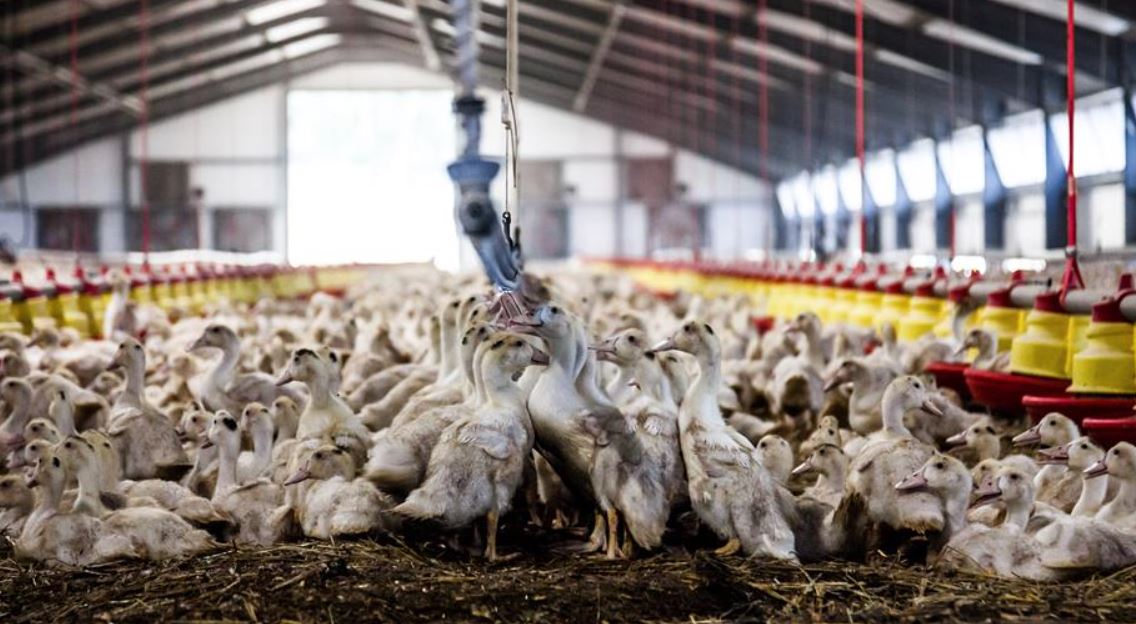
Almost simultaneously, Portugal confirmed an H5N1 outbreak in poultry, specifically on Tuesday 2 September. The virus was identified at the largest meat duck fattening farm on the Iberian Peninsula, namely a poultry complex housing 257,650 meat ducks in the locality of Samora Correia, near Lisbon, in the freguesia of Santo Estevão, concelho of Benavente, district of Santarém. In this case, 1,011 birds died, and the remaining 256,639 were culled and disposed of.
In September 2022, the same waterfowl meat farm in Benavente (Portugal) was already forced to cull 192,000 ducks.
History repeats itself, and in the case of Portugal bad luck has meant that avian influenza has struck the same meat duck poultry complex — the largest on the Iberian Peninsula — in exactly the same month as the 2022 outbreak.
The outbreak exactly three years ago at the largest duck fattening unit in Portugal forced the Directorate-General for Food and Veterinary Affairs (DGAV) to activate its contingency plan and implement a wide range of measures to bring the situation under control. This was the 26th avian influenza outbreak identified in Portugal in 2022, but it was the case with the most serious consequences, requiring the culling in September 2022 of the 192,281 ducks at the farm in the parish of Santo Estevão, in the municipality of Benavente.
This duck breeding and sales farm has been operating in Santo Estevão for nearly 30 years, and the company presents itself as the largest duck producer on the Iberian Peninsula. The unit forms part of an estate of approximately 314 hectares and, in addition to the rearing sheds, includes a slaughter facility, cold storage and warehousing facilities, and a wastewater treatment plant.
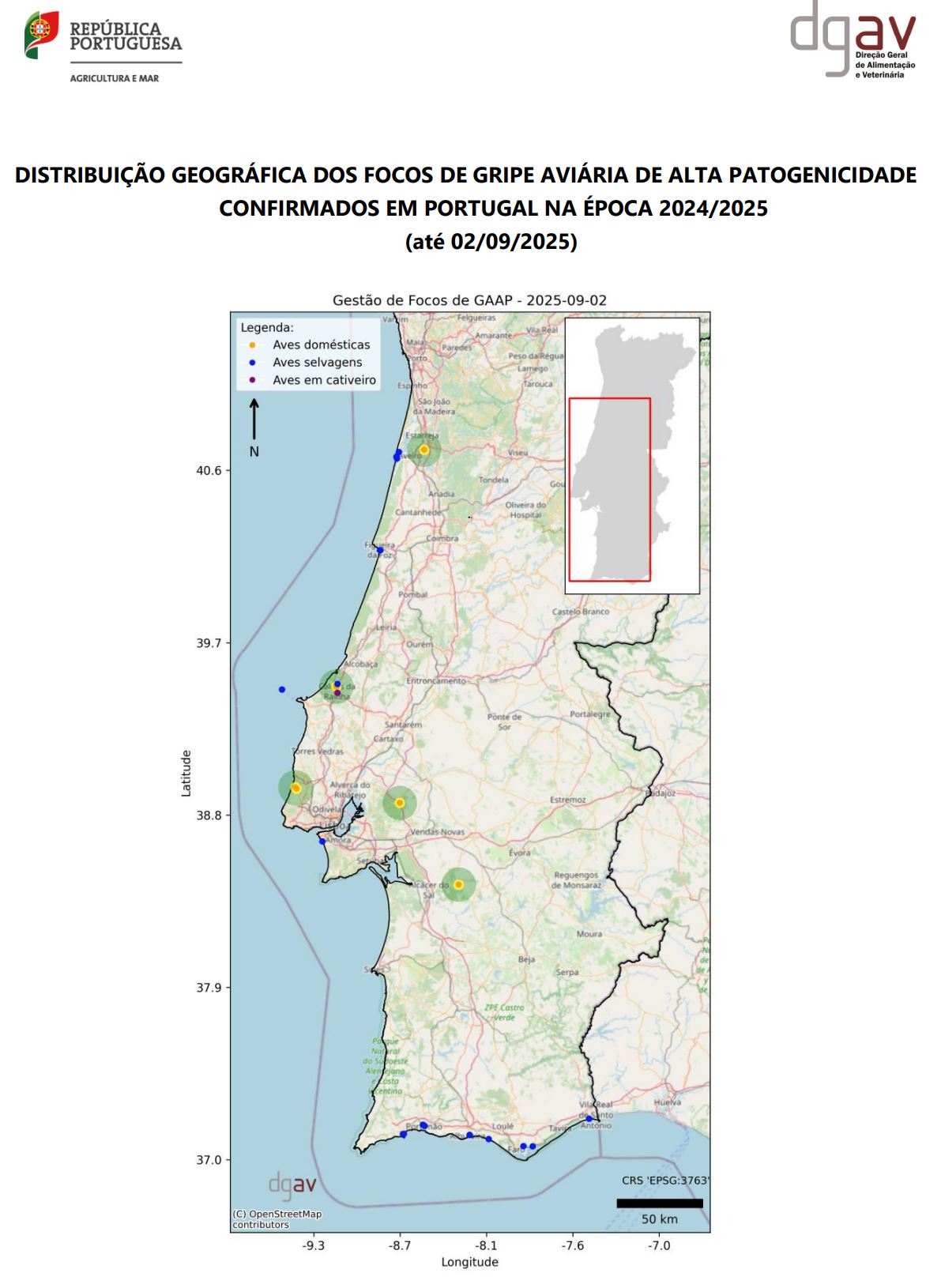
Portugal had recorded no H5N1 HPAI in its poultry sector since January 2025, although the virus has never truly disappeared — up to 2 September 2025, the country has accumulated nearly twenty confirmed cases in wild birds, according to information provided by the Directorate-General for Food and Veterinary Affairs of Portugal (DGAV).

Thirdly, in Spain a case was confirmed on Thursday 4 September on a turkey farm in the province of Huelva, reviving the worst nightmares of 2022, when AI hit this region particularly hard. This is the third case in 2025 on poultry farms in Spain, following two cases in July — the first on another turkey farm in Extremadura and a second case on a breeder farm in Toledo.
To these must be added 31 cases in wild birds across various autonomous communities, including Catalonia, the Basque Country, Castile and León, Asturias, Galicia, etc. The most likely route of virus introduction into the Huelva farm is considered to be indirect contact with wild birds.

“Germany and Portugal confirmed cases of highly pathogenic H5N1 avian influenza on poultry farms in early September, resulting in the death and culling of thousands of birds.”
WOAH has indicated that Europe as a whole is facing a seasonal resurgence of this deadly disease. The spread of avian influenza has generated concern among governments and the poultry industry due to its recent track record of devastating poultry livestock, and also in mammals in the USA, at the global level, disrupting supply, driving up food prices and restricting exports.
“The reappearance of the AI virus, for the first time since winter in these countries, is generating concern in the poultry industry and among governments due to its potential impact on supply, food prices and the risk of undermining the One Health approach.”
Authorities have acted swiftly.
In Spain, the Minister of Agriculture of the Junta de Andalucía, Ramón Fernández-Pacheco, stated this Friday the 5th that the authorities have been working “from the very first moment” in a coordinated manner to control the situation and rule out any health risk to the public. The official veterinary services have contained the Huelva case, and all indications point to the July outbreaks in Extremadura and Castile-La Mancha having been fully eradicated.
Among the measures adopted, the most notable include the culling of approximately 8,500 birds, comprehensive disinfection of potentially contaminated materials, and the establishment of a 10-kilometre safety perimeter around the affected farm. “We know how to act, we have highly trained professionals and animal health services that have been focused on this outbreak for days“, Fernández-Pacheco stressed, also recalling that Andalusia has already successfully dealt with similar episodes in the past (in 2022).
In Portugal, the Directorate-General for Food and Veterinary Affairs (DGAV) implemented stringent control measures, including inspection of the affected sites, disposal of animals, cleaning and disinfection, movement restrictions and surveillance within a radius of up to 10 km around the detected focus. The DGAV reiterated its appeal to all poultry keepers to comply with biosecurity measures and good poultry production practices, avoiding direct or indirect contact between domestic and wild birds. The DGAV also recalled that persistent circulation of the HPAI virus has been detected in wild birds and that further outbreaks have been reported in Portugal this month in Olhão, Aveiro, Alcácer do Sal and Costa da Caparica.
In Germany, no further cases have been reported so far.
At the European level, the EU is reinforcing monitoring of potential avian influenza outbreaks in cattle to prevent cross-species transmission such as has occurred in the USA.

“Authorities have implemented rigorous control measures, including mass culling of birds and surveillance of affected areas, while the source of the infections is being investigated.”
The source of infection in these outbreaks remains unknown or inconclusive. However, WOAH has highlighted that migratory birds, especially waterfowl, are natural carriers of the virus. Although transmission to humans is rare and only sporadic cases have been reported, it can lead to severe clinical disease.
For further information:
-. Press release from the Government of Portugal dated 2 September 2025
-. WOAH report on the avian influenza outbreak in Germany dated 3 September 2025
-. Official statement from the Spanish Ministry of Agriculture dated 4 September 2025
-. Avian Influenza on NeXusAvicultura