
A contested public health decision in the United States: the cancelled avian influenza vaccine contract and its global implications
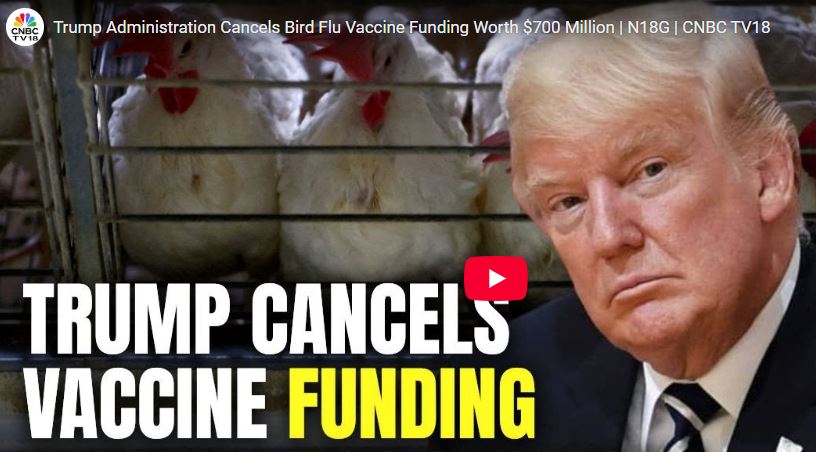
The Trump administration has just suspended a $590M USD contract for an avian influenza vaccine. But that is not the most alarming part. What is truly alarming is the progressive dismantling of public animal health institutions, whose enormous body of work cannot be rebuilt overnight.
Animal health and human health are intrinsically linked. The emergence of zoonotic diseases — those that transmit from animals to humans, such as avian influenza H5N1 — underscores the importance of a robust, long-term health policy that addresses both fronts simultaneously. Recently, a decision in the US to cancel this major contract for the development of an H5N1 vaccine has raised serious concern, highlighting how political decisions on health matters can have significant repercussions for global pandemic preparedness, affecting both animal populations and human health security.
The promising contract that has been suspended
In one of the final days of the Biden Administration, the US Department of Health and Human Services (HHS) announced in January 2025 a $590 million contract with Moderna, aimed at accelerating the development of mRNA vaccines against potential pandemic influenza viruses and enhancing the platform’s readiness to respond to other emerging infectious diseases.
This contract, agreed just before a change of administration, had the specific objective of creating an mRNA-based vaccine against the H5N1 virus. mRNA technology has already demonstrated its effectiveness in the rapid development of vaccines against emerging viruses, as seen with COVID-19. The goal was to establish a protective barrier against a potential large-scale spread of H5N1.
Initial results from a limited clinical trial involving 300 participants were encouraging, showing that the vaccine could induce a robust immune response against H5N1. A lead researcher highlighted this immune response despite the withdrawal of funding. The chief executive of the laboratory involved also expressed satisfaction with the “robust immune response” observed. However, the cancellation of funding leaves the continuation of this project in uncertainty.
The avian influenza virus has amply demonstrated its capacity to mutate and jump between species (and between countries)
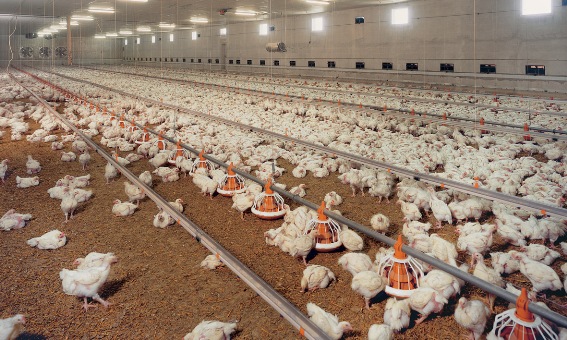
The H5N1 virus is not new and has been circulating for decades, primarily among wild birds and poultry. What is new — and has reignited fears in recent times — is its transmission to dairy cattle, pigs, sheep and other species found to be susceptible over the past two years. This inter-species transmission is a major cause for concern, as it increases the likelihood of a dangerous mutation. In the US, H5N1 has affected 178 bovine herds — an unprecedented phenomenon.
Experts fear a mutation that would allow easy human-to-human transmission, a scenario that could trigger a global health crisis. The urgency of taking action was underscored by the first human death linked to H5N1 in the US, which occurred in early January 2025 in Louisiana in a man over 65 years of age. Although human cases remain rare for now, this event is a reminder of the virus’s unpredictability.
Avian influenza is a global threat that transcends borders. Other countries are also facing its impact: Vietnam reported the death of 47 tigers in zoos in 2024 due to H5N1; France has launched a mass vaccination campaign for ducks to protect its farms; Brazil recorded a case on 16 May 2025; Hungary accounted for 65% of European avian influenza cases in 2024; and Spain recently recorded a case in wild birds — to cite just a few recent examples. These cases illustrate the scale of the challenge that the H5N1 virus poses to animal health worldwide.
The reasons behind the cancellation: political decisions with no scientific basis
The decision to cancel the contract is set within a particular political context in the US. The arrival of a new administration, characterised by positions that are at times sceptical towards certain vaccines, appears to have influenced this decision. Health Secretary Robert F. Kennedy Jr., known for his controversial denialist statements and for questioning science without any formal training or scientific background in human or animal health, is reported to have played a key role in this cancellation.
This decision is the latest in a series of anti-vaccine measures taken by the same official who, two days before the cancellation of the H5N1 contract, had announced restrictions on access to COVID-19 vaccines, advising against them for healthy children and pregnant women. These new recommendations, together with the repeated dissemination of false information about vaccines (such as those against measles) and the appointment of vaccine-sceptic individuals to key positions, have raised serious questions about the new officeholder’s vaccination policy.
This stance of the Secretary, described as vaccine-sceptic, suggests that the cancellation may reflect both a reassessment of priorities and a distrust of mRNA technology.
The impact of a weak health policy on animal and human health
The cancellation of this contract, in the context of the growing H5N1 threat, illustrates how a health policy that fails to prioritise preparedness can have serious consequences:
- Slowing of research and development: Without public funding — which is often crucial to absorbing the initial costs of vaccine development (hundreds of millions of dollars) — laboratories must seek private investors. This can stall the research process or limit future access to the vaccine. Although the laboratory states it will explore alternative options, the lack of government support adds a significant layer of difficulty.
- Increased vulnerability to a pandemic: By halting the accelerated development of a vaccine, the decision leaves the world potentially more vulnerable to a future pandemic should the H5N1 virus mutate to spread easily among humans. Every day without a vaccine solution increases the risk of a more severe crisis.
- Impact on public confidence: Debates surrounding mRNA vaccines, often fuelled by misinformation, erode public trust, complicating prevention and response efforts. The actions of public figures with sceptical positions can exacerbate this distrust.
- Contrast with approaches taken by other countries: The US decision stands in contrast to the lessons learned and applied elsewhere. In France, for example, preventive vaccination of ducks has helped limit economic and health losses on farms, demonstrating that prevention is often less costly than managing a crisis. The virus does not recognise borders.
Avian influenza H5N1 has proven its capacity to adapt, infecting animals of different species. A health policy that does not actively invest in prevention — such as vaccine development — puts both animal populations, which act as reservoirs and potential incubators of dangerous mutations, and human health at risk, leaving the population unprotected against a possible large-scale zoonotic transmission event.
It seems we never learn from the past …….. but not all is lost.
Past epidemics, such as H1N1 (“swine flu”) in 2009 and COVID-19, served as reminders of the speed with which a virus can spread and the critical importance of a coordinated and rapid response. These precedents underscore that prevention is always the least costly option.
In the face of the uncertainty created by the contract cancellation, various sources suggest several essential courses of action to mitigate the risk:
- Strengthening surveillance: Rapidly identifying new infection foci to limit spread. This is vital for monitoring the virus in animals and detecting possible spillovers to humans.
- Promoting partnerships: Collaboration between governments and private companies is fundamental to funding research and the development of countermeasures.
- Raising public awareness: Clear communication is essential to maintaining public confidence in vaccines and health measures.
Although the contract cancellation is a setback, scientific tools such as mRNA technology offer powerful opportunities for private laboratories to counter emerging threats. However, their potential will not be fully realised without a clear commitment from governments, since private sector initiatives in animal and human health must necessarily go hand in hand with governments’ “One Health” policies.
The fight against pandemics demands a long-term vision and a coordinated approach that recognises the interconnection between animal and human health. Decisions such as the cancellation of this contract — apparently motivated by short-term budgetary prudence or specific political positions — can have serious consequences for global preparedness and leave the world vulnerable to a threat that, though currently discreet, must not be underestimated. Cooperation and innovation are our best weapons against a global threat, and a health policy that supports them is essential for protecting both animals and people.
Protecting the health of our production birds is protecting the health of people, and that requires implementing policies grounded in up-to-date scientific evidence and designed to deliver results in the medium and long term. We cannot afford to be stumbling around in the dark.
To learn more:
-. “The perils of RFK Junior’s anti-vaccine leadership for public health“. The Lancet. January 11, 2025
-. Avian Influenza on NeXusAvicultura
-. Vaccination in poultry farming against avian influenza
-. Vaccination of poultry farm workers on NeXusAvicultura.com