
A new scientific report published on 17 December 2024 details the avian influenza situation in Europe and other regions of the world between September and the first half of December 2024. This comprehensive analysis, produced by the European Food Safety Authority (EFSA), the European Centre for Disease Prevention and Control (ECDC) and the European Union Reference Laboratory for Avian Influenza (EURL), reveals a concerning spread of highly pathogenic avian influenza (HPAI), particularly subtypes A(H5N1) and A(H5N5), in both domestic poultry and wild birds. The report also addresses detections in mammals and the human infection situation, with the aim of providing a clear and up-to-date overview for veterinarians, poultry farmers and aviculture experts.
General Overview of Avian Influenza in Europe (September–December 2024)
During the period from 21 September to 6 December 2024, 657 HPAI detections were recorded in domestic poultry (341) and wild birds (316) across 27 European countries. The geographical distribution of these outbreaks shows a concentration in areas with high poultry density, characterised by secondary farm-to-farm transmission. Waterfowl, in particular the mute swan, were the most affected, with HPAI virus detections concentrated in south-eastern Europe. Noteworthy is the geographical and host range expansion of A(H5N5) viruses, which caused an increase in detections and mortality events in gulls and crows.
- Poultry Outbreaks: 274 HPAI outbreaks in poultry were reported across 17 European countries, with Hungary as the most affected country (186 outbreaks), followed by Italy (23) and Poland (19).
- Wild Bird Outbreaks: 316 HPAI detections were recorded in wild birds, mainly in the order Anseriformes (237), which includes ducks, geese and swans, and Charadriiformes (52), which includes gulls and shorebirds.
- Viral Subtypes: The majority of outbreaks were caused by the A(H5N1) virus, but a significant increase in outbreaks caused by A(H5N5) virus was observed, particularly in northern Europe.

Detailed Analysis of Poultry Outbreaks
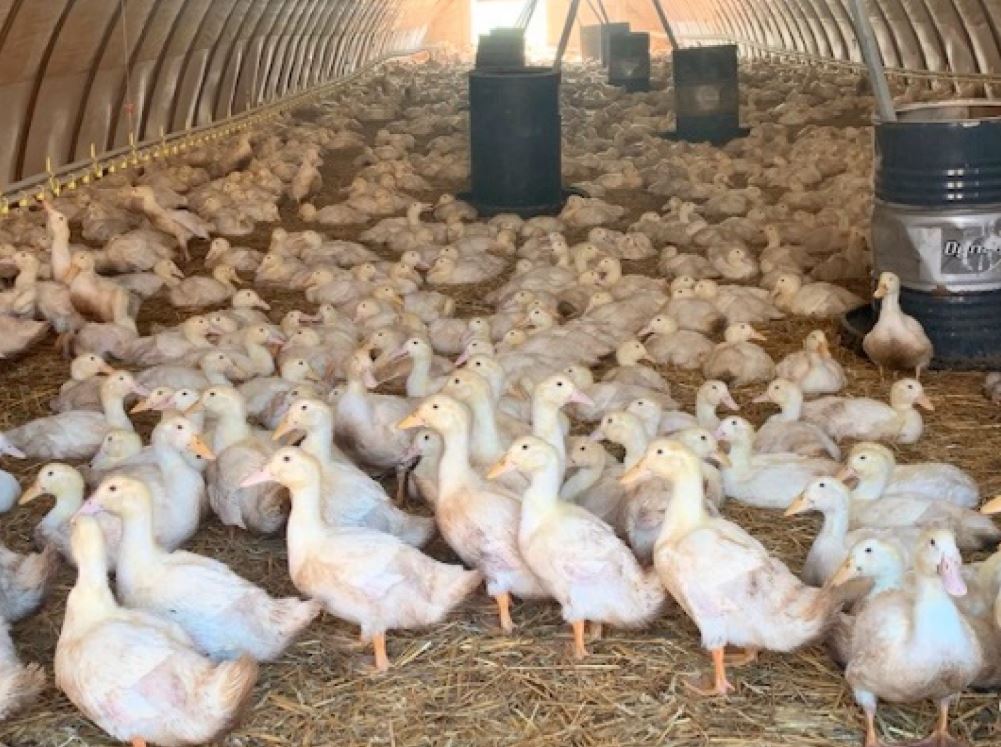
The report highlights that, during the study period (up to 6 December 2024), Hungary recorded more than 65% of HPAI outbreaks in poultry. The majority of these outbreaks were classified as secondary and occurred due to indirect contact between poultry on neighbouring farms. The most affected establishments were those rearing domestic ducks (121 outbreaks), mostly for foie gras production. Note: the two cases on poultry farms in France occurring on 27 and 28 December 2024 are not included.
During this period, more than 13 million birds died or were culled on affected poultry holdings, representing a substantial increase compared with the previous period.
Outbreaks in different countries show diversity in the types of birds affected and the circumstances of infection:
- Albania: A primary outbreak was reported in a small non-commercial establishment with laying hens.
- Austria: Six primary outbreaks were confirmed in commercial establishments with various species, including chickens, turkeys and ducks.
- Bulgaria: Three primary outbreaks were reported in game bird establishments, with pheasants and other species affected.
- Croatia: A primary outbreak was detected in a commercial turkey-fattening establishment.
- Czech Republic: Four outbreaks were detected, one of them in an establishment with domestic geese for fattening.
- Hungary: Recorded the highest number of outbreaks, with the majority affecting Mulard ducks and geese for foie gras production.
- Italy: 23 outbreaks were recorded, many of them in small rural establishments with mixed-species poultry flocks.
- North Macedonia: An outbreak was reported in a small establishment with four birds.
- Poland: 19 outbreaks were recorded, with additional information provided for 13 of them.
- Romania: Two primary outbreaks were detected in non-commercial establishments with ducks and chickens.
- Slovakia: Two primary outbreaks were confirmed in broiler chicken establishments.
- Turkey: Five primary outbreaks were reported in commercial establishments, affecting a large number of birds.
- United Kingdom: Two poultry outbreaks were reported.

Impact on Wild Birds
The report notes a significant increase in the number of HPAI detections in wild birds compared with the previous period. Waterfowl, such as the mute swan, the greylag goose and the mallard, were particularly affected.
- Expansion of A(H5N5): A(H5N5) viruses expanded their geographical and host range, affecting 17 different wild bird species, including gulls, crows and raptors.
- Mass Mortality: Mass mortality events were observed in several wild bird species, including pheasants in the United Kingdom and seabirds in Norway.
HPAI Detections Outside Europe
Outside Europe, an increase in HPAI detections in domestic poultry and wild birds was also reported, although the number of affected countries was lower.
- Americas: Canada and the United States recorded the highest number of outbreaks, mainly caused by the A(H5N1) virus. In the United States, HPAI virus was detected for the first time in pigs on a mixed-species farm.
- Asia: Japan and South Korea were the most affected, with outbreaks in both domestic poultry and wild birds.
- Antarctica: Detections were reported in the Falkland Islands.

Genetics of HPAI Viruses
Genetic analysis of HPAI viruses in Europe revealed that the majority belong to genotypes EA-2022-BB, EA-2023-DT and EA-2024-DI for subtype A(H5N1) and EA-2021-I for subtype A(H5N5).
- Genetic Diversity: Low genetic diversity was observed among circulating viruses, despite the rapid increase in the number of cases.
- Mutations: Several mutations were identified in A(H5N1) viruses that had previously been described as avian-adapted. These mutations were detected in wild birds from France, Italy and Austria. An increase in the frequency of detection of these mutations was observed during the study period. However, genetic data remain limited at this stage.
HPAI in Non-Human Mammals
Although no new HPAI detections in mammals were reported in Europe during the study period, the number of dairy cattle holdings affected in the United States increased to more than 800 across 16 states, and HPAI virus was identified in two pigs on a mixed-species farm.
- Species List: The report includes a list of mammal species in which HPAI virus has been detected since 2016, including cattle, goats, alpacas, pigs, foxes, mink, otters and dolphins, among others.
- Feeding Risk: The report also indicates that feeding carnivorous species with meat contaminated with HPAI virus can cause mortality.
Human Infections with Avian Influenza Viruses
56 new cases of human infection with avian influenza virus were reported between 21 September and 11 December 2024, with the majority of A(H5N1) cases linked to exposure to poultry, live bird markets or dairy cattle.
- Cases by Region: 45 cases of A(H5N1) in North America, 1 case of A(H5) in Vietnam and 10 cases of A(H9N2) in China.
- Transmission: Human infections remain rare, and no human-to-human transmission was documented during the study period.
- Risk: The risk of infection for the general public in the EU/EEA is considered low, but the risk is low to moderate for persons with occupational exposure or contact with infected animals.
How can we prevent, or substantially reduce, the impact of Avian Influenza on our operations?
The report underscores the urgency of addressing the growing threat of avian influenza in Europe and other regions. The intense spread of HPAI in poultry and wild birds, detection in new hosts such as mammals, and the emergence of human cases are all causes for concern. The recommendations issued by EFSA, ECDC and EURL are crucial for veterinarians, poultry farmers and all professionals in the poultry sector to reinforce their biosecurity and surveillance measures with the aim of protecting animal and human health. A joint and coordinated effort is needed to control the situation and mitigate the effects of this disease. The following are some of the recommendations to mitigate the spread of avian influenza in both birds and mammals, and to reduce the risk of human infection.
For Birds:
- Surveillance: Maintain and strengthen active surveillance in poultry and wild birds, including small-scale establishments, which may carry a higher risk due to lower biosecurity standards.
- Biosecurity: Reinforce biosecurity measures on poultry holdings and avoid or minimise contact between poultry and wild birds.
- Mortality: Accurately record mortality events associated with HPAI in wild birds and remove carcasses to reduce virus spread.
- Vaccination: Maintain surveillance in vaccinated flocks to detect virus variants in a timely manner.
- Genotyping: Carry out genetic characterisation of viruses to track their spread and detect new variants.
For Mammals:
- Surveillance: Improve HPAI surveillance in mammals, including ruminants, and develop virological and serological diagnostic tests.
- Feeding: Avoid feeding pets and other captive mammals with raw meat or milk from potentially infected animals.
- Reporting: Report HPAI detections in mammals more accurately and promptly to facilitate risk assessment.
For Humans:
- Prevention: Implement preventive measures to limit the risk of human exposure to avian influenza virus, including the use of personal protective equipment when handling infected animals.
- Surveillance: Maintain surveillance for possible human cases of avian influenza, particularly in areas of high virus circulation.
- Sequencing: Carry out sequencing of viruses detected in humans and share them in public databases.
- Vaccination: Offer seasonal influenza vaccination to persons with occupational exposure to avian influenza virus.
Source: EFSA
Further reading:
-. Avian influenza overview report 11 September 2024 – 6 Dec 2024. Published 17 Dec (64 pages)
-. Avian Influenza on NeXusAvicultura.com