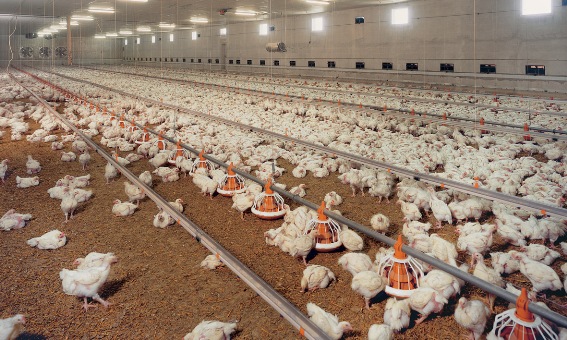

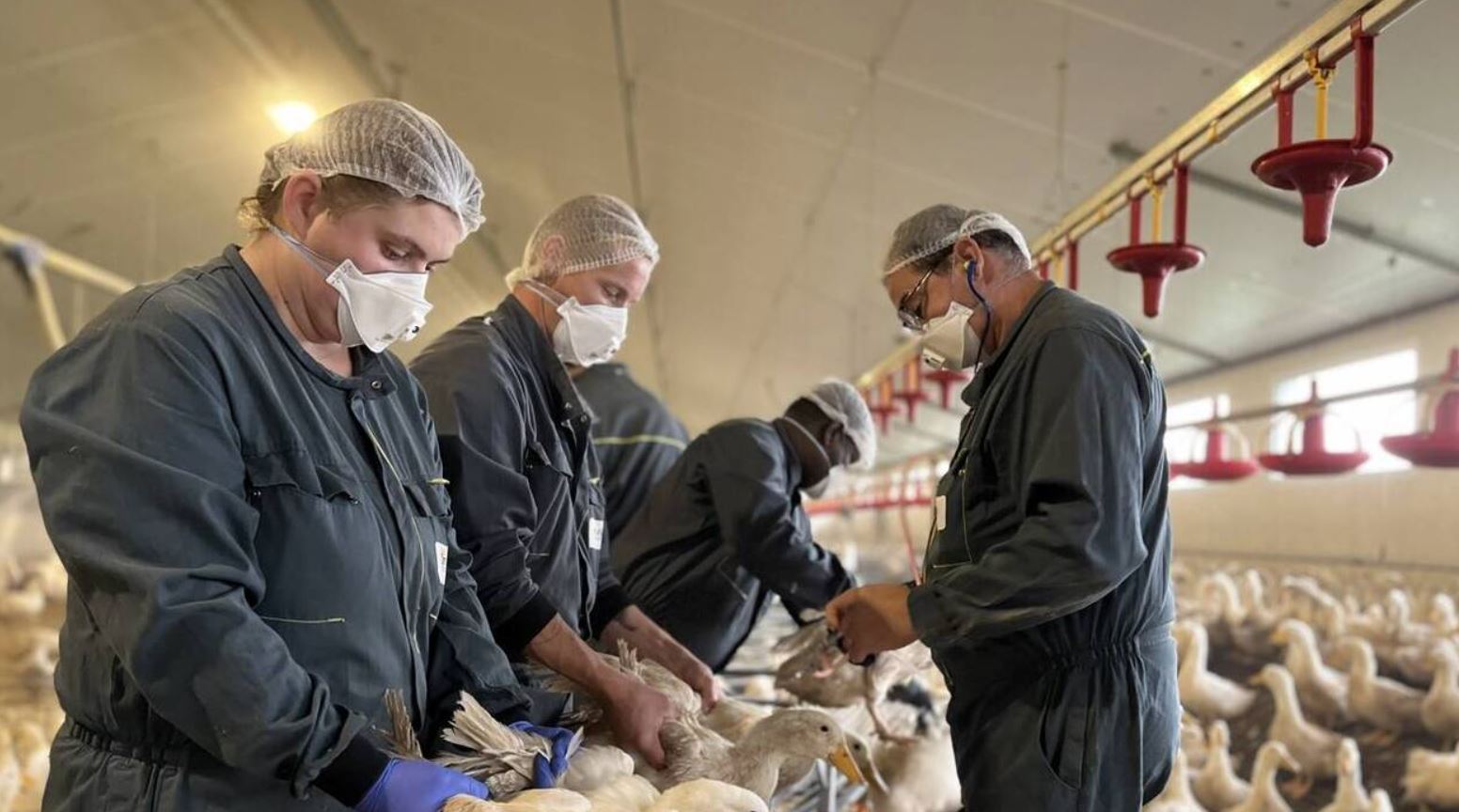
France has positioned itself as the first country in the world to implement mandatory vaccination against avian influenza in all farmed ducks intended for commercial sale. This pioneering initiative in Europe aims to protect poultry farms. Despite the ambition of the programme, there are important factors that veterinarians and poultry producers must consider.
General overview of vaccination in France:
- Mandatory status: Since autumn 2023, vaccination has been compulsory for holdings with more than 250 ducks (Muscovy, mule and Pekin breeds) whose products are destined for sale.
- Exclusion: Vaccination is prohibited for holdings with fewer than 250 ducks.
- Scale: During the first vaccination campaign, between October 2023 and September 2024, 61 million ducks were vaccinated. The campaign was repeated with the same strategy from October 2024 onwards.
- Rationale: The decision was taken following the epizootics of 2021–2022 and 2022–2023, which led to the culling of 22 and 10 million birds respectively.
- Global context: Avian influenza (HPAI H5N1) is present in 24 countries, with a constant risk due to wild bird migration. The virus (clade H5 2.3.4.4b) has spread globally since its emergence in South-East Asia 8–10 years ago. The avian influenza situation in Europe is relatively controlled, but by the end of 2024 there had been two cases in France and on 3 January 2025 a case in Portugal.
Types of vaccines used:
- Initially, the selected vaccine was from Boehringer Ingelheim, an inactivated H5 subunit product.
- Subsequently, an mRNA vaccine from CEVA was added — the first of its type to be used commercially in poultry. The CEVA vaccine is a self-amplifying mRNA vaccine encoding the H5 antigen of H5N8, encapsulated in iron nanoparticles, and contains squalene.
- In March 2024, the French authorities ordered 27 million doses of the CEVA mRNA vaccine and 34 million conventional Boehringer vaccines.
- The vaccination schedule consists of three doses.
Considerations regarding vaccine efficacy:
- Non-sterilising: The vaccines used in France are non-sterilising. This means that, although the animals are vaccinated, they can still become infected, shed the virus and transmit it.
- Viral shedding: Trials conducted by the Toulouse Veterinary School in 2022 demonstrated that the vaccines reduce viral shedding via the respiratory and faecal routes, as well as transmission between birds. Nevertheless, cloacal shedding persists for 14 days and is only marginally reduced compared with unvaccinated animals.
- Transmission: The vaccine limits transmission through direct contact and eliminates airborne transmission. Some vaccinated animals may remain infectious for 3 days and transmit the virus to other ducks, although these secondary contacts do not shed the virus intestinally.
- Variants: The use of vaccines may favour the emergence of viral mutants. A Chinese study showed that a mandatory poultry vaccination programme resulted in the emergence of a new viral mutant. Furthermore, vaccination can exert immunological pressure on circulating strains, favouring strains not covered by the vaccine.
Effects on marketing and the consumer:
- Export restrictions: Vaccination of birds destined for export is prohibited, which has a commercial impact on French producers.
- Food safety: The French health authorities have not established any precautions regarding the meat of vaccinated ducks. In contrast, the United States stipulates a withdrawal period before sale to ensure no vaccine residues remain in the meat. Additionally, there are legislative proposals to require detailed labelling of the vaccines administered to slaughter animals.
- Possible mRNA transmission: The mRNA in the CEVA vaccine is encapsulated in lipid nanoparticles, which may resist gastric juices. There is a theoretical possibility that, if the meat is not thoroughly cooked, the vaccine mRNA could be absorbed by the consumer. Although this has not been studied in ducks, studies in humans have demonstrated that vaccine mRNA can be incorporated into exosomes and transmitted to other cells.
- Possible mRNA transmission: There is a theoretical possibility that, if the meat is not thoroughly cooked, the vaccine mRNA — being encapsulated in lipid nanoparticles — could be absorbed by the consumer. Although this has not been studied in ducks, studies in humans have demonstrated that vaccine mRNA can be incorporated into exosomes and could hypothetically be transmitted to other cells.
Outbreak cases in vaccinated animals:
- Cases of avian influenza have been confirmed in vaccinated animals. For example, an outbreak was detected on 6 November 2024 on a duck farm where the birds had been vaccinated against HPAI.
Additional points:
- Since the start of the mandatory vaccination campaign, the health authorities increased the vaccination of mule ducks to three doses. This third dose is administered under the responsibility of the veterinarian, as the ATUs (temporary authorisations for use) for the vaccines only cover two doses.
- In July 2024, the Ministry of Agriculture proposed booster doses for breeder ducks.
- Following the detection of an avian influenza case in Eure in December 2024, PCR testing every 15 days was prescribed for vaccinated birds.
Conclusion: vaccination is working, but continuous monitoring and evaluation of its benefits and any potential drawbacks that may arise are essential.
Vaccination against avian influenza in France is an innovative approach, but it is not without challenges. Veterinarians and poultry producers must be aware of the limitations of current vaccines, the risk of variant emergence, and the implications for public health and international trade. It is essential that ongoing monitoring is carried out and that further research is conducted to evaluate the safety and efficacy of the vaccines.
Source:
-. “Vaccination des canards contre la grippe aviaire en France” Preprint, January 2025. Dr. Hélène Banoun
For further information:
-. Avian Influenza on NeXusAvicultura.com