
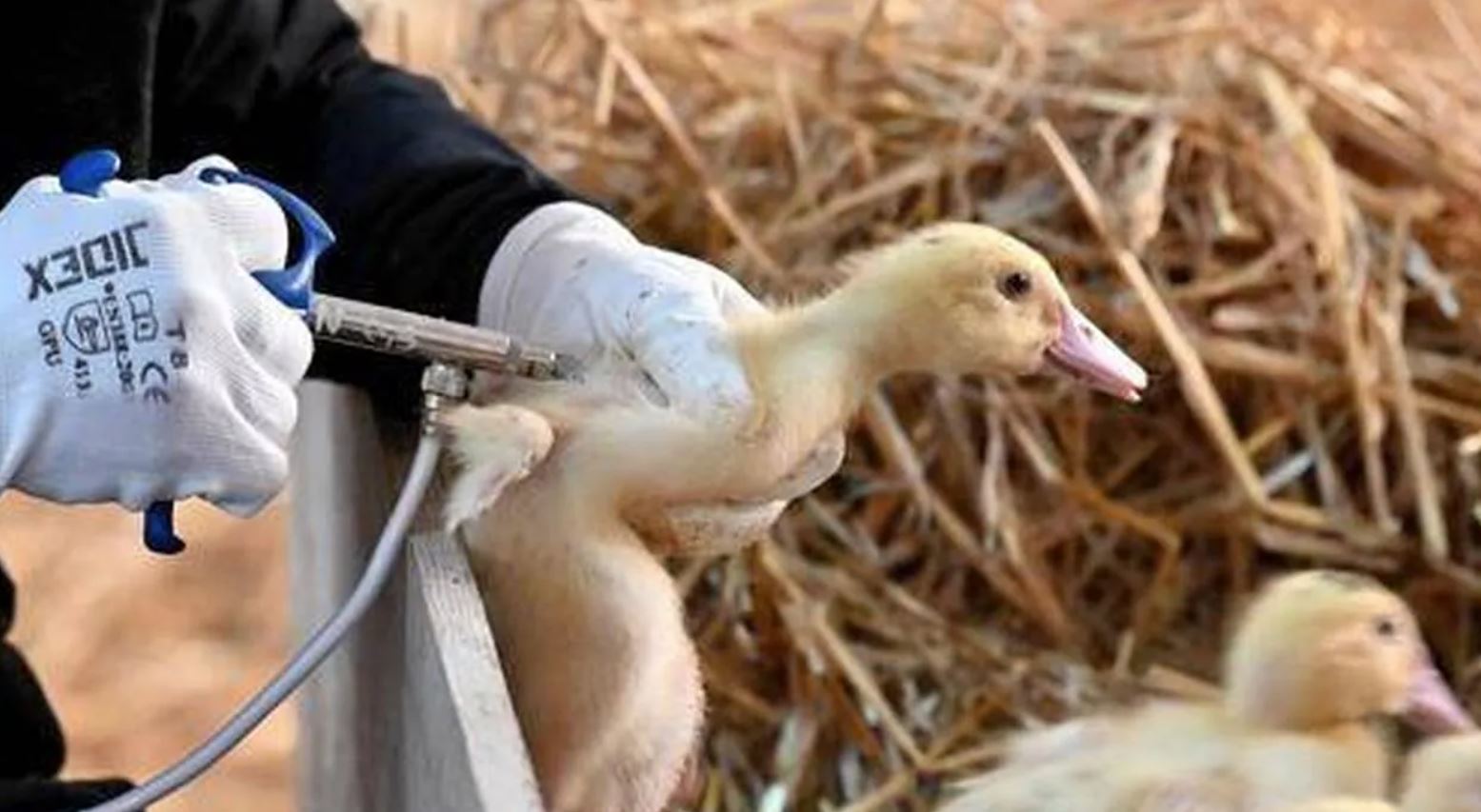
Based on the results recorded during the first (2023/2024) compulsory vaccination campaign in ducks against avian influenza, with only 10 outbreaks out of the 701 that were feared could have occurred without vaccination, the French Ministry of Agriculture has launched the 2024–2025 campaign. This second campaign aims to vaccinate 60 million ducks, achieving 70% coverage by the end of the year.
In the absence of vaccination, France could have experienced up to 701 farm outbreaks in 2023–2024 compared with the ten outbreaks actually recorded: this is the conclusion of a study carried out by the Chair of Biosecurity and Avian Health at the National Veterinary School of Toulouse (IAP Unit – ENVT-INRAE). The researchers reached this conclusion using predictive models, based on outbreak data detected on farms and in wild birds across several Western European countries since 2016.
Savings of over €900 million compared with a scenario without avian influenza vaccination
€96 million vaccination cost versus over one billion euros in compensation payments in recent years — an unqualified success.
On 1 October 2023, France launched an unprecedented vaccination campaign worldwide, with WOAH approval, but not without risking the loss of certain export markets from countries concerned about the silent spread of the virus. The State had allocated €96 million to the programme, a virtually painless outlay compared with the compensation payments generated by the epizootics of recent years, with a cumulative amount of over €1 billion across the last three campaigns, according to ministry data. In the current season, France has recorded four farm outbreaks since 1 August.
Identical strategy in 2024/2025 compared with 2023/2024
The lessons learned by the National Veterinary School of Toulouse only serve to reinforce the Ministry of Agriculture’s decision to renew exactly the same strategy, consisting of vaccinating the most susceptible species, namely ducks. Vaccination is compulsory for farms with more than 250 birds (Muscovy, Mulard and Pekin) whose products (meat and foie gras) are intended for commercial sale. This covers the entire French territory (with the exception of Corsica), representing approximately 62 million ducks to be vaccinated across 2,500 farms, according to the ministry.

70% covered by the State
Regarding the financial aspect, the State is committing €100 million, sufficient to fund up to 70% of the vaccination campaign through to the end of the year. Following an agreement with the inter-trade organisations, the State is responsible for 100% of vaccine procurement, storage and delivery of vaccine doses, veterinary supervision of vaccination operations, the conduct of monthly active surveillance (monitoring of low-level virus circulation in vaccinated ducks) and the corresponding laboratory analyses.
The farming sectors are responsible for duck vaccination interventions and analyses carried out within the framework of weekly so-called “passive” surveillance to detect any possible virus circulation, based on samples taken by the farmer or duck farm technician from ducks found dead or sick.
For further information:
-. Avian Influenza on NeXusAvicultura.com