
The Ministry of Health will acquire avian influenza vaccines in the next EU joint procurement process because, although no cases of human-to-human transmission have occurred, the epidemiological situation has changed since June, when it chose not to acquire them.
This was explained by the Secretary of State for Health, as reported by the EFE news agency, Javier Padilla, during “El primer café” organised by Medicina Responsable, in which he highlighted that Spain is reviewing stocks of items such as ventilators, face masks, protective garments and diagnostic tests, and is participating “very actively” at the European level in monitoring the response to a potential increase in transmission.
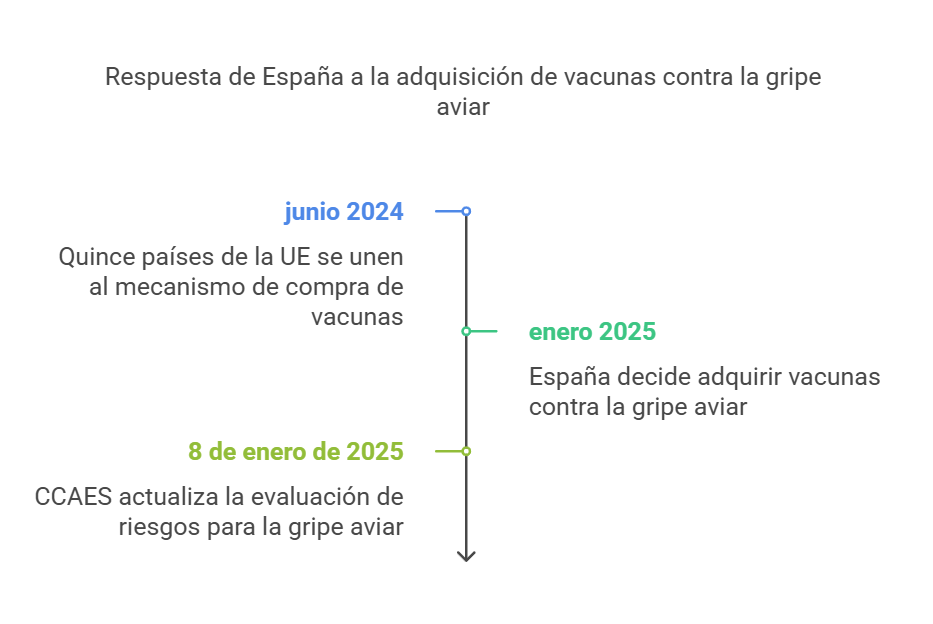
The Ministry of Health initially ruled out joining the EU’s centralised vaccine procurement mechanism, to which fifteen countries had adhered in June 2024 to acquire avian influenza vaccines, citing the low probability of human transmission in Spain, although it left the door open to doing so if necessary — as has indeed now happened in January 2025, and all the more so given AI outbreaks as close as the recent one at a laying hen farm in Portugal.
Specifically, the European Health Emergency Preparedness and Response Authority (HERA) signed on 11 June a joint procurement contract for the supply of up to 665,000 doses against the zoonotic influenza virus, which can be transmitted from animals to humans, in response to the outbreak in the United States affecting poultry and, for the first time, dairy cattle.
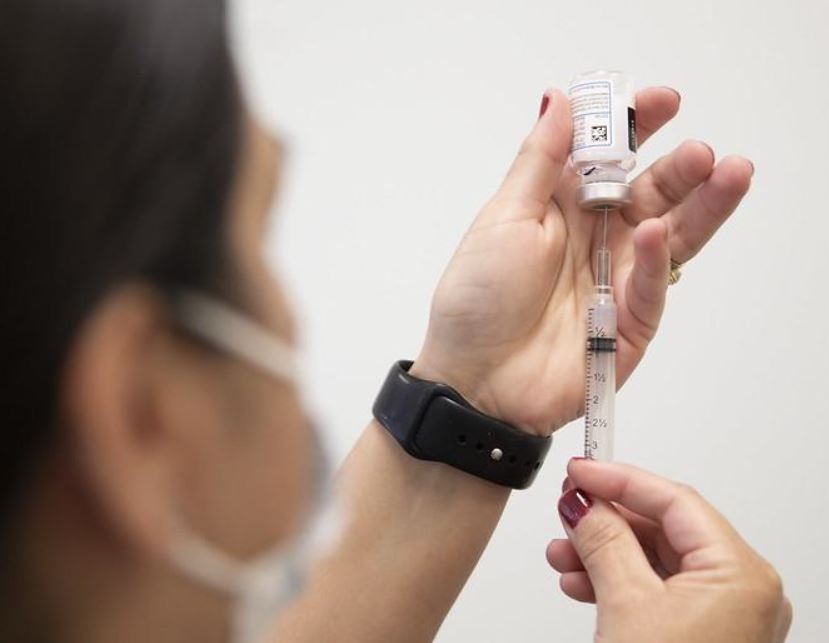
This was done with the objective of preventing avian influenza in people and preparing for a potential pandemic, to distribute the vaccine among the population most exposed to possible infections, such as poultry farm workers and veterinarians. The contract included an option for the supply of an additional 40 million doses over its four-year duration.
Spain decided at the time not to acquire vaccines because “the available evidence on effectiveness in terms of immunogenicity was extremely low at that point“, but now considers that the epidemiological evolution — with 66 confirmed human cases in the United States, one fatality and nearly 700 dairy cattle herds affected across several states — is a different matter.
Even so, Padilla has insisted that the “fundamental element that determines pandemic potential — namely human-to-human transmission — has not yet occurred“.
Indeed, on 8 January 2025, the Health Alerts and Emergencies Coordination Centre (CCAES) updated its risk assessment report for Spain regarding this influenza, maintaining it at “very low” for the general population and “low” for those most exposed, such as farm workers.
Nevertheless, the Ministry of Health has now opted to purchase vaccines because “the more tickets we buy, the more cases there are — both at the animal level and from animal to human — the greater the likelihood that certain adaptive mutations will occur in the virus that produce that species jump“.
The second-in-command at the Ministry of Health believes it is “normal to be more sensitive to certain news”, but has stressed that “if right now we had to look at an epidemiological situation that should concern us, it is not China — it is the United States, and it would be related to avian influenza“, he concluded.
To learn more:
-. Avian Influenza on NeXusAvicultura.com
-. Vaccination of poultry farm workers on NeXusAvicultura.com