
The Health Emergency Preparedness and Response Authority (HERA) of the European Commission has signed a joint procurement framework contract for the supply of avian influenza (AI) vaccines to member states. The contract initially includes 665,000 doses of vaccines against avian influenza H5N1 in its most up-to-date formulation, as well as the option to acquire a further 40 million doses over the duration of the contract.
As of now (June 2024), fifteen countries are participating in this joint procurement programme, and the first doses will be received by the health authorities of Finland.
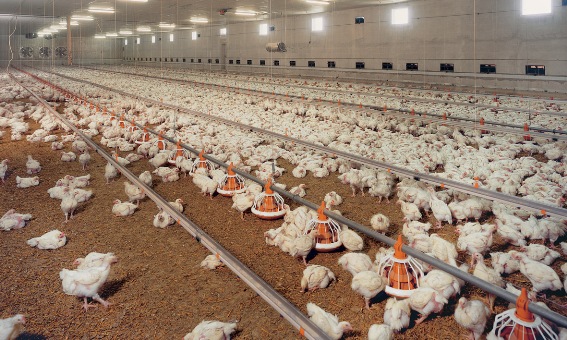
The Commission and the various health agencies state that they continue to monitor the AI situation in the EU very closely, and recall that EU rules already exist on the measures to be taken in the event of an outbreak in domestic poultry, as well as a robust framework of preventive and remedial measures in place in the event of infections in animals.
With regard to human health, European health security legislation ensures surveillance, rapid response and coordination at EU level in the event that a case is detected.
To date, the European Medicines Agency (EMA) has authorised certain antiviral medicines for the treatment of human influenza cases in the EU (Dectova, Ebilfumin, Tamiflu, Xofluza).
Europe has also been preparing for a potential AI pandemic with the recent authorisation of two new vaccines that can be adapted to whichever strain is circulating. And while no one can guarantee that the H5N1 virus will be the driver of the next pandemic, virologists have been concerned about it for decades and there are many indications that it could be.

Two AI vaccines with different but complementary approaches
In anticipation of that risk, the EMA has approved two vaccines from the same pharmaceutical company, Celldemic and Incellipan, both from the same pharmaceutical company, one of the world’s largest vaccine manufacturers.
The first is based on an AI strain that circulated in birds in 2005, but would elicit an effective protective response against whichever virus is currently circulating, and is intended for higher-risk population groups, such as poultry farm workers and those in their immediate environment, due to their direct contact with animals capable of transmitting the disease.
The other is the only one designed to address global immunisation in the event that an AI pandemic is officially declared. However, it is not a finished product as such, but rather a manufacturing platform that would allow rapid adaptation to whichever virus is circulating at that time.
Both are administered in two separate doses and are intended for adults and children from six months of age.
For further information:
-. WHO: Avian influenza vaccination: why it should not be a barrier to safe trade
-. Avian Influenza on NeXusAvicultura.com