
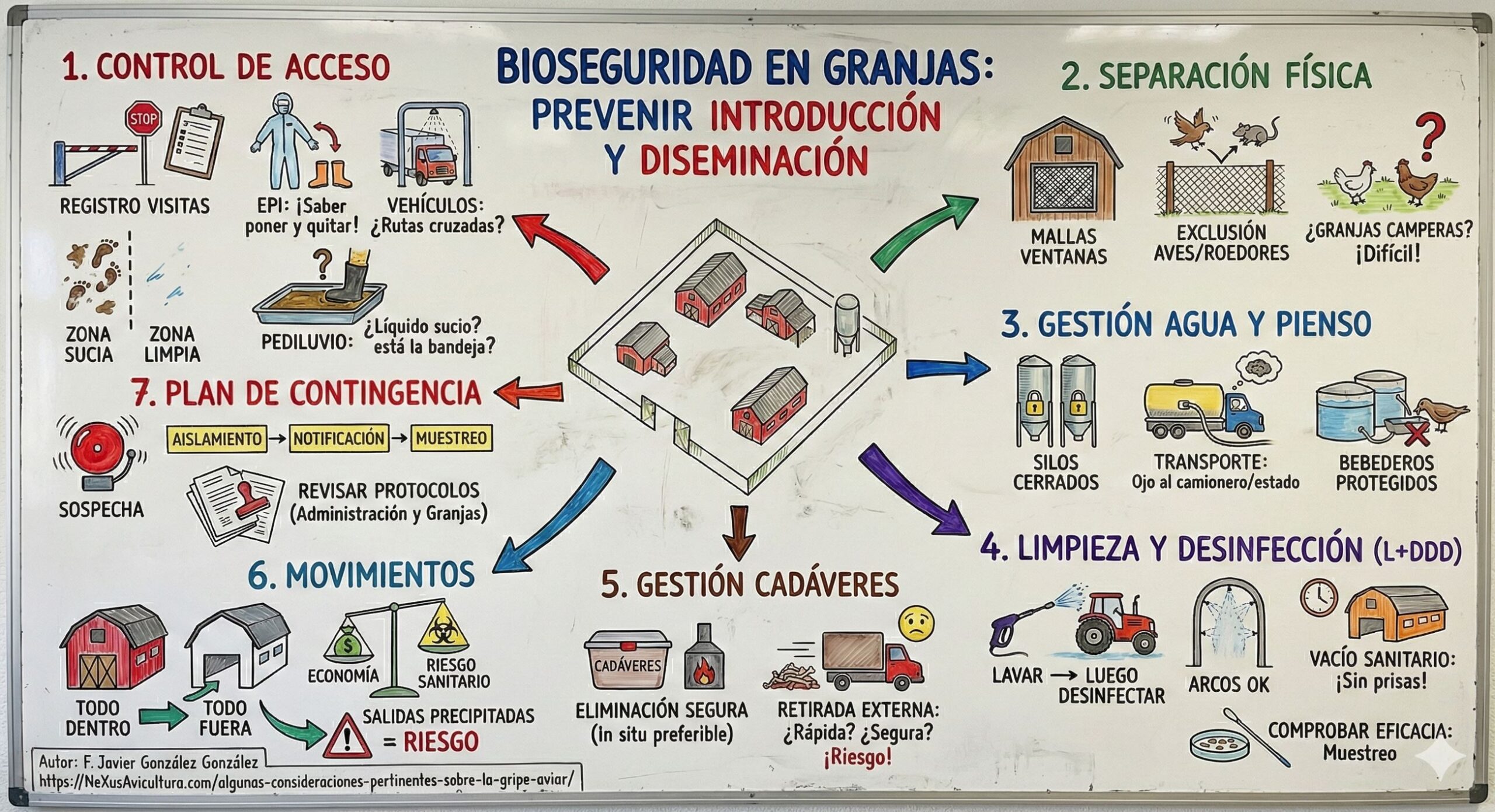
F. Javier González González
Veterinarian STC Avicultura Nanta
Valladolid, 25 Oct. 2025. First of all, I must acknowledge that I am no expert on avian influenza, and my only credentials for venturing to write these lines are my 35 years of experience as a “field technician” in poultry farming, and my first-hand knowledge of most of the people who have been suffering the effects of this disease in the flesh so far this year.
Because, you will agree with me, it is not the same to see on the news that in Mexico or in the USA “x” millions of hens have had to be culled, as it is to receive a call from a friend telling you he has a positive result and that he must cull all his birds.
This year, for laying hens alone, we have already culled more than 2.5 million birds in Spain. I did a simple exercise and it turns out that if we lined all these birds up in single file they would stretch over 1,000 km — the distance between Madrid and Paris. They seem like rather more that way, don’t they?
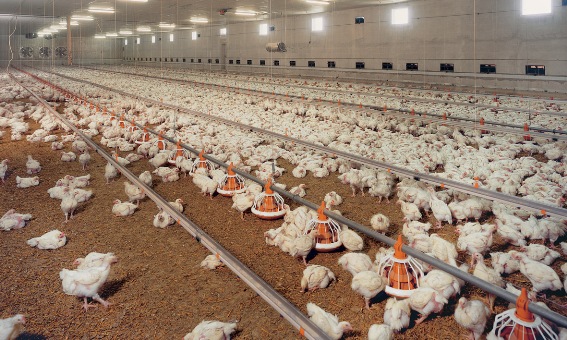
To this figure we must add the economic implications, both in terms of the value of the animals themselves and the loss of earnings from the absence of eggs for no fewer than 6 months (if all goes well), or from being unable to place the broiler flocks that were due; plus the damage to poultry production activity itself, both internally, due to restrictions on animal movements (who would dare to fill a broiler house located 4–5 km from an outbreak?), and in terms of the impact of export restrictions.
Who would dare to fill a broiler house located 4–5 km from an outbreak?
In short, a landscape that I believe provides the ideal framework for discussing future actions that could help make things calmer going forward. And this also means “opening the debate” on the use of vaccines.
Let us take a quick look at the current control measures:
- Sanitary measures and preventive culling of infected and contact flocks, followed by cleaning and disinfection.
- Control of movements of birds, eggs and products, and establishment of protection and surveillance zones.
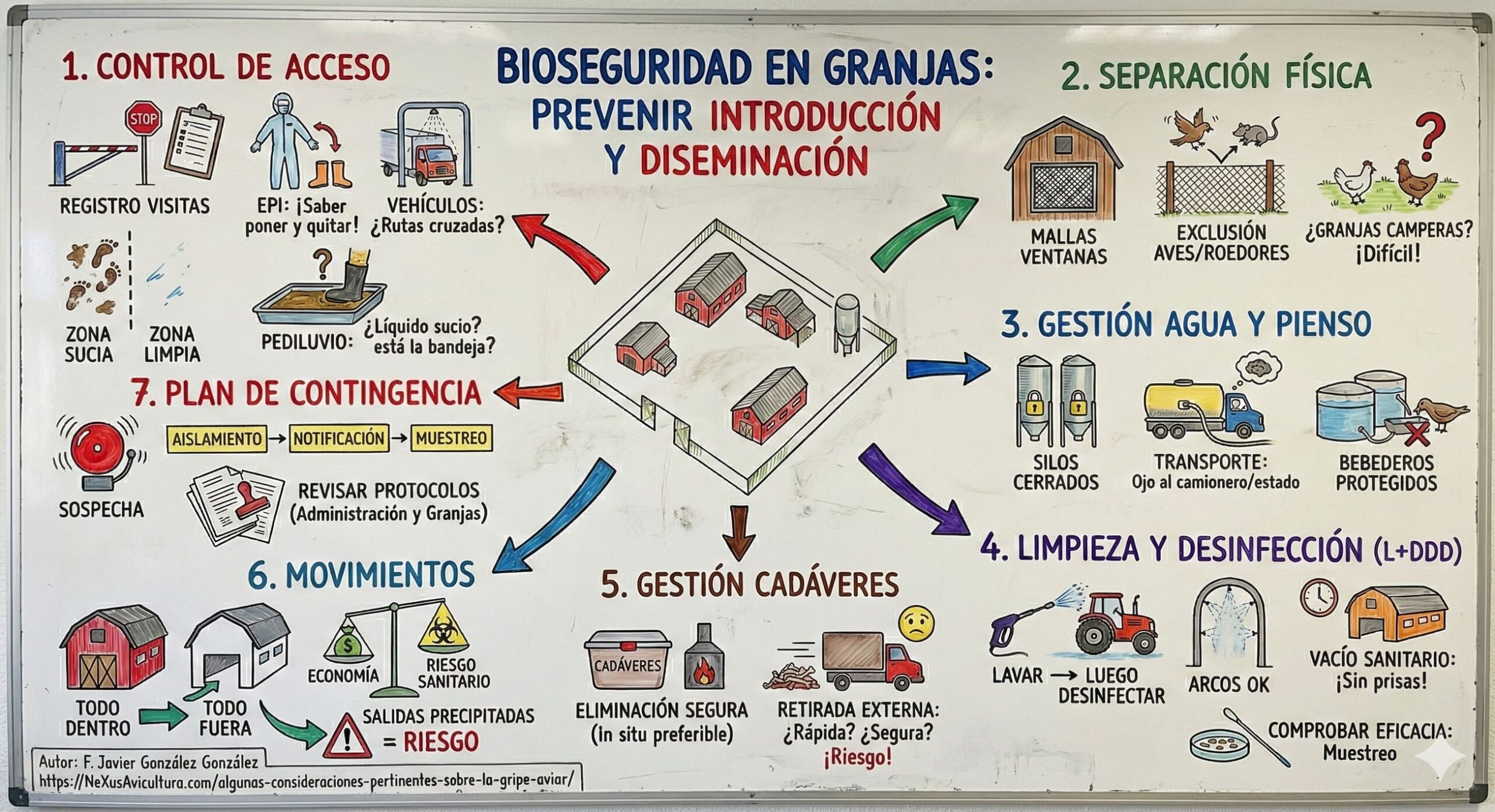
- Farm biosecurity to prevent introduction and spread.
- Epidemiological surveillance and mandatory notification, with sampling and laboratory testing.
- Vaccination as a complementary measure in high-risk contexts, subject to risk assessment and regulatory requirements.
We will now attempt to offer some “practical” observations within each heading — and this is where science meets “other considerations”:
Sanitary measures and preventive culling of infected and contact flocks, followed by cleaning and disinfection.
This year it has become clear that, setting aside differences between autonomous communities, we face serious limitations in meeting this requirement on time and in the proper manner. The current system of containers and CO2 simply lacks the culling capacity needed to handle farms of 800,000 hens. The biosecurity implications are severe: having to remove birds from farms in small batches, birds flapping, contact with the outside environment (whether in sunshine or wind), removing carcasses, transporting them off the premises… We are facilitating viral transmission, and I can only see two solutions: on-farm culling and burial (where space permits) within the farm’s own land. I am aware that these methods have serious drawbacks, but I cannot think of any other option. There is also the possibility of increasing culling capacity (more or larger containers), but I struggle to see that happening. I leave this first point open for debate.
Control of movements of birds, eggs and products, and establishment of protection and surveillance zones.
In this case, the most important factor is speed of response. I believe that at the first serious suspicion of the disease — even before a confirmed positive — all movements (birds, eggs, manure, etc.) should be frozen within a radius of at least 3 km. The next step is for the Administration to reinforce its presence in these areas (two or three official veterinarians are wholly insufficient to serve zones of high poultry concentration, as was the case this year in Valladolid — however well-intentioned they may be), and to carry out the necessary checks as swiftly as possible in order to define specific, tailored actions for each case based on the results. Second point for debate.
Farm biosecurity to prevent introduction and spread.
On this point I think it is important to go through things step by step. Let us outline the most important measures recognised at global level:
- Access control: essential visits only, visitor logbooks, Personal Protective Equipment (PPE) and footdips. On this point I would invite each reader to reflect on how these measures are actually implemented in practice. Particular attention should be paid to vehicles (feed, livestock, manure, etc.), especially those known to visit other farms. PPE must not only be available — people also need to know where to put it on and where to take it off. Distinguishing clean from dirty areas may seem straightforward in theory, but I can assure you it is far from simple in practice, especially on large units with multiple houses arranged in a row. And as for footdips and wheeldips… there is not a day goes by that, on at least one of the farms I visit, we do not have to comment on either the sorry state of the liquid that is supposed to be disinfecting your boots before you enter the house, or the fact that the disinfectant mat has turned black, or where the tray has been left. This requires serious attention.
- Physical separation: wire mesh on windows, exclusion of wild birds, rodent control and control of other species. It is self-evident that these practices are difficult to maintain in free-range and organic systems, both of which involve access to outdoor ranges. It is already challenging to achieve this in enclosed houses, where it is relatively common to see wild birds flying inside — to say nothing of rodents, or the cats that some producers keep to combat both “pests”. Of course, plans must be in place, but their effectiveness must also be monitored so they can be updated and adapted as needed.
- Water and feed management: closed and protected tanks and silos. These are vitally important matters. As a risk factor for the issue at hand, I believe the most critical aspect here is feed transport and everything it entails (the condition of the vehicle itself, driver behaviour, reception at the farm, etc.). As so often, it is the accumulation of many small details that makes the difference. Regarding water, having closed tanks and preventing wild birds from accessing drinkers (and feeders) — obvious as it may seem — are also areas worth reviewing.
- Cleaning and disinfection: intensify C&D procedures for equipment, water lines, feeders and vehicles. Clean first, then disinfect. Have the appropriate equipment available and ensure that disinfection tunnels or arches are properly maintained and functioning correctly. Carry out downtime periods correctly and allow sufficient time for them (particular care needed with broiler production and the pressure to refill houses quickly). Verify afterwards that what has been done has actually achieved its purpose (surface swabbing, water testing, etc.) and make decisions that are documented and evidence-based.
- Carcass and by-product management: safe and rapid removal and disposal. In the event of an outbreak we have already noted that this becomes very complicated: the volumes to be disposed of, the disposal method, haulage routes, etc. All of this means that, in the case of farms with large numbers of birds, removal is neither safe nor rapid. For this reason, we return to the first point and advocate, wherever possible, for these operations to be managed within the farm premises.
- Movements: minimise movement of birds and materials into and out of the farm; all-in/all-out management. These are practices inherent to production itself and therefore unavoidable. In the event of an outbreak, companies are acutely aware of the economic impact of being unable to move birds in or out of restriction zones, and it is not always easy to make quick, sound decisions. We tend to try to move animals/eggs out of these zones as soon as possible, with the consequent risk that we all know. I emphasise: it is not easy, however well we may know “the theory”.
- Contingency plan: protocols upon suspicion (isolation, notification, sampling). This is as important as it is infrequent. I expect that, following the experience of this year, many companies will reconsider this issue. Equally — if not more — important is that the Administration reviews its own plans and protocols, because this year they were clearly overwhelmed by the sheer number of animals affected. There is no doubt that these protocols need to be revised.
Epidemiological surveillance and mandatory notification, with sampling and laboratory testing.
This is already underway. As I said, the protocols can be improved — above all in terms of the speed of obtaining results. Nor should we forget that surveillance must begin on the farm itself. I say this because no one wants a positive avian influenza result, and there is none so blind as those who will not see. Reacting quickly to a “more or less” sudden increase in mortality is essential, but very difficult when you consider what may lie in store for you. From here, all we can do is recommend reporting promptly, because what “lies in store” in the event of a delayed notification is far worse than when the response is swift. In the future, it would not be inconceivable that, as is already done with zoonotic salmonellas, a specific annual AI virus monitoring and self-monitoring programme be established. And this point may serve as a useful introduction to the last and most controversial topic.
Vaccination as a complementary measure in high-risk contexts, subject to risk assessment and regulatory requirements.
At present, unless I am misinformed, we already have inactivated vaccines (H5/H7 subtypes) and recombinant vaccines (vectors) available. Within the EU, their use is permitted under plans approved by the European Commission and subject to EFSA evaluation. In the USA, vaccination in commercial poultry remains very restricted, with a preference for culling and biosecurity due to the trade and surveillance implications that will be obvious to all.
The problems associated with mass vaccine use range from the difficulty of differentiating vaccinated from field-virus-infected animals, to international trade complications. And all this without forgetting that, for the time being, vaccines are administered by injection (some can now be given in ovo), and that in the case of laying hens, two doses are required, with immunity not extending beyond 6 months. There are also issues relating to logistics, costs, documentary controls, and so on.
And perhaps the greatest concern is that mass vaccination would mean resigning ourselves to coexisting with a virus that has zoonotic potential and an enormous capacity to mutate.

We know that France took the decision to vaccinate 61 million ducks in 2023. The result was a drastic reduction in outbreaks (315 outbreaks in 2022 versus 10 in the same period the following year, and of those 10, only 2 in vaccinated flocks). The economic impact was also assessed and the balance came out strongly in favour of vaccination (cost of the vaccination campaign approximately €105 million versus losses in 2021–22 estimated at €1.4 billion). Indeed, France regained HPAI-free status in February 2025 following a final outbreak in January.
In the Netherlands, vaccination of some laying hen and duck flocks in high-risk areas was also trialled, with good protection results, though on a very limited scale as it remained a pilot project.
the prevalence of the virus in wild birds is demonstrated to be greater every day, which means there is no point in considering the possibility of eradicating it
Currently, there are already experimental vaccines based on mRNA technology (similar to COVID vaccines), which would represent a highly significant advance given their numerous advantages:
- Speed of development: they can be designed within hours of sequencing a new strain, compared to the months required by traditional egg-based vaccines.
- Antigenic flexibility: the composition can be updated easily in response to emerging variants.
- More agile production: not dependent on fertile eggs, thus avoiding bottlenecks during pandemic situations.
- Strong and durable immune response in laboratory animals, with protection against severe disease and death.
However, they are not yet available.
As a veterinarian I am “torn”, because on the one hand, from a Public Health perspective, I cannot align myself with widespread vaccine use, but on the other hand — and also as a veterinarian — seeing so many animals culled that could have been immunised makes me want to advocate for it. Likewise, as a taxpayer, I find the economic cost of these outbreaks unbearable. A further argument in favour of vaccination is the fact that the prevalence of the virus in wild birds is demonstrated to be greater every day, which means there is no point in considering the possibility of eradicating it. We live with the certainty that we will have to continue to suffer this scourge in the coming years, and with the hope that it will not “happen to us”.
Before concluding, one further point for debate: the larger the production unit (the bigger the farm), the greater the biosecurity risk. Does this mean we should move towards smaller, and therefore less efficient, production models? The answer is almost certainly “no”, but I think it is worth reflecting on the what and the how. Something will have to change.
And on that note, I will leave it there. I hope that, even if I have been “more or less wrong” about some things, I have at least managed to encourage readers to engage in debate and to seek out future alternatives.
Let us be optimistic and work together to make things better.
F. Javier González González
Veterinarian STC Nanta
See other articles by this author
Want to stay one step ahead in poultry production?
Subscribe free to our eNewsletter and receive a weekly selection
of the best information to anticipate trends, stay up to date and grow as a poultry industry professional.
NeXusAvicultura: Vision, Insight, Quality and Context.