

New accurate tests can specifically detect highly pathogenic avian influenza, also known as bird flu. These tests, developed by the European Joint Research Centre (JRC), enable tracking of the virus’s spread across various sample types, including wastewater.
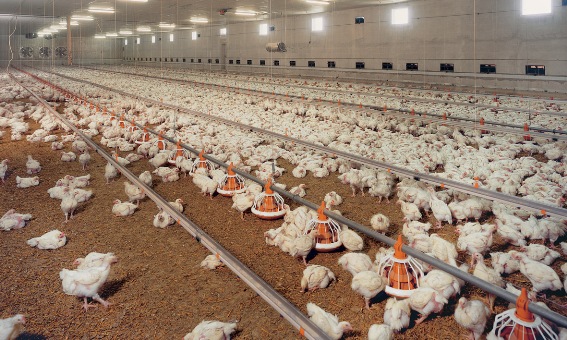
Avian influenza A(H5N1) is a highly contagious disease in birds that has already infected millions of them and is now emerging in some mammals. It is spreading rapidly worldwide, which has led to mass culling of hens and chickens on poultry farms due to its highly contagious and deadly nature. This has caused significant disruptions to the global poultry industry, with examples including rising egg prices in the USA and restrictions on exports of poultry products, as occurred this summer in Spain or in spring in Brazil.
Avian influenza is generating concern because it can cross the species barrier and infect mammals, including cattle, cats, and humans. Although it has not spread between people, its ability to infect mammals raises public health concerns and demands increased monitoring.
The new tests allow outbreaks to be detected and responded to much more rapidly and effectively.
What technology underpins the new tests?
The European Joint Research Centre, in collaboration with the European Union Reference Laboratory (EURL) for Avian Influenza and Newcastle Disease, the Belgian institute Sciensano, and the Istituto Superiore di Sanità of Italy, developed two digital RT-PCR assays: one capable of specifically detecting influenza A(H5Nx) clade 2.3.4.4b viruses, known for their global spread, and a second capable of detecting a broader range of influenza A viruses, including seasonal influenza. These assays can be used separately or in combination as a single diagnostic approach (duplex assay).
Reverse Transcription Polymerase Chain Reaction (RT-PCR) is a laboratory technique used to detect the presence of a specific ribonucleic acid (RNA) in a sample. RT-PCR-based assays can identify RNA containing the genetic material of specific viruses, including influenza viruses such as the one that causes avian influenza. Detection of this RNA in a clinical sample indicates that the individual tested, whether human or animal, has been infected by the virus.
The new digital RT-PCR tests are more advanced and sensitive than conventional versions of RT-PCR. Digital tests are a high-precision method for detecting and quantifying small amounts of viral RNA genetic material, even in complex matrices such as wastewater samples, where more than one virus may coexist.

The novelty of the digital RT-PCR assays lies in their ability to specifically distinguish between A(H5Nx) clade 2.3.4.4b viruses and other influenza A viruses, including human seasonal influenza, in a single test. Previously, distinguishing between these viruses was more cumbersome, costly, and time-consuming, often requiring multiple tests and sequencing.
The assays were rapidly developed using a JRC-pioneered specific computational workflow, previously applied with success for the development of SARS-CoV-2 assays:
- For the specific detection of BA.2.86 SARS-CoV-2 and its descendant sublineages (2024).
- For the detection of current and future SARS-CoV-2 variants (2023).
Another example is the use of this computational workflow in the production of a certified reference material — the first of its kind in the EU — to improve the accuracy of COVID-19 testing.
For the new RT-PCR assays, the workflow analysed thousands of avian influenza sequences to identify the most conserved and clade 2.3.4.4b-specific genetic elements, enabling precise and rapid differentiation in complex samples.
The new tests allow outbreaks to be detected and responded to much more rapidly and effectively. The tests are ready and available for use by all laboratories involved in avian influenza surveillance, including those participating in wastewater surveillance.
For further reading:
-. Novel (d)PCR assays for influenza A(H5Nx) viruses clade 2.3.4.4b surveillance. Euro Surveill. 2025;30(33):pii=2500183.
https://doi.org/10.2807/1560-7917.ES.2025.30.33.2500183
-. Avian Influenza on NeXusAvicultura