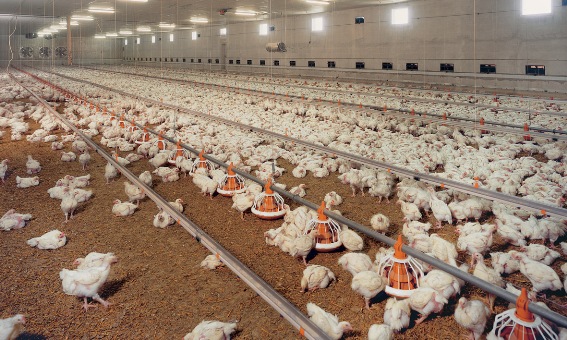


Lidl sues animal welfare organisation OBA (Observatorio de Bienestar Animal), formerly known as Equalia, to protect its reputation and combat food safety misinformation.
The company announces that should the courts award damages, these will be donated in their entirety to social projects.
- The supermarket chain is taking legal action against activist organisation OBA after being the target of repeated disinformation campaigns based on distorted, unsubstantiated and unverified information
- In the face of misinformation, Lidl stands by the scientific evidence, supported by independent experts as well as audits carried out by certification bodies
- For more than 30 years, the company has been committed to the highest food safety standards, guaranteed through recognised certifications such as the ISO 9001:2015 quality management system and IFS Food (International Featured Standards Food) and BRC (British Retail Consortium) accreditations, which are required of all its suppliers
- Any damages awarded in the legal proceedings will be donated to initiatives promoting social projects
Specifically, in recent years this organisation has promoted disinformation campaigns that not only lack any scientific basis but also directly damage the company’s honour and reputation.

The supermarket chain has stated that these false claims, or ‘fake news’, have generated a mistaken perception of food safety within the sector, inducing consumers to feel a sense of insecurity that does not reflect the reality of a highly regulated sector, according to a press release issued by the company.
For more than 30 years, Lidl has maintained a firm commitment to food safety, demanding the highest standards from all its suppliers to ensure that products are maintained in the best possible condition from the manufacturer through to the end consumer.
OBA has used this social alarm strategy in an attempt to pressure the company into signing up to the European Chicken Commitment (ECC)
To this end, the company highlights that it carries out “exhaustive controls” throughout the entire supply chain via independent and accredited bodies. In line with this, its products and its sustainable production model are underpinned by internationally recognised quality accreditations, including the ISO 9001:2015 quality management system and IFS Food (International Featured Standards Food) and BRC (British Retail Consortium) certifications, which are required of all its suppliers.
In addition to these company-level reviews, the authorities and health services also carry out rigorous inspections of all its suppliers, thereby ensuring compliance with all applicable legislative requirements.

Lidl has stated that the accusations made by OBA have been “systematically discredited by independent experts”, and that complaints filed by OBA itself in connection with some of its defamatory campaigns were dismissed by the courts, demonstrating the lack of scientific rigour in its claims and the use of distorted, unsubstantiated and unverified information.
Companies that refuse to be held accountable to the animal welfare lobby are placed in the crosshairs, while those that accept its demands or agree to work towards addressing their alleged “shortcomings” are included in their annual reports listing “good companies” and “bad companies”.
In this way, the brand makes clear that the lawsuit filed is not driven by financial motives, but by the defence of its honour and the fight against misinformation. Accordingly, should the courts award damages, the company will donate those funds in their entirety to initiatives promoting social projects.
In recent years, the food sector has faced a growing wave of misinformation, characterised by out-of-context news items, alarmist headlines and unfounded alerts that are not backed by the competent public authorities responsible for food safety and nutrition in Spain.
In this context, Lidl denounces the fact that misinformation can harm the sector and create confusion among consumers, and calls upon organisations to act responsibly and upon dissemination platforms — particularly media outlets, most of which already operate professionally and ethically — to uphold rigorous standards.
An unfounded attack on transparency and scientific rigour
The accusations levelled by OBA have been systematically discredited by independent experts, and complaints filed by OBA itself in connection with some of its defamatory campaigns were dismissed by the courts, demonstrating the lack of scientific rigour in its claims and the use of distorted, unsubstantiated and unverified information.
For Lidl, OBA has used this social alarm strategy in an attempt to pressure the company into signing up to the European Chicken Commitment (ECC). Although the company shares the objectives of the ECC, it prefers to achieve them through its own monitoring and continuous improvement mechanisms, taking the entire value chain into consideration.
complaints filed by the OBS animal welfare activists were dismissed by the courts themselves
In this regard, Lidl underlines that the lawsuit filed is not driven by financial motives, but by the defence of its honour and the fight against misinformation. Accordingly, should the courts award damages, the company will donate those funds in their entirety to initiatives promoting social projects.

A call for informational responsibility
In recent years, the food sector has faced a growing wave of misinformation, characterised by out-of-context news items, alarmist headlines and unfounded alerts that are not backed by the competent public authorities responsible for food safety and nutrition in Spain. In this context, Lidl denounces the fact that misinformation can harm the sector and create confusion among consumers. The company therefore calls upon organisations to act responsibly and upon dissemination platforms — particularly media outlets, most of which already operate professionally and ethically — to uphold rigorous standards.
Through this action, Lidl reaffirms its commitment to transparency and food safety — the cornerstones of its business model. The company also pledges to continue improving its processes on an ongoing basis through collaboration with independent laboratories and certification bodies, working closely with its suppliers and promoting sustainable and safe practices, while always guaranteeing the highest standards across all its products.
Some recent attacks:
-. Spring 2024: Animal welfare organisation accuses LIDL of having 70% of its chicken contaminated with bacteria
-. Spring 2023: More than 70% of Lidl’s German chicken is contaminated with antibiotic-resistant bacteria
-. Spring 2023: Equalia documents chickens “run over” and “crushed” at a large-scale farm linked to Lidl
-. Autumn 2022: The NGO Equalia denounces malpractice at two animal welfare-certified farms supplying chicken to Lidl
Further reading:
-. KFC will also not comply with the “Better Chicken Commitment”