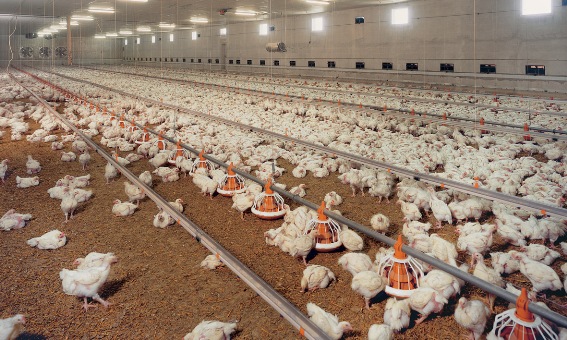

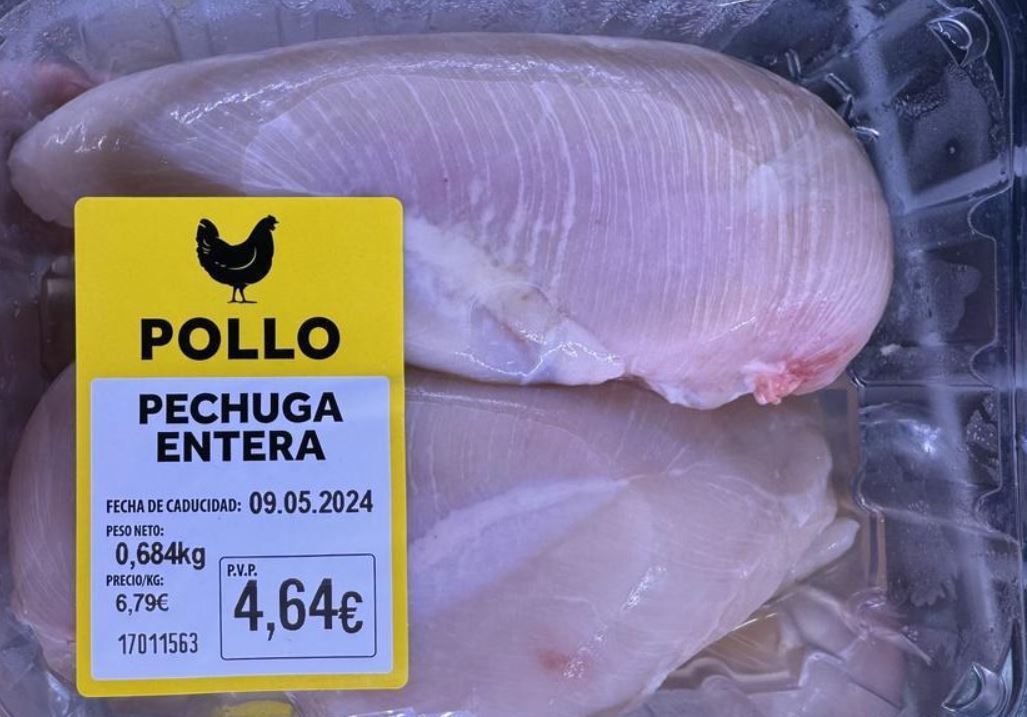
Several experts have expressed their position forcefully following accusations made in November 2024 by the animal rights organisation known as the Observatorio de Bienestar Animal (OBA), formerly Equalia, which alleged that “98% of the chicken breasts from Lidl stores in Spain that were analysed showed abnormalities“. The organisation’s report even asserts that the animals suffer from a disease, based on 6,097 trays examined across 321 of the chain’s outlets, the vast majority of which displayed “white striping”. As has been clarified, these striations pose no health risk whatsoever, although they are considered to affect meat quality.
Lidl has been in the crosshairs of the animal rights lobby for refusing to bow to its demands and has been the repeated target of its attacks on numerous occasions.
The news caused concern among some consumers, who began questioning whether Lidl chicken was safe to eat. However, several experts have insisted there is no cause for alarm. One of them is Mario Sánchez Rosagro, a food technologist, who expressed surprise at the alarmist tone that has accompanied the coverage. He explains that white striping is a common phenomenon in chicken reared using current production methods, not only at Lidl but in the majority of supermarkets. “It poses no health risk; it is a visual defect that does not actually affect product quality. It is simply connective tissue and fat that arise from the way chicken is produced today,” he clarifies.
“In conclusion: if you are going to eat chicken, don’t worry; there is absolutely nothing wrong with it. And if you decide not to eat it, let it be for your own reasons, not out of fear or misinformation,” Sánchez concludes.
Along the same lines, José Miguel Mulet, a chemistry graduate and doctor in biochemistry and molecular biology, points out: “This NGO has no real standing and is targeting a major company by claiming its chicken is contaminated. And if that doesn’t stick, they criticise its nutritional value. Ultimately, you can see a financial motive: they are trying to extract money from the company. Lidl chicken is safe, full stop“.
Food safety expert Gemma del Caño has also called for caution. She believes that food safety and animal welfare are being conflated, which is generating confusion among the general public. “White striping results from the rapid growth of broilers and does not represent any risk for consumption, nor does it diminish nutritional quality,” she explains. She further notes that “the fact that chickens grow rapidly does not imply the use of hormones; it is due to genetic selection and low levels of physical activity. Is this an ‘abnormality’ intended to frighten consumers? No“.
Meanwhile, the Observatorio de Bienestar Animal — the animal rights organisation behind the study — maintains that “white striping myopathy is directly linked to abusive and exploitative practices in industrial poultry farming”. In light of its findings, it is calling on Lidl to review its production systems with regard to animal welfare. The organisation states that it is willing to collaborate with all parties involved to find solutions that benefit both animals and consumers.
For further reading:
-. Muscle degenerations and broiler breast quality. Folegatti, Elisa; Martínez-Alesón Sanz, Ricardo.
Myopathies in chicken breasts
As reported by the digital platform SESC (Slaughterhouse Support Service), the veterinarians at IRTA – Food Industries (Monells) report that myopathies are muscular defects associated with hypoxia and oxidative stress, ultimately involving apoptosis of muscle cells and their replacement by fat and connective tissue. Their incidence tends to be high in fast-growing broiler chickens destined for cut-up sales, where breast yield is of particular importance.
- White striping myopathy, known as “white striping”, is characterised by the presence of white striations along muscle fibres. This myopathy was the first to be identified and is quite common in the food industry.
- Wooden breast myopathy, or “wooden breast”, is the most extensively studied, as it has a significant impact on product quality. It manifests as hardening of the muscle, often accompanied by areas of pale discolouration and petechiae.
- Spaghetti meat myopathy, or “spaghetti meat”, is the most recently identified condition. It is characterised by a loss of cohesion among muscle fibres, which disintegrate into strips, giving the meat an appearance resembling spaghetti.
All of these myopathies present similar lesions on histological section, including infiltration of white blood cells and muscle cell death, accompanied by infiltration of connective tissue, adipose tissue, and water. In the case of white striping, it is primarily adipose cells that occupy the space of the muscle fibres. Wooden breast and spaghetti meat, on the other hand, display thicker connective tissue. In wooden breast, the collagen fibres are more compact, whereas in spaghetti meat they are smaller and more immature, thus accounting for the lack of cohesion between muscle fibres.

Appearance of myopathies observed in chicken breast.

Histological appearance of a normal muscle (left), one with wooden breast (centre) and one with spaghetti meat (right) using collagen staining (red). Lower panel viewed under polarised light. p: perimysium m: muscle fibre m-n: degenerated muscle fibre. Image: Sanden et al 2021.