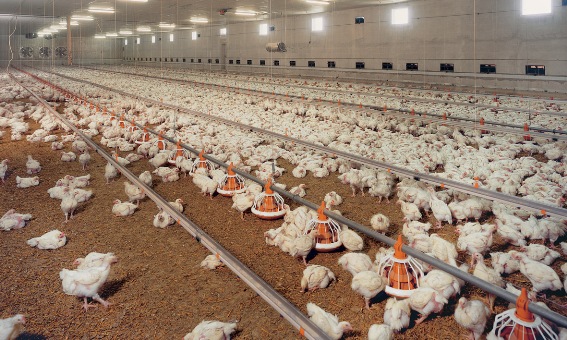


The US Government is seeking to import poultry products from European countries, among other regions, to alleviate the severe domestic shortage.
The United States is looking abroad for a solution to its egg shortage, caused by an avian influenza outbreak that has sent supermarket prices soaring. The Department of Agriculture of the United States (USDA) sent a request in late February to European egg associations — setting aside the trade tensions caused by the United States — urging them to ship eggs to the US.
Germany, Denmark, Italy, Poland and Sweden are among the nations the USDA has approached to address the shortage. However, supplying eggs to American consumers would be complicated for foreign producers. In Europe, avian influenza is relatively well controlled by poultry producers in 2025, and the sector is focused on meeting rising domestic demand ahead of the Easter holidays.
Divergences in food safety regulations between countries
One of the greatest obstacles, however, is the approach adopted by the United States to prevent Salmonella contamination. US food safety regulations require that fresh eggs be sanitised and refrigerated before reaching the consumer.
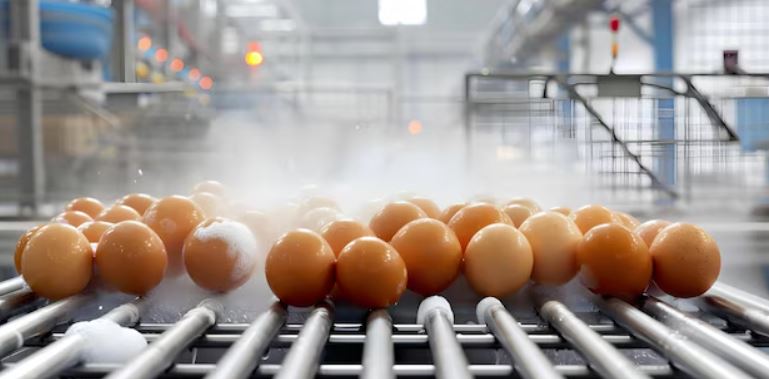
In the European Union, safety standards require that Class A eggs be sold unwashed and without prolonged refrigeration. “These are two systems that could not be more different,” says Hans-Peter Goldnick, president of the German egg association.
Poland is one of the EU’s leading egg exporters. According to Katarzyna Gawrońska, director of the Polish National Chamber of Poultry and Feed Producers, eggs are not washed in the majority of the EU’s 27 member states out of concern that removing the natural protective cuticle from the shell makes them more vulnerable to bacteria, Gawrońska explained. Polish veterinary authorities are attempting to determine whether the country and its poultry producers can meet US requirements.
US food safety regulations require that fresh eggs be sanitised and refrigerated before reaching the consumer, which is not the case in Europe.
In some parts of Europe, and for certain very local markets, there are still some direct sales outlets where consumers can buy eggs that may still have a feather stuck to the shell. Poultry farmer David Karlsch describes the simple process by which he transports eggs from his family poultry farm in Schoeneiche, a village on the outskirts of the German capital, to his customers.

The eggs are collected from the nest boxes, placed in cartons and sold on the premises or in a refrigerated vending machine located outside the property. “Demand at Easter is, of course, very, very high, as many children want to paint eggs,” says Karlsch, describing this German tradition.
Polish veterinary authorities are attempting to determine whether the country and its poultry producers can meet US requirements.
Although EU regulations stipulate that eggs must not be washed or cleaned, member states retain some flexibility if they authorised egg washing at packing stations decades ago. Joergen Nyberg Larsen, director of the Danish egg association, states that national customs influence the decision. Washed eggs are the norm in Sweden, for example. However, both Denmark and Norway have informed the United States that they have no surplus eggs available for export.

Europeans open to exporting processed egg products to the US
Larsen also told Euronews Business that the Danish association was willing to help the North American country. “In the EU we do not have a large surplus of eggs,” he noted, suggesting that for now, any increase in US egg imports from Europe is more likely to arrive in the form of egg powder or other processed products.
This is the same response that the Polish trade association gave to US authorities. If the US certifies Poland as an approved export source, the organisation’s members would have a limited number of shell eggs available for sale, but could supply very large volumes of processed products, Gawrońska said.
If the US authorises the sale of egg products or processed eggs from the EU, the volume would be far greater than if Europe exported only shell eggs. The lead time to supply the US market would also be reduced very substantially.
According to the US Department of Agriculture, processed eggs are typically pasteurised to prevent foodborne illness and are then used in food manufacturing or in restaurants, hospitals and care homes. Baked goods, pasta and sauces such as mayonnaise are among the commercial products made using dried egg powder.
US authorities also attempted to sound out farmers in the Veneto region of northern Italy about supplying emergency eggs, according to Coldiretti, Italy’s main agricultural lobby. However, Italy only produces enough eggs to cover domestic demand, so most producers in the region have declined to help. Avian influenza outbreaks since early last year have also taken a toll on the Italian poultry industry.

Germany is also unable to contribute significantly. Its domestic poultry industry produces around 73% of the eggs consumed in the country. “We ourselves have to import eggs from the Netherlands every day to keep everyone supplied,” says Goldnick of the German egg association. “We have around 45 million eggs that we can collect from henhouses each day, and in the United States there is a shortage of around 50 million eggs per day.”
Imports of liquid, frozen and dried eggs could help free up some supply for consumers. Last month, the country produced 720 million fewer table eggs than in February 2024, a decline of nearly 10%. The US also reduced its own egg exports in order to boost domestic stocks, according to the Department of Agriculture.
In the United States there is a shortage of around 50 million eggs per day
The poultry situation in Spain
Other countries contacted by the US Government include Austria, Norway and Spain. The US Department of Agriculture stated that it had secured new commitments in recent months from Turkey and South Korea regarding eggs, though it did not specify the quantity or type.
In Spain specifically, there is limited interest in exports to the United States, as is the case with the automotive tariff dispute. Egg exports across the Atlantic rarely exceed 100 tonnes per year, representing just 0.1% of Spain’s total export volume. Spain’s trade relationship with European countries is stronger than with the US, and furthermore, the Iberian Peninsula has been barely affected by the avian influenza that has been hitting producers on both continents.
SPAIN’S EGG EXPORTS TO THE US ACCOUNT FOR LESS THAN 0.1% of total export volume.
The United States recovers from “egg-flation”
As informal trade discussions continue, the US market has shown signs of improvement — despite more than 166 million birds having been culled in the US due to avian influenza. The Department of Agriculture has reported that the national price for large eggs fell to $3.27 (€3.30) per dozen on 21 March. The peak was $8.15 per dozen (€7.56) on 21 February.
American consumers are beginning to see falling wholesale prices translate into lower prices on supermarket shelves, according to the Department. The strong demand typically associated with Christian and Jewish Easter celebrations could push prices higher again next month.

Trump has been anything but cautious in his approach to Europeans since the start of his second term. The president’s repeated threats to take control of Greenland, a Danish territory, have infuriated many in Denmark and across the European Union, as well as the indigenous Inuit population. His stance on Ukraine and dismissive remarks by senior members of his Administration have alarmed America’s European allies.
The European Union, which is the United States’ third-largest trading partner, was not spared from the tariffs Trump imposed on steel, aluminium and motor vehicles. Yet many officials in Europe say that none of this would rule out exporting eggs.
Goldnick says a friend who is an egg producer recently told him that if the price is right, he would be willing to export. “I have two souls within my breast. On one hand I would say: ‘No, we cannot support this system’, but that is not the right answer,” he says, referring to the new US tariffs on European products. “The right answer is that we have to help as much as we can. And this concerns people. It does not concern the Government. It is about people’s demand at Easter, and that is just as important to meet in the United States as it is here.”
Source: EURO NEWS