
Agriculture Ministry orders confinement of all free-range poultry farms in Spain in response to the advance of avian influenza
Madrid, 13 Nov. 2025. The Ministry of Agriculture, Fisheries and Food has raised the alert level further and has ordered, effective today, the confinement of all poultry reared outdoors throughout the national territory. The measure, published this Thursday, 13 November, in the Official State Gazette (BOE), is intended to act as a preventive reinforcement in the face of what the ministry describes as an “increased risk of spread” of avian influenza.
The new ministerial order (APA/1288/2025) represents a significant expansion of biosecurity measures. Until now, confinement was only mandatory in 1,199 municipalities designated as special risk and surveillance zones, a measure that had been in force since Monday, 10 November.
With today’s Thursday publication, the ban on outdoor rearing is extended to all poultry farms throughout Spain. This includes commercial operations, organic farming units, subsistence flocks, and those producing meat or eggs for direct sale to consumers.
The risk posed by migratory birds
The decision is based on the epidemiological situation in central and northern European countries, where a “notable increase” in avian influenza outbreaks has been detected over the past four weeks.
The primary concern is transmission from wild birds to domestic flocks. Spain is a key point on the migratory route of many of these birds, which move towards the country’s wetlands with the onset of winter. The text of the order underlines that a “clear risk of transmission” exists on farms that keep their animals outdoors.
Highly pathogenic avian influenza (HPAI) is a “highly contagious” viral disease in birds that can cause “high mortality rates” in poultry farms and in wild birds (this autumn, thousands of migratory cranes have already been found dead, along with other migratory bird species). It is classified in the European Union as a Category A+D+E disease, meaning that “immediate eradication measures” must be taken as soon as it is detected.
In the current 2025–2026 season to date, Spain has reported 14 outbreaks in poultry, 5 in captive birds, and 68 in wild birds, all belonging to the H5N1 subtype. The most recent outbreak on a poultry farm was in a shed of 54,000 broilers on 20 October in Valladolid.
New prohibitions and control measures
In addition to the general confinement, the ministerial order establishes a set of strict biosecurity measures that take effect immediately:
- Species separation: The rearing of ducks and geese together with other poultry species is prohibited.
- Water control: Supplying birds with water from sources accessible to wild birds is prohibited, unless the water is treated to inactivate the virus.
- Protection of water sources: Outdoor water reservoirs, even those required for animal welfare reasons, must be protected against wild waterfowl.
- Cancellation of events: The presence of poultry at animal gathering centres is prohibited. This includes livestock shows, fairs, exhibitions, and any cultural events at which these birds are assembled.
The exception: netting and shelters
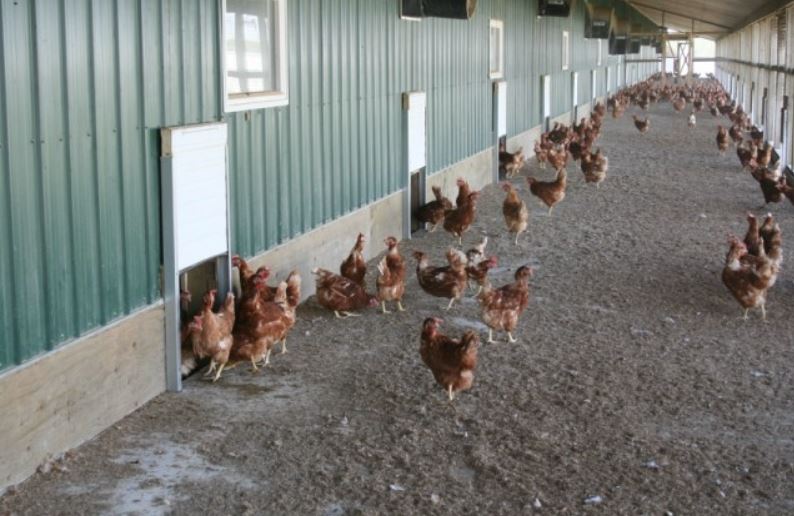
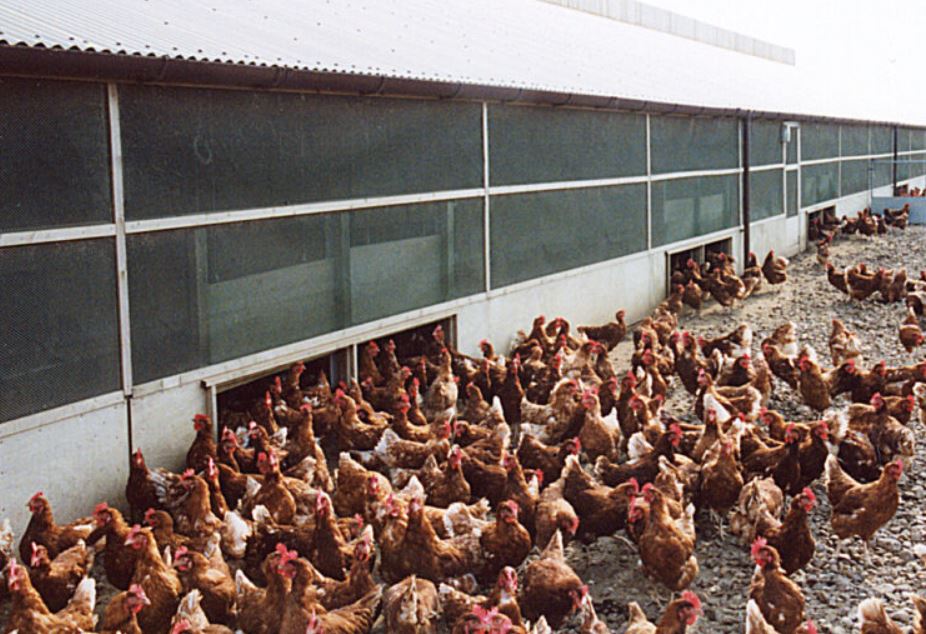
The order provides for an exception for those operations where full confinement “is not possible”.
In such cases, the competent authority of the autonomous community may authorise the continued outdoor keeping of birds, but under strict conditions: “bird-proof netting or any other device that prevents wild birds from entering” must be installed.
Furthermore, in these exceptional cases, feed and water must be provided exclusively “inside the facilities or in a shelter” that prevents contact between feed and migratory birds.
Tracking of Avian Influenza cases on poultry farms in Spain in 2025:
-. 1st outbreak of 2025 (18 July, Extremadura): Alert over an Avian Influenza outbreak on a farm of 7,000 turkeys in Extremadura
-. 2nd outbreak (28 July, Toledo): Second AI outbreak detected, this time in breeder flocks in Toledo
-. 3rd outbreak (1 Sept., Huelva): The spectre of H5N1 returns to Andalusia: 8,500 turkeys culled due to avian influenza in Huelva.
-. 4th outbreak (8 Sept., Guadalajara): Spain records its fourth AI outbreak of 2025, this time on a breeder farm in Guadalajara
-. 5th outbreak (9 Sept., Huelva): H5N1 positive confirmed on the farm of 8,400 poultry in Valverde del Camino, Huelva, Andalusia
-. 6th outbreak (19 Sept., Valladolid): H5N1-type AI detected on a farm of 760,000 laying hens in Valladolid
-. 7th, 8th and 9th outbreaks (1 Oct., Valladolid and Madrid): 552,000 laying hens affected by three new AI outbreaks in Madrid and Valladolid
-. 10th outbreak (6 Oct., Valladolid): Tenth Avian Influenza outbreak detected in Spain. More than 800,000 laying hens to be culled.
-. 11th outbreak (13 Oct., Valladolid): Eleventh Avian Influenza outbreak detected in Spain on a farm of 66,000 laying hens.
-. 12th outbreak (15 Oct., Valladolid): 315,000 new laying hens affected in the latest outbreak
-. 13th outbreak (16 Oct., Toledo): 112,000 laying hens in Yeles, Toledo
-. 14th outbreak (20 Oct., Valladolid): 54,000 broilers in Valladolid
No new outbreaks have been reported on poultry farms since 20 October (updated as of 13 Nov. 2025)
For further information:
-. Avian Influenza at NeXusAvicultura