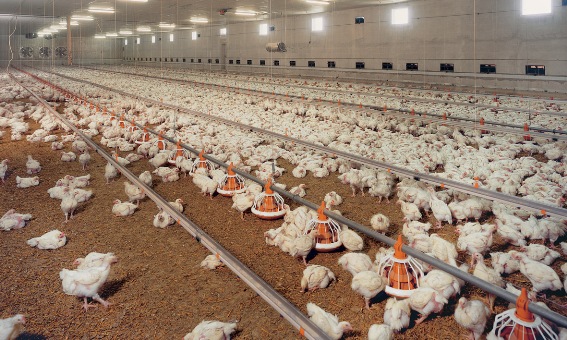


Laying poultry: HEVO GROUP’s third major acquisition of 2025 integrates the historic AVÍCOLA TRATANTE and reinforces the holding’s market leadership.
The consolidation trend in the Spanish poultry sector has reached a new milestone with the acquisition of Avícola Tratante by Hevo Group. This transaction, completed on 1 December 2025, represents Hevo Group’s third major acquisition this year (alongside Granja Legaria and El Granjero), and consolidates the holding — integrated into the multinational Global Eggs — in its meteoric rise to the top tier of the Spanish egg industry.
Hevo Group, among the three largest egg producers in all of Spain (alongside GRUPO HUEVOS GUILLEN and GRANJA SAN MIGUEL, the latter partially owned by AGOTZAINA), already handles an annual output of more than 100 million dozen and exceeds 150 million euros in turnover. With the incorporation of Avícola Tratante, the group strengthens its national presence, adding the Pontevedra facilities to its existing centres in Guadalajara, Cuenca, Tarragona, Navarra and Vizcaya.
AVÍCOLA TRATANTE, the second largest egg producer in Galicia after GRANJA CAMPOMAYOR and ahead of COREN, brings experience and a production capacity across all production systems of 15 million dozen annually.

The legacy of AVÍCOLA TRATANTE: from family business to the second largest egg producer in Galicia
Avícola Tratante, with a history spanning more than five decades, began its journey in 1969 under the guidance of Mr José Raúl Vázquez Dieguez, who passed away in October 2025. Founded in 1969 as a family business in Pontevedra, it initially focused on pullet rearing for other producers, but as early as the 1970s it embarked on an expansion process with the construction of laying houses.
The key turning point for the Galician company came in the early 1980s, when it successfully positioned itself attractively in the market by beginning to supply its poultry products to the major retail areas, hypermarkets and most important supermarket chains in Galicia.
Avícola Tratante’s production, quality control, grading and packing facilities are located in the village of Sixto, in the municipality of Dozón (Pontevedra), helping to retain the rural population and providing employment for 45 people in the area.
The production, quality control, grading and packing houses of Avícola Tratante are situated in the village of Sixto, in the municipality of Dozón (Pontevedra), at the geographical centre of the Galician region; this allows them to guarantee immediate delivery throughout Galicia.

The modernisation of the company continued thanks to Alejandro Campos, José Vázquez’s nephew, who had taken over the running of the business upon his retirement and drove an expansion process with the construction of new poultry houses in 2021, in partnership with Big Dutchman, for 200,000 new laying hens, along with other improvements that enabled it to obtain the Galicia Calidade quality mark and ultimately attract the interest of industry giants such as Hevo Group.
Following the death or retirement of the founder, his nephew, Alejandro Campos, who had joined the company in 2001, took over and led an expansion and modernisation process that attracted the interest of industry giants such as Hevo Group. Avícola Tratante also holds the prestigious Galicia Calidade quality mark.
The legacy of Avícola Tratante: the mark of the “poultry farmer/priest” who dreamed of a social enterprise
The second largest egg producer in Galicia always knew how to keep alive the spirit of its founder, José Raúl Vázquez Dieguez, a priest, businessman and poultry farmer who combined the altar with business to serve his community by applying a genuine corporate social responsibility policy even before the term existed.
A priest–entrepreneur with a social vocation
Behind Avícola Tratante there was always the singular figure of Mr José Raúl Vázquez Diéguez (Cartelos-Carballedo, 1935), a priest in Deza for more than six decades and founder of the farm in O Sixto (Dozón) in 1969. Far from seeing any incompatibility between pulpit and enterprise, he maintained that business activity allowed him to help people more and better than he could ever have achieved on a priest’s salary alone, both his parishioners and the surrounding rural community.
His entrepreneurial character manifested itself very early: even at the Seminary of Lugo, which he entered in 1945, he worked as a sales representative for a Catalan cassock manufacturer, an experience that gave him the grounding to later launch his own project in the poultry sector. That combination of entrepreneurial initiative, approachable manner and love of sport — he even served as president of Lalín FC in the Spanish Second Division B — made him a highly popular and respected figure in Lalín and throughout the region.
Vázquez Diéguez was no ordinary businessman. For more than 60 years he served as a priest in the Deza region while building a poultry empire. Far from concealing this duality, he always championed it as his greatest strength: “Being a priest was never a drawback — on the contrary, people respected and liked me all the more,” he confessed in one of his last interviews. His financial reliability was such that, during his years as a partner in a construction firm, the popular saying was unequivocal: “I’ll sell to the priest, because the priest pays.”
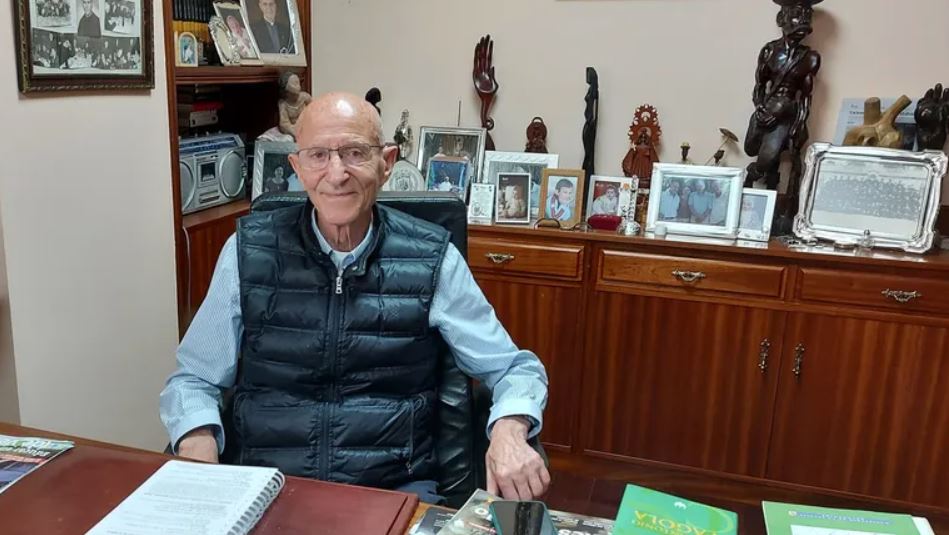
A company in the service of its territory
Vázquez transformed Avícola Tratante into a tool for local development: with the profits from the farm, he helped restore churches, improve access roads and car parks, and support numerous initiatives across his network of parishes. He always championed the idea that a business should be rooted in its territory, retaining the rural population in Dozón and creating stable employment in the area — a commitment that was borne out over time with a workforce of nearly fifty employees.
Over the years, he gradually handed over the reins to his nephew Alejandro Campos, with whom he worked side by side before retiring, although he never stopped following the day-to-day life of the company or visiting the facilities, which he described as a place where he felt happy talking to everyone. That family continuity allowed the modernisation of the farm to be completed, with new houses, certifications such as Galicia Calidade and a prominent position in supplying major retail chains in Galicia.
A social vocation not entirely fulfilled
In his later years, the founder reflected frequently on the social impact of his career and acknowledged that he would have liked to go a step further in the collective dimension of the project. His greatest regret, as he told the Galician daily, was never having set up a cooperative or a social enterprise in which the workers would have fully participated in management and profits — something he considered consistent with his understanding of faith and economics.
That sensitivity explains why Avícola Tratante was born and grew with a strong community ethos: a sound, competitive and technologically advanced firm, but also conceived as an instrument to improve the lives of the people around it. The recent integration into Hevo Group thus arrives on the back of a legacy in which profitability always walked hand in hand with social commitment and the parish-rooted values that defined the biography of its founder.

A beloved figure to the very end
Well into old age, José Raúl Vázquez maintained an intense pastoral life, celebrating Sunday masses in several parishes in Lalín, Dozón and Rodeiro and providing daily chaplaincy at the As Dores care home. He liked to summarise his mission as bringing a message of hope and joy, something his parishioners recognised in the warm, jovial manner and wealth of shared anecdotes built up over more than sixty years.
He passed away in Lalín on 1 October 2025, at the age of 90, leaving behind a company that had managed to professionalise and grow without entirely losing the human and family stamp he had imprinted from day one. Between games of tute at the Casino, summers surrounded by nephews and great-nephews, and a diary always full of weddings, funerals and celebrations, the founder of Avícola Tratante departed as he had lived: feeling deeply loved by his people and satisfied at having put the economy at the service of his community.

Position and figures: a clear commitment to cage-free eggs, with much of the journey already completed.
At the time of its acquisition, AVÍCOLA TRATANTE remained one of the benchmark players in the Galician sector. The company had consolidated its position in the national Top 25, ranking 23rd by production volume in Spain.
In production terms, the company had stabilised its output at 15 million dozen in both 2023 and 2024. This stability was reflected in a turnover that rose from €24 million (M€) in 2023 to an estimated €25 M€ at the close of 2024.
Avícola Tratante stood out for its determined commitment to alternative laying systems (cage-free). In total, the company had 550,000 birds in production, distributed across several categories:
- 300,000 birds housed in enriched cages (Type 3 eggs).
- 253,000 birds in alternative systems (Free-range, Organic, Barn).
In detail, the company had 35,000 birds for free-range egg production and 18,000 hens for organic production. The company had recently completed the expansion of its facilities to accommodate 200,000 hens for Type 2 barn egg production, meeting market demand accordingly.
Indeed, the company’s strategy already marked a clear transition, with 50% of its production (equivalent to 7.5 million dozen) corresponding to alternative production codes (barn, free-range or organic). To reinforce this trend, Avícola Tratante had commenced between 2024 and 2025 the largest investment in its history, allocating between 5 and 6 million euros to the construction of a new complex in Lalín with capacity for almost 182,000 new birds in barn housing.
Avícola Tratante also maintains a balanced commercial approach, operating under its own brands (Avícola Tratante, Demillo and Lugar de Sixto) while serving as a reference supplier to major retail chains for Own Label (private label) products, which accounted for 40% of its activity. Its principal private-label packing customers include major chains such as Alcampo, Eroski, Froiz and Avis.

A global giant in expansion that already brings together 7 of the largest egg producers in Spain and the fourth largest producer in the USA
Global Eggs is a business holding domiciled in Luxembourg and controlled by Ricardo Faria. In November 2024, Faria became the majority shareholder of Hevo Group, integrating it into the holding that already included Granja Faria in Brazil; subsequently, in May 2025 Global Eggs acquired Hillandale Farms, the fourth largest egg producer in the United States.
The Spanish division, Hevo Group, headquartered in Guadalajara and led by the Brazilian-born, Spain-based André Baldissera, now brings together seven leading companies in the poultry sector: Dagu, Huevos Roig, Granja Agas (these three formed the founding core) and the four subsequent acquisitions: Avícola Larrabe (August 2024), the Navarran Granja Legaria (May 2025), the Castile and León-based El Granjero (August 2025) and this sixth and latest (?) acquisition, Avícola Tratante (1 December 2025).
HEVO Group was born from the union of three of Spain’s leading egg production brands, with a long track record and prestige in the sector: DAGU, Ous Roig and Granja Agas. This three-way integration placed it at the starting line with a total of 20 farms, 15 laying and 5 pullet-rearing, three grading and packing centres, one egg products plant and three feed mills, and an initial capacity to produce more than 70 million dozen eggs per year — production and capacity that have been substantially exceeded by the four subsequent acquisitions.
Hevo Group is engaged in an active national expansion process that includes farm modernisation, enlargement of the productive flock, improvements to grading centres and new acquisitions. With these seven acquisitions, HEVO GROUP comfortably exceeds 120 million dozen eggs per year in Spain.
The origins of Hevo Group date back to 2021, when Grupo Dagu and Ous Roig announced their merger. Shortly afterwards, in 2023, came the acquisition of poultry company Granja Agas, with the aim of becoming the leading national egg producer both in terms of scale and presence in retail and distribution, reaching at that point 3.5 million laying hens and doubling its turnover compared with 2018.
In May 2023, the company took a further step with the creation of Hevo Group as a new corporate identity. In November 2024 Hevo Group was acquired by Ricardo Faria, who made it his gateway into the European market. The acquisition was carried out through his Luxembourg-based holding company Global Eggs.
This move in Spain comes less than eight months after Global Eggs closed a deal in the United States on 13 May 2025 to acquire Hillandale Farms for a total of USD 1.1 billion, one of the five largest egg producers in the country. Hillandale Farms houses approximately 20 million laying hens. Global Eggs has indicated that it is in discussions with other European producers, underscoring its growing interest in the continental market through acquisitions.
To find out more:
-. Company news on NeXusAvicultura
-. The EGG SECTOR
-. Company news on NeXusAvicultura
Want to stay one step ahead in poultry?
Subscribe free to our eNewsletter and receive a weekly selection
of the best information to anticipate trends, stay up to date and develop as a poultry industry professional.
NeXusAvicultura: Vision, Insight, Quality and Context.