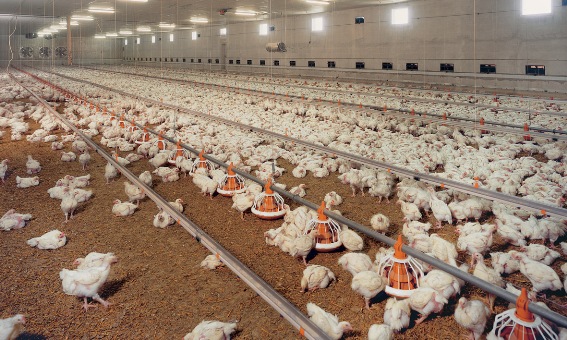


The US poultry sector faces challenges and opportunities that will define its course for the remainder of 2024 and into 2025.
We have summarised here the latest report published by the USDA “Livestock, Dairy, and Poultry Outlook: November 2024” on 15 November 2024, since although it focuses on the US, some of its observations and trends may ultimately be reflected in other poultry markets around the world.
This summary, prepared for NeXusAvicultura.com readers, covers the main trends observed in production, prices and trade, and aims to provide those responsible for decisions on placement schedules, marketing, pricing, etc. with a strategic outlook for making informed decisions.
The combined effects of persistent avian influenza outbreaks, rising production costs and intense competition in global markets have tested the resilience of egg and poultry meat producers. However, projections for the coming years show signs of production recovery, price adjustments and stabilisation in exports.
Eggs: tighter supply and rising prices
- Production trends:
- 2024: Total egg production is forecast at 7,783 million dozens, 1% lower than the previous year, due to a slowdown in placements during the first three quarters and losses from highly pathogenic avian influenza (HPAI), particularly in Utah, Washington and Oregon, where 2.8 million laying hens were depopulated in October.
- 2025: Projected production stands at 8,110 million dozens, reflecting a recovery with a year-on-year increase of 4.2%.
- Prices:
- Egg prices have risen significantly in 2024 due to highly pathogenic avian influenza and declining flock inventories.
- In October, the New York wholesale price for large eggs averaged 313.3 cents per dozen, reaching a peak of 446 cents at the end of the month.
- Average price projections for 2024 stand at 285.7 cents per dozen, with a decline to 200 cents per dozen in 2025 due to the anticipated production recovery.
- Exports:
- Exports of shell eggs and egg products for 2024 are expected to reach 246.5 million dozens, representing 2.7% of total production. For 2025, the figure is projected at 264 million dozens.
Poultry meat: slight production growth in 2025
- Broiler production:
- 2024: Total broiler production is projected at 21.4 million MT (by comparison, the EU produced a total of 13.16 million MT in 2021 and Brazil 15 million MT), a 2.7% increase compared to the previous year. Hatchery data indicate continued production growth.
- 2025: Projected broiler production will increase to 21.7 million MT, a 1.4% increase, representing 302,092 MT of additional chicken to be produced in 2025
- Exports:
- Broiler exports for 2024 are projected at 3.046 million MT, representing 14.4% of production, due to strong global competition and price pressures.
- For 2025, exports are projected at 3.075 million MT, maintaining a 14.4% share of production.
- Prices:
- The national composite wholesale broiler price averaged 284.22 cents per kg in October 2024, reflecting an upward adjustment for the fourth quarter (130 cents) and early 2025 (132 cents).
- The annual average price for 2025 is projected at 286.60 cents per kg.
Key challenges
- Impact of highly pathogenic avian influenza: Ongoing outbreaks continue to constrain laying hen and broiler flock sizes, directly affecting production and prices.
- Global competition: US exports face intense international competition, influencing trade volumes and market strategies.
Opportunities
- Recovery of laying hen placements: Projections to increase production capacity by 2025 point to the potential for market recovery.
- Price stability: The expected normalisation of egg prices and moderate growth in broiler prices offer opportunities for strategic production and export planning.

- A “blue ocean” in cage-free laying hen housing: Equipment and facilities companies for egg production have a major opportunity ahead, with thousands of farms that will either be converted or newly built in order to meet the unstoppable demand — driven not only by regulatory requirements but also by pressure from major retailers to source exclusively from cage-free production systems.
In summary, the USDA report suggests a cautious yet optimistic outlook for the poultry sector, balancing disease management with production recovery and export competitiveness.
Further reading:
-. The poultry industry in the US
-. USDA report (31 pp.) “Livestock, Dairy, and Poultry Outlook: November 2024“