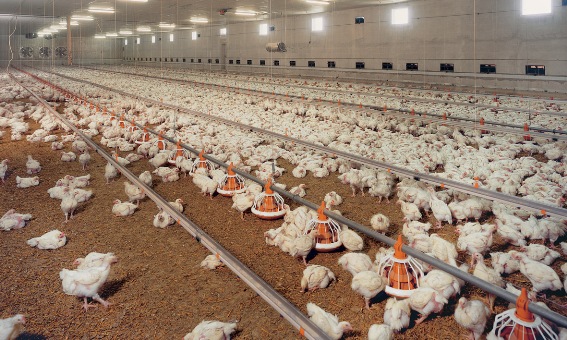

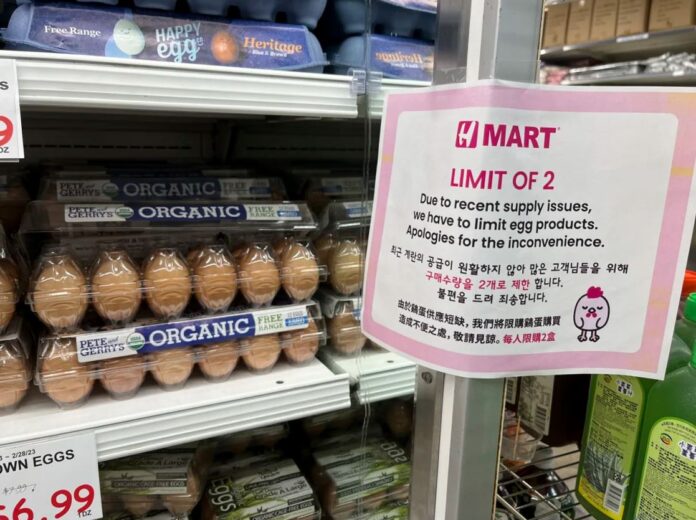
- Avian influenza (AI) has affected more than 108 million birds across 48 US states since 2022, driving up prices and reducing supply.
- Ultra-cheap eggs are now a thing of the past in the US
- The supply shortfall is more severe in states that are transitioning to cage-free systems
- The situation is expected to correct itself in early 2025, avian influenza permitting, as placements of new pullet flocks are increasing
While most food prices stabilised in 2024, one staple product in US supermarkets continues to rise in price and disappear from shelves: eggs.
This proved frustrating for shoppers at a Trader Joe’s store in the Union Market neighbourhood of Washington, D.C., on 14 November 2024, where an empty refrigerator displayed a sign reading: “Temporarily out of eggs.” One customer, Donella Brockington, expressed her concern about not being able to find eggs for Thanksgiving baking. “I hate going to the grocery store, and when I go and can’t find what I need, it’s really unpleasant,” she said.
At a nearby Whole Foods Market in Logan Circle, only duck eggs, quail eggs and organic pasture-raised hen eggs were available. A sign warned customers that egg purchases were limited to three cartons per person. “We are currently experiencing difficulties sourcing eggs that meet our strict animal welfare standards,” it read.
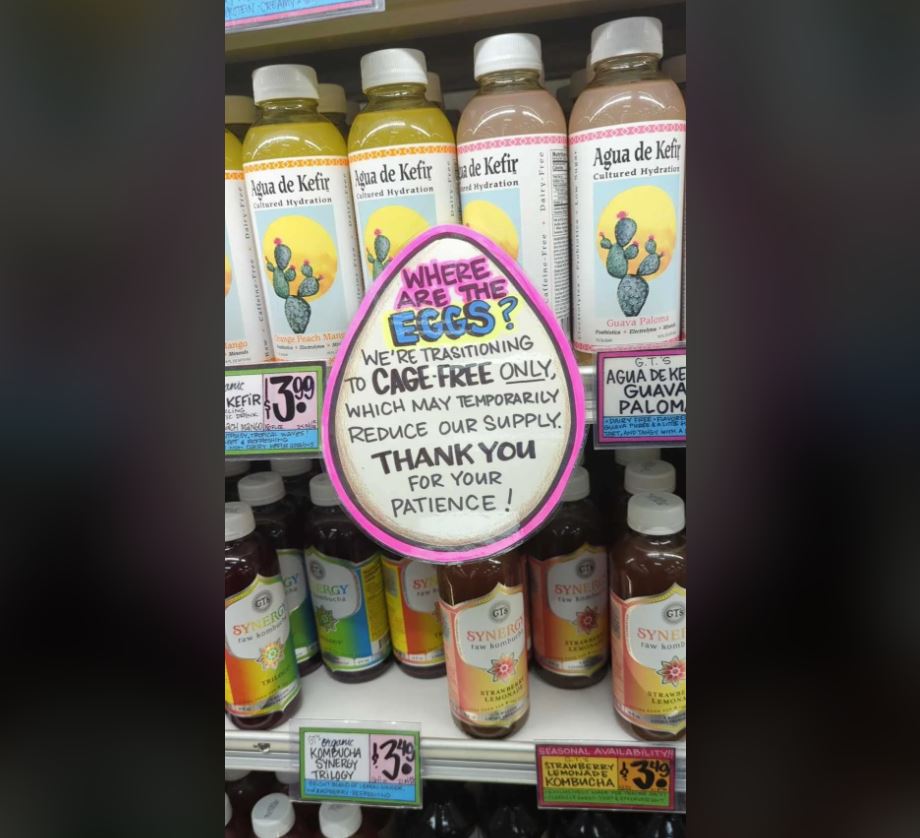
In October and November 2024, eggs have disappeared from — or seen significantly reduced availability on — the shelves of many US supermarkets, raising fears of a shortage that could coincide with the holiday season. According to a poultry sector report and other production data published on 15 November by the United States Department of Agriculture (USDA), domestic egg production fell 2.6% in October 2024 compared to the previous year and is projected to decline 1% in 2024 relative to 2023.
The culprit behind this latest shortage is well known: avian influenza. A devastating outbreak of highly pathogenic avian influenza, which began in February 2022, has affected more than 108 million birds across 48 states, according to the Centers for Disease Control and Prevention (CDC). In October 2024, outbreaks in Utah, Washington and Oregon resulted in the loss of 2.8 million birds and forced the USDA to revise its egg production estimates downward for the end of 2024 and early 2025.
Economist Bernt Nelson of the American Farm Bureau Federation explained that avian influenza is the primary factor driving fluctuations in egg supply and prices: “As avian influenza comes and goes, egg prices fluctuate.”
Egg prices reach record levels
The reduction in the number of laying hens over the past two years has left retailers struggling to maintain supply and has triggered a price surge. In October 2024, the average price of a dozen large eggs was $3.37, 30.4% higher than in the same month of 2023, although below September’s average of $3.82.
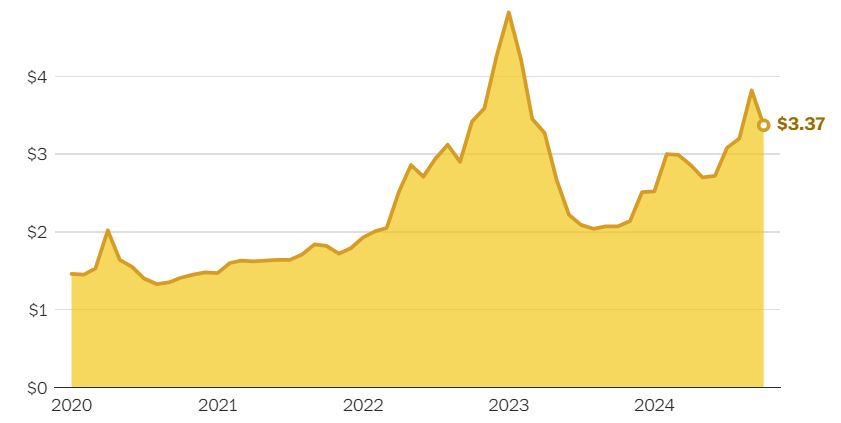
Source: Bureau of Labor Statistics
Avian influenza tends to spread more readily in autumn and spring, when wild birds such as turkeys, ducks, geese and swans migrate. These birds can readily transmit the disease between farms, infecting both commercial flocks and backyard poultry.
This autumn, bird migrations along the Pacific Flyway exacerbated outbreaks on the West Coast, according to Nelson. Although prices will not reach the record levels seen in late 2022 and early 2023 — when the average cost of a dozen eggs peaked at $4.82 — consumers should prepare for tighter supplies during the holiday season, according to Emily Metz, President and CEO of the American Egg Board.
Egg shortages more pronounced in large retailers and states that have committed to cage-free systems
In addition to avian influenza, feed, labour, transport and packaging costs have also contributed to the end of the 99-cent egg carton, Metz explained.
Egg demand typically increases ahead of the holiday season, but given current prices, the USDA anticipates some consumer resistance.
At stores such as Trader Joe’s and Whole Foods, the egg shortage is more pronounced due to their policies of selling exclusively cage-free eggs. This trend is also being adopted by more than a dozen states that are implementing similar legislation. However, these regulations limit the number of egg suppliers that can serve these markets, according to Nelson.

States requiring cage-free eggs have faced greater difficulties following avian influenza outbreaks, as cage-free hens, having greater freedom of movement, are more susceptible to disease. Although less than 50% of hens in the US are cage-free, they account for more than 60% of those affected by avian influenza.
An uncertain future, but with cause for optimism
The USDA estimates that the United States would need to produce 66.7 billion cage-free eggs per year to meet full demand, which would require 221.4 million cage-free hens. Currently, there are only 106.6 million cage-free hens, leaving a deficit of 114.8 million birds.
Nevertheless, current pullet chick hatch data are encouraging and suggest that egg production could recover in early 2025, Nelson stated.
“Any shortages consumers experience will be intermittent,” Metz assured. “To consumers looking for eggs: don’t panic.”
For further information:
-. Implementation of cage-free systems for egg production
-. Avian Influenza on NeXusAvicultura.com