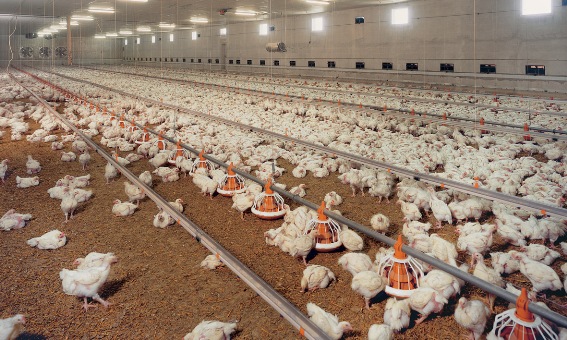

Researchers at the University of Georgia completed a study in January 2025, funded by the U.S. Poultry & Egg Association (USPEA) and the US Poultry Foundation (USFP), to measure and analyse, in an easy, open-access and user-friendly web-based manner, the Broiler Activity Index (BAI) using artificial intelligence (AI).
The project “Development of a web-based artificial intelligence system for analysing broiler activity index” (ref. #F113) forms part of the extensive research programme of the U.S. Poultry & Egg Association, which covers all phases of poultry and egg production and processing.
All bird movement can be converted into data
Broiler activities such as locomotion and movement can be quantified as the “Broiler Activity Index” (BAI), which has been correlated with leg health status, productivity and the physical condition of the birds.
However, the index is calculated automatically by determining pixel-level changes between adjacent images representing the birds. This means that the indicator requires engineering expertise to adjust image processing parameters, segment individual birds, select calculation areas and normalise variations to obtain consistent values — in short, tasks that are not easy to use for producers or animal scientists without such knowledge.

The project, led by researcher Dr. Guoming Li of the Department of Poultry Science at the University of Georgia, set out to develop a web-based AI platform for analysing the BAI with three specific objectives:
1) to verify the biological significance of the activity index,
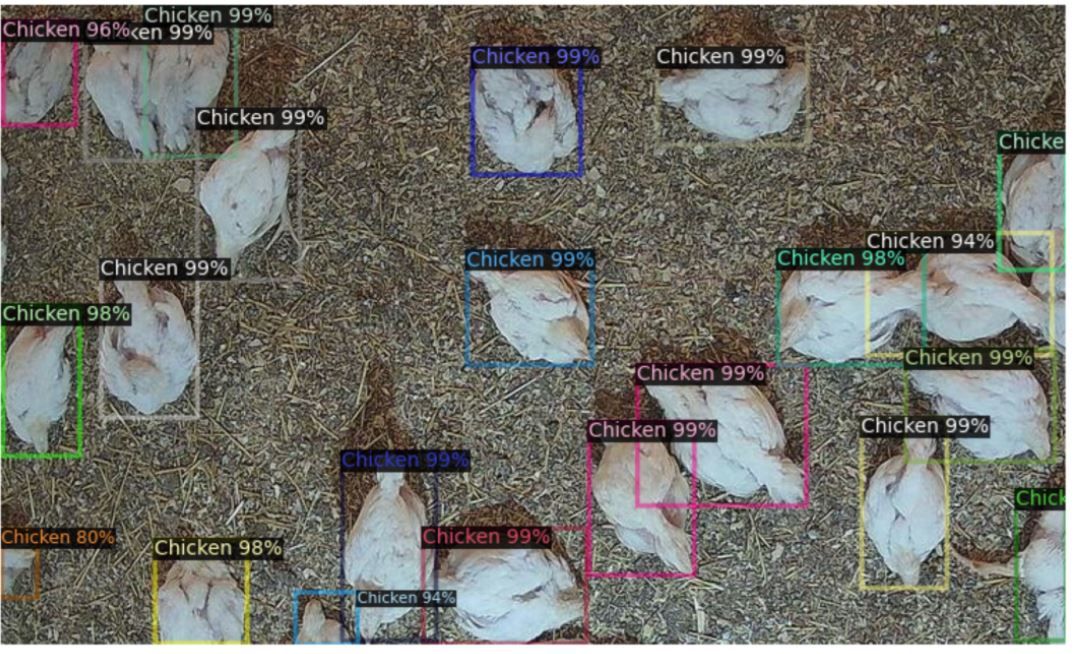
2) to explore efficient algorithms for segmenting individual birds from images, and
3) to develop a user-friendly interface for calculating the BAI.
Broiler BAI was classified into high, medium and low levels using machine learning models. High and medium activity levels were significantly lower in birds subjected to cyclic heating operations than in birds without such operations.
The results indicated that the BAI can be an effective indicator of heat stress in broilers, which may support early and timely interventions to improve flock performance. The research demonstrated that the modified general deep learning model, without extensive training, can achieve over 84% accuracy in bird segmentation from images captured within the house itself.
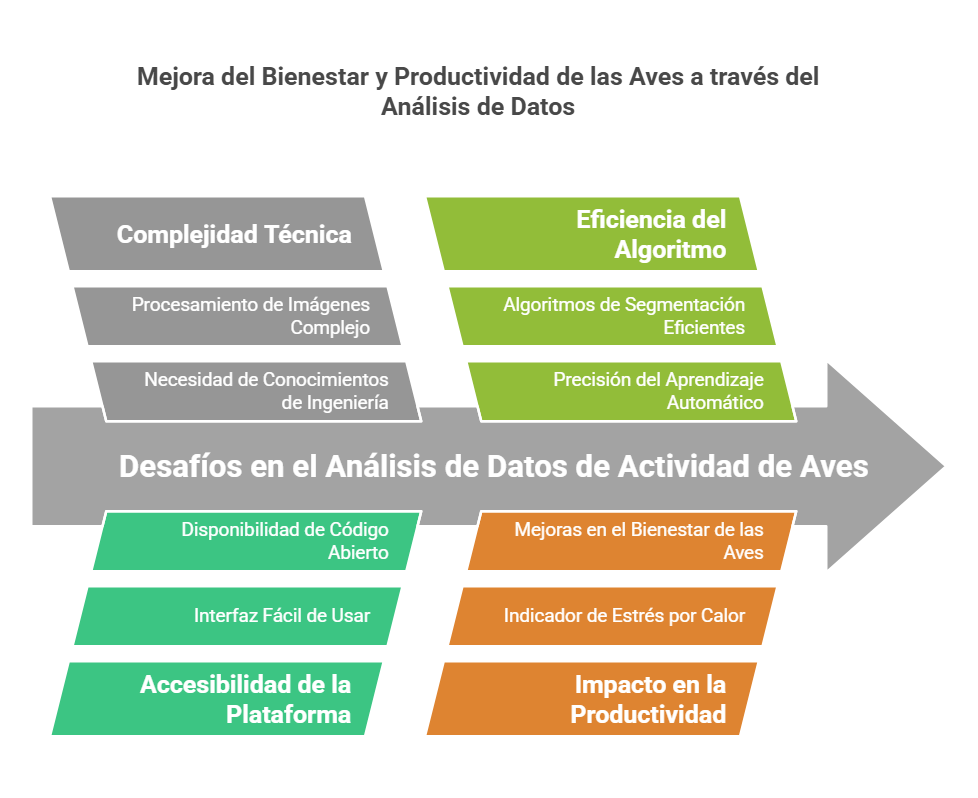
A platform was subsequently developed using Streamlit to calculate the BAI, either individually or in groups, from video footage. The open-source, user-friendly platform enabled researchers to interact with software tools to understand animal behaviour patterns and welfare without requiring extensive programming knowledge. The platform will be released on the open-access GitHub repository.
The detailed quantitative measurements of bird behaviour provided by the developed tool can better explain the effects of management practices and further contribute to producing broilers with improved welfare and productivity. Company technicians will be able to access and implement the tools to develop low-cost commercial products for automatic monitoring, thereby further enhancing the level of automation in the poultry sector and reducing the labour hours devoted to flock inspections — a far from trivial consideration in a context where finding qualified personnel to manage poultry farms is becoming increasingly difficult.
For further reading:
-. Applications of artificial intelligence in poultry production (use cases at NeXusAvicultura.com)