
We summarise below the scientific article “Sustainable Poultry Feeding Strategies for Achieving Zero Hunger and Enhancing Food Quality” for its valuable contributions to poultry nutritionists regarding the potential of alternative ingredients and by-products in diets for production poultry.
Introduction: How must poultry nutrition reinvent itself to help address global challenges?
Global demand for poultry products is on the rise. In this context, innovative feeding strategies that improve resource efficiency and food security are urgently needed. The poultry sector plays a fundamental role in providing affordable, high-quality protein to millions of consumers worldwide, directly contributing to Sustainable Development Goal 2 (SDG 2), Zero Hunger. Poultry meat and eggs are rich sources of proteins, amino acids, fats, vitamins and minerals, all crucial to human health. Furthermore, poultry meat generally contains less saturated fat than red meat, making it a healthier option.

The need to transition towards new approaches in feed formulation
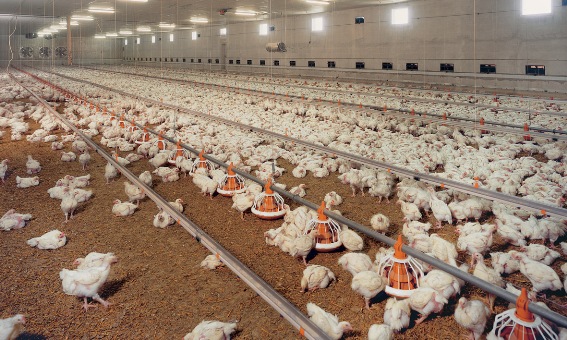
Traditional poultry feeding practices rely heavily on common grains such as maize, wheat and soybean. These ingredients are also staple foods for humans. This competition for common resources can increase food insecurity, particularly in regions with insufficient grain production. A major challenge of conventional diets is the high cost and price volatility of ingredients such as maize and soybean meal. To address these challenges, there is growing interest in exploring alternative feed ingredients that can complement or replace conventional ones.
The transition to alternative feed ingredients is complex and requires careful consideration of nutritional adequacy, palatability, cost-effectiveness and supply chain logistics.
Which alternative ingredients hold the greatest potential for new poultry diets?
The article reviews the potential for repurposing by-products, plants and food waste derived from fruits, vegetables and seeds, which account for up to 35% annually. The use of alternative ingredients such as legume residues, oilseed meals, fruit by-products, leaves or plants and other agricultural co-products offers promising ways to mitigate current challenges in the poultry industry. Oilseed meals such as canola, linseed and rapeseed, which are by-products of oil extraction processes, offer a substantial protein and fat content and can partially replace soybean meal in poultry diets. Agricultural by-products, such as oilseed meals, hulls and other residues from crop production, can also be repurposed.
Insect-based feeds have emerged as one of the most promising alternative protein sources due to their high nutritional value, low environmental footprint and potential to contribute to a circular economy. Insects such as black soldier fly larvae, mealworms and crickets are recognised for their ability to efficiently convert organic waste into high-quality protein sources.
Nutritional value and bioactive compounds
The paper analyses the nutritional composition (protein, fat, fibre and ash) and mineral profile (calcium, phosphorus, zinc, manganese, copper and iron), as well as the bioactive compounds (polyphenols, antioxidants, carotenoids, fatty acids and vitamins) of alternative feed ingredients. These can contribute to resource efficiency and reduce dependence on conventional feeds.
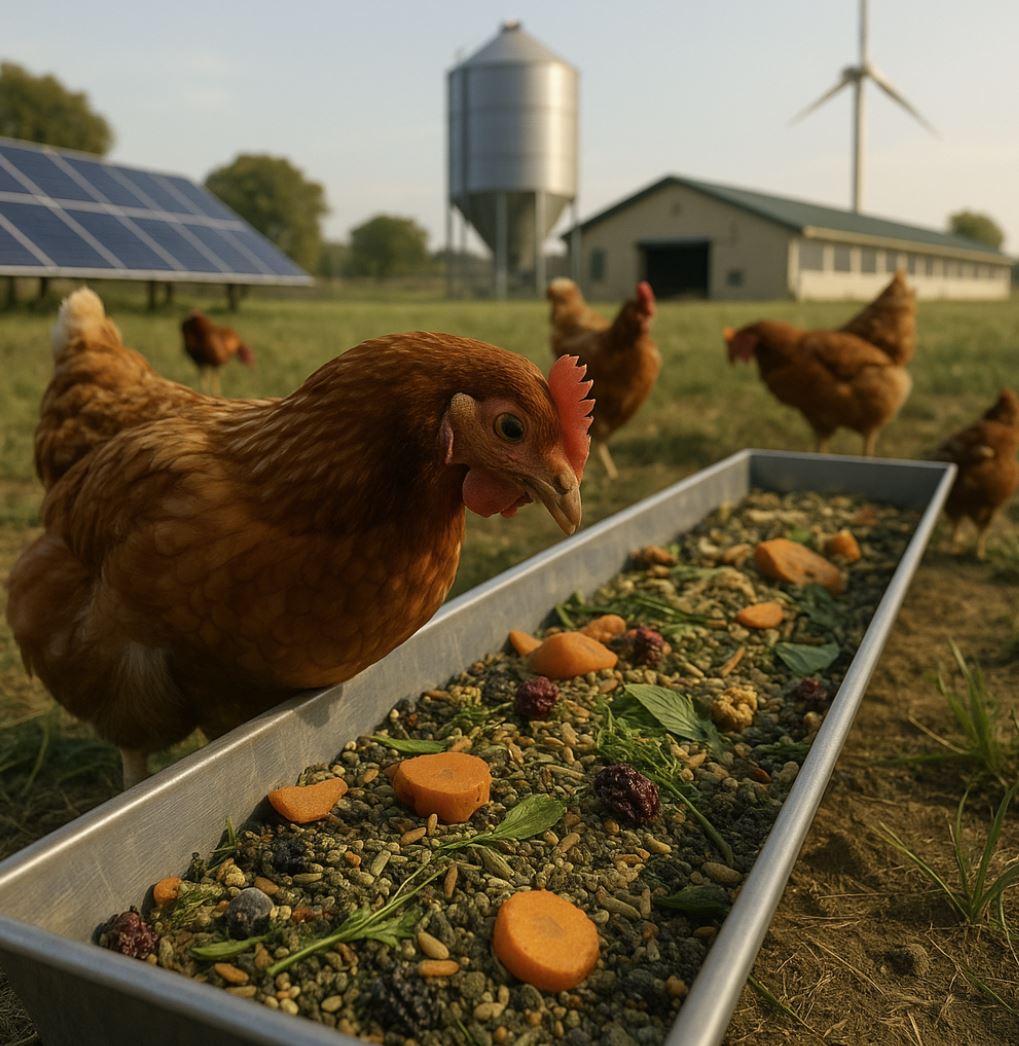
Carrot, paprika, rosehip and certain berry by-products represent an excellent source of carotenoids, polyphenols and vitamins. Seed meals (linseed, rapeseed and sea buckthorn) have been shown to improve the essential fatty acid composition of eggs and meat. Numerous plants (basil, sage, rosemary and lettuce) are natural reservoirs of bioactive compounds. The chemical composition of alternative feeds varies enormously depending on the source, but in general these products provide essential nutrients that support the health and performance of poultry.
Specific ingredients such as carrot by-products have improved egg quality, and alfalfa meal has reduced abdominal fat and yolk cholesterol in laying hens.
Impact on performance, health and product quality
The alternative ingredients reviewed, with varying amounts of nutrients and bioactive compounds, have been reported as safe and offering multiple benefits when used in poultry diets. Various plants from different botanical families have been explored for their effects on poultry performance, health and product quality.
- Carrot by-products have shown positive effects in laying hens and broilers, improving both internal and external egg quality.
- Pumpkin seed meal is a rich source of protein, fat and beneficial n-3 fatty acids.
- Parsley leaves, when tested in laying hens under heat stress, improved production performance and antioxidant compounds in eggs.
- Alfalfa (Medicago sativa) has been studied for its beneficial effects as a source of dietary fibre. In laying hens, dietary alfalfa meal at 5 to 10% significantly decreased FCR, mortality, abdominal fat yield and egg yolk cholesterol content.
- Grape seed meal was beneficial for broilers, significantly improving performance, meat quality and health. In laying hens, it improved production performance and antioxidant compounds in eggs.
What difficulties can be expected during implementation?
While the benefits of sustainable feeding strategies are clear, several challenges hinder their widespread adoption, particularly when focusing on by-products, food waste and plant-based alternatives. One of the main obstacles is the variability in the availability and quality of by-products and food waste. This inconsistency poses a challenge for formulating balanced poultry diets. Another challenge is the presence of antinutritional factors and contaminants in some plant-based alternatives and by-products, such as tannins, phytic acid and mycotoxins, which can interfere with nutrient absorption and bird health.
Digestibility is a key factor when formulating poultry diets with waste-derived products. High-fibre ingredients can reduce digestibility if not processed correctly. Palatability is also critical, as birds may refuse feed if it has an unpleasant taste, odour or texture.
The regulatory framework governing the use of insects in animal feed is a significant barrier in many regions. However, certain insect species have been reported to meet safety conditions for use in feed, in accordance with European Commission regulations.
A thorough understanding of the nutritional value of new ingredients is essential for formulating balanced and effective poultry diets.
The medium- and long-term future requires extensive research and testing with new formulations
Further research is required to improve the nutritional content of alternative feeds so that they meet the nutritional requirements of poultry whilst remaining cost-effective for farmers. This will involve further studies on the digestibility, palatability and nutritional advantages of new ingredients.
It is vital to develop clear guidelines that guarantee the safety, quality and environmental benefits of alternative feed ingredients.
Adopting alternative sustainable feeding strategies is crucial to achieving SDG 2, Zero Hunger. By exploring innovative alternatives and aligning feeding practices with circular economy principles, the poultry industry can make a significant contribution to global food security and environmental sustainability. Future research, supported by favourable policies, will be fundamental to addressing the challenges and ensuring the successful implementation of these strategies.
Source:
-. “Sustainable Poultry Feeding Strategies for Achieving Zero Hunger and Enhancing Food Quality” . Vlaicu, Petru Alexandru, Arabela Elena Untea, and Alexandra Gabriela Oancea. 2024. Agriculture 14, no. 10: 1811. https://doi.org/10.3390/agriculture14101811