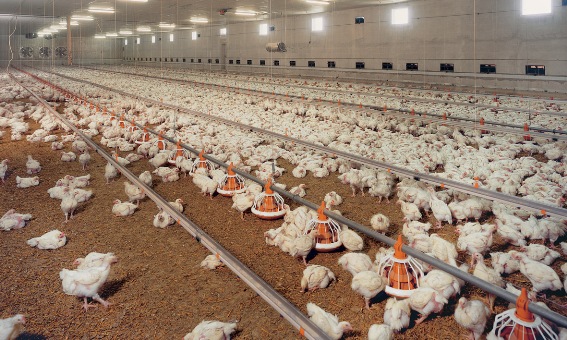

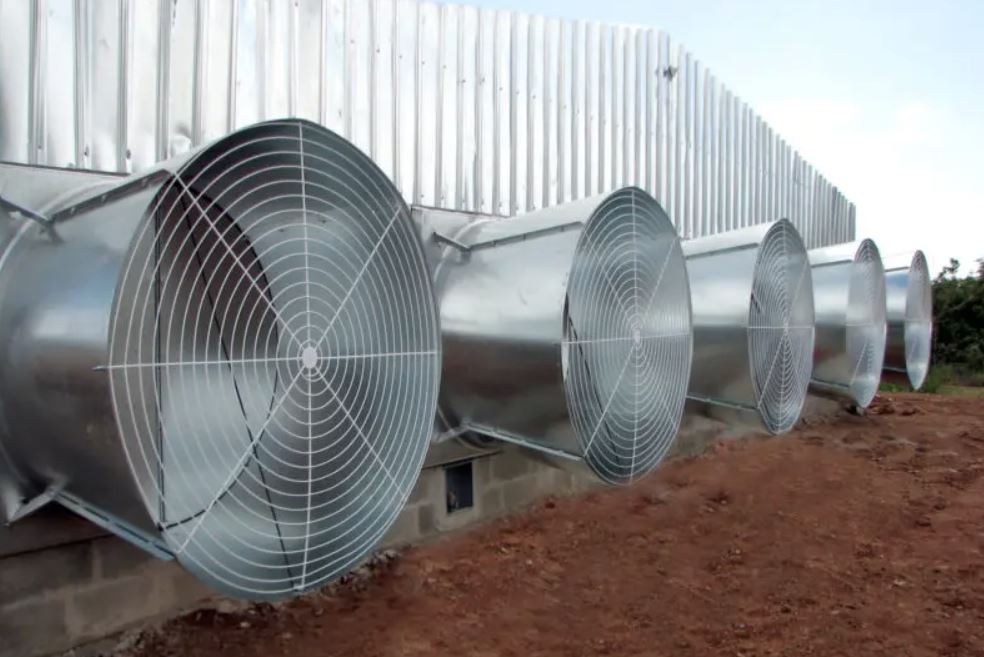
Heavy broilers exposed to hot summer conditions or heat waves experience fluctuations in surface temperature due to heat stress, resulting in reduced performance and impaired welfare. Furthermore, chickens exposed to heat stress conditions adapt to their environment through various behavioural changes in an attempt to regulate body temperature, which is a key welfare parameter.
To gain a better understanding of this subject, we conducted a study to evaluate the effect of two air velocity (AV) treatments on the dynamics of surface body temperature and behavioural patterns of broilers between 42 and 61 days of age.
Overall, we carried out five trials in environmental chambers over three consecutive summers as part of a comprehensive study on the efficacy of thermal comfort applications to mitigate heat stress in heavy broilers and provide them with optimal environmental comfort.
Two dynamic AV treatments (high and low) were applied across three chambers per treatment and 44 birds per chamber with a final stocking density of <40 kg/m². Bird surface temperature was recorded periodically from 35 to 61 days of age using infrared thermography in the morning, midday, afternoon and night. Video cameras inside each chamber recorded different bird activities such as feeding, drinking and resting; the number of birds performing each activity was counted and the correlation between bird surface temperature and air temperature was investigated.

The results indicated that the overall mean surface temperature was 35.9 ± 2.4°C and that birds exposed to high AV had lower surface temperatures (P<0.05) than those under low AV. A regression model was constructed to predict the surface temperatures of heavy broilers based on bird age, temperature-humidity index and AV. In addition to reducing bird surface temperatures, high AV increased (P<0.01) the number of birds eating, standing and walking compared with those under low AV.
In conclusion, it was found that high air velocities helped heavy broilers to dissipate metabolic body heat by adjusting their behaviour under heat stress conditions.
Source:
-. Suraiya Akter et al. XI European Symp. On Poultry Welfare. Prague, 2023