
Avian influenza viruses are a potential threat to humans because they can replicate at temperatures higher than a typical fever, one of the body’s ways of stopping viruses, according to new research led by the universities of Cambridge and Glasgow.
Joint research by Cambridge and Glasgow Universities, “Avian-origin influenza A viruses tolerate elevated pyrexic temperatures in mammals“, recently published in November 2025 in the journal Science, reveals a troubling biological mechanism: the H5N1 virus possesses a “thermal shield” that makes it resistant to high body temperatures, challenging human immunological barriers and increasing the risk of a lethal pandemic.
Fever has been, for millennia, one of the most effective weapons of the human body. When a virus attacks us, our internal thermostat raises the temperature to “cook” the invader and stop its replication. However, a new and exhaustive study published in the journal Science suggests that this ancestral strategy could be useless against a potentially major viral threat: Avian Influenza.
Scientists from Cambridge University and Glasgow University have discovered why the avian influenza virus (particularly strains such as H5N1) represents such a serious threat: unlike seasonal human flu, avian flu not only tolerates fever but is evolutionarily designed to thrive in heat.
The origin of the “superpower”: ducks, gulls, and a boiling intestine
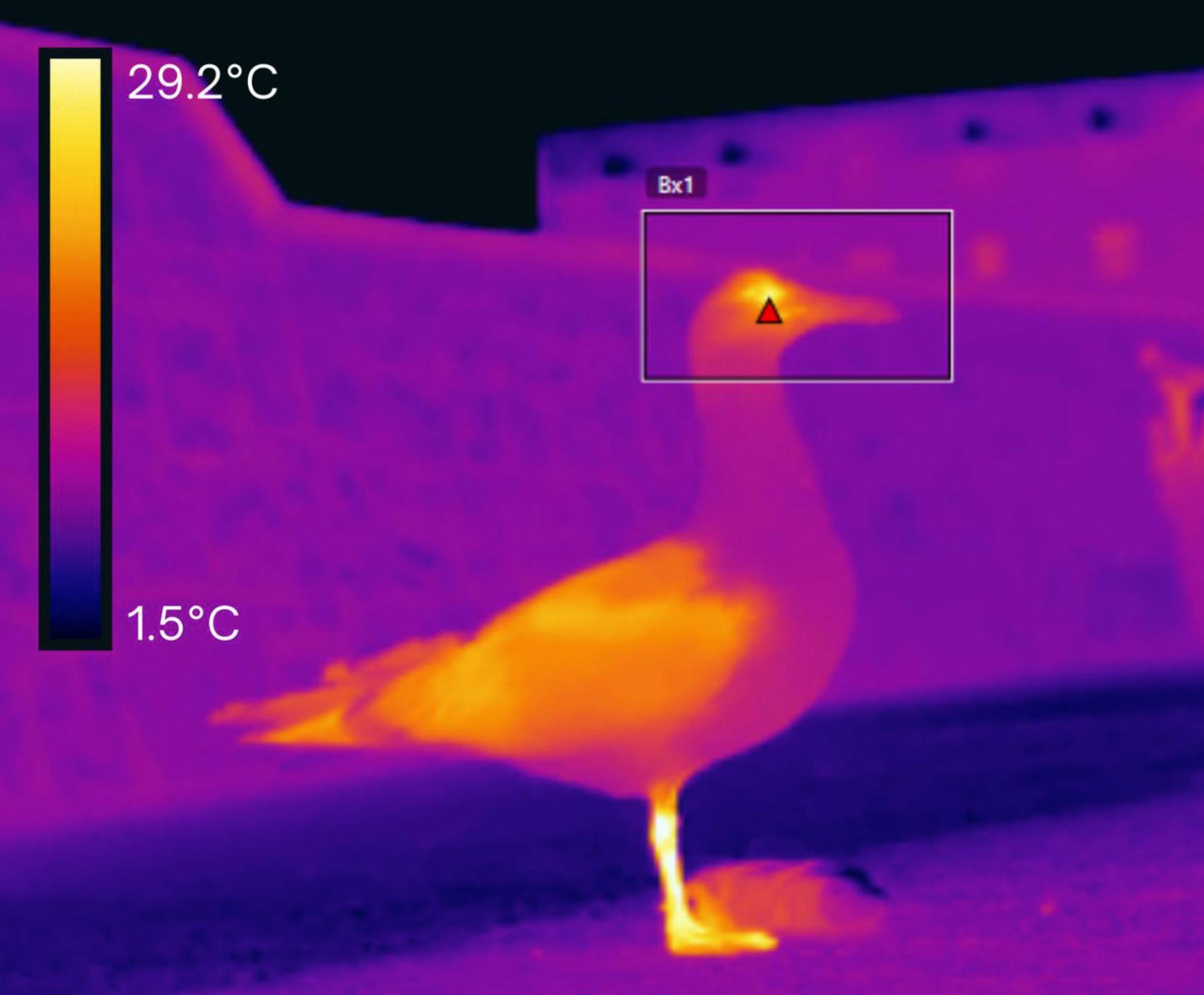
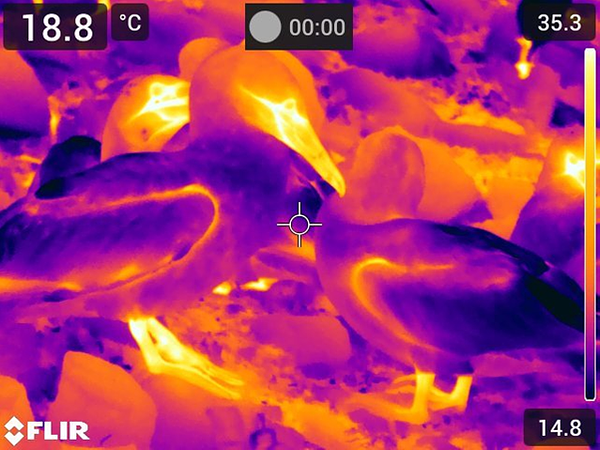
To understand why this virus is so resistant, we must look at its natural hosts. While humans have a body temperature of about 37 °C, wild waterfowl (such as ducks and gulls) operate at much higher temperatures.
The avian virus typically infects the intestine of these birds, an environment where the temperature ranges between 40 °C and 42 °C. As a result, the virus has evolved to replicate comfortably in an environment that would be lethal to a human flu virus.
The vital thermal difference:
- Human Flu (Seasonal): Prefers the upper respiratory tract (nose and throat), where air keeps the area at a cool 33 °C.
- Avian Flu: When jumping to mammals, it seeks the lower and deeper respiratory tract of the lungs, where the temperature is 37 °C or higher, causing severe damage such as severe pneumonias.
The key finding: the PB1 gene
The research team, led by Professor Sam Wilson (Cambridge) and Dr. Matt Turnbull (Glasgow), has identified the genetic culprit behind this resistance: the PB1 gene.
This gene acts as the virus’s replication engine. The study warns that if a human flu virus and an avian one infect the same host (such as a pig) simultaneously, they can exchange genetic material. If the human virus acquires the avian PB1 gene, it becomes a hybrid with human transmission capacity and avian thermal resistance.
“We have seen this before”, warns Dr. Turnbull. “In the deadly pandemics of 1957 and 1968, the human virus exchanged its PB1 gene with that of an avian strain. This helps explain why those pandemics caused such severe disease in people”.

The experiment: when fever is not enough
To test this theory, scientists used in vivo models with mice, simulating fever conditions. They used a human-origin flu virus (PR8 strain) and manipulated the ambient temperature to raise the body temperature of the rodents.
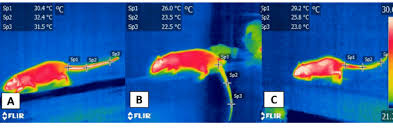
The results were conclusive:
- Against human flu: An increase of just 2 °C in body temperature was enough to stop viral replication, turning a lethal infection into a mild disease. Fever worked.
- Against flu with avian gene: The virus completely ignored the temperature increase. It continued to replicate and caused severe disease in mice despite the “fever”.
Should we reconsider the use of Ibuprofen and Aspirin?
One of the most controversial and revealing points of the study is its implication for medical treatment. Currently, it is common to treat fever with antipyretics (temperature-lowering medications) such as paracetamol, ibuprofen, or aspirin.
However, Professor Wendy Barclay, chair of the MRC Infection and Immunity Board, suggests caution. The study indicates that fever is crucial for slowing viruses adapted to humans. “There is clinical evidence that treating fever does not always benefit the patient and may even promote the transmission of influenza A virus in humans”, the report notes. Artificially lowering fever could be “disabling” our best defense just when we need it most.
A context of growing threat
Although we don’t like this news, and some might think it doesn’t concern us and it’s better not to talk about it, we at NeXus believe that the times of not speaking about something or hiding things “under the wing” have passed into history. Without sensationalism but with rigor. The “One Health” approach is not posturing. It is for this reason that the publication of this study in Science, and recent warnings from the Pasteur Institute of France, could not be more timely. The current landscape shows warning signs:
- United States: In November 2025 a resident of Washington state died after becoming infected with an avian flu strain. It is the first documented case of infection and death from complications of the H5N5 strain in humans. Previously, in January 2025 another person had also died from avian influenza, in this case from the H5N1 strain.
- Europe: French authorities have warned that a hypothetical avian flu pandemic would likely be more deadly than the COVID-19 pandemic.
Professor Sam Wilson concludes with a clear warning: “Although humans are not frequently infected with avian flu, mortality rates have been historically concerning, exceeding 40% in H5N1 infections. Understanding this heat resistance is crucial for our pandemic preparedness”.
The message from science is clear: the virus is equipped to resist heat. Surveillance of the PB1 gene and the development of new strategies that do not depend solely on our natural febrile response will be determinant in preventing the history of 1957, 1968 or 2020 from repeating.
The “Viral Lottery”: What is Genetic Reassortment (the exchange of genes between viruses or “Antigenic Shift”)?
To understand why avian flu is so dangerous, we must first visualize how the flu virus is structured. Unlike COVID-19 or measles, which have a single long chain of genetic code, the influenza virus has a fragmented genome.
Imagine that the virus is not a book, but a folder with 8 loose pages (or RNA segments). Each page contains instructions for a different part of the virus: one page for the entry “key” (haemagglutinin), another for the “exit” (neuraminidase), and another, very important in this case, for the replication “engine” (the PB1 gene).
The process step by step: how a hybrid is born
Genetic reassortment occurs when two different viruses infect the same cell of the same animal at the same time. Here is the process:
- The encounter (Co-infection): Imagine a rural scenario. A pig (which is susceptible to both avian and human viruses) comes into contact with feces from an infected duck (H5N1) and, at the same time, a farmer coughs near it (seasonal human flu). Both viruses enter the pig’s cells.
- The mixing (The “cards are shuffled”): Inside the pig’s cell, both viruses “disarm” themselves to replicate. The 8 pages of the avian virus (let’s say, red colored) and the 8 pages of the human virus (blue colored) come loose and mix in the cell fluid. Now there are 16 pages floating around.
- The packaging (The Hybrid): The cell, forced to manufacture new viruses, begins to package sets of 8 pages at random.
- It may create a 100% avian virus.
- It may create a 100% human virus.
- The danger: A mosaic virus is created. For example, it takes 7 pages from the human virus (which allows it to spread easily among people) but takes the page of the avian virus’s PB1 gene.
- The result: A new virus is born that the human immune system does not recognize or cannot fight effectively.
Historical fact: The pandemics of 1957 (Asian Flu) and 1968 (Hong Kong Flu) were not slow mutations; they were reassortment events. In both cases, the human virus acquired internal genes (including PB1) from avian viruses, catching the world off guard.
Why is the PB1 gene the most dangerous piece?
Returning to the Cambridge and Glasgow study, this is where reassortment becomes lethal.
If the new hybrid virus acquires the avian PB1 gene, it gains a terrible evolutionary advantage:
- Human capacity: Uses the “shell” of the human virus to enter our respiratory tract and jump from person to person when coughing.
- Avian resistance: Uses the “internal engine” (PB1) of the bird. As we saw, this engine is designed to work at 40-42 °C.
When your body detects this new virus, it raises the temperature (fever) to 39 °C to stop it.
- Normal virus: It stops.
- Hybrid virus with avian PB1: It continues to function at full power, because its “engine” can handle much more heat. Fever does not stop it, and the infection progresses toward severe pneumonia.
The role of the “Mixing Vessel”
Scientists closely monitor pigs because they are considered “mixing vessels”. Their respiratory cells have lock-like receptors that accept both the keys of avian viruses and those of human viruses. They are the perfect biological laboratory for this reassortment to occur.
Source:
-. Turnbull, ML et al. Avian-origin influenza A viruses tolerate elevated pyrexic temperatures in mammals. Science; 27 Nov 2025; DOI: 10.1126/science.adq4691
To learn more:
-. Avian Influenza on NeXusAvicultura