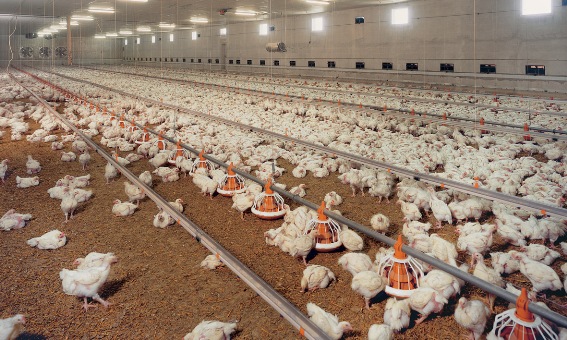

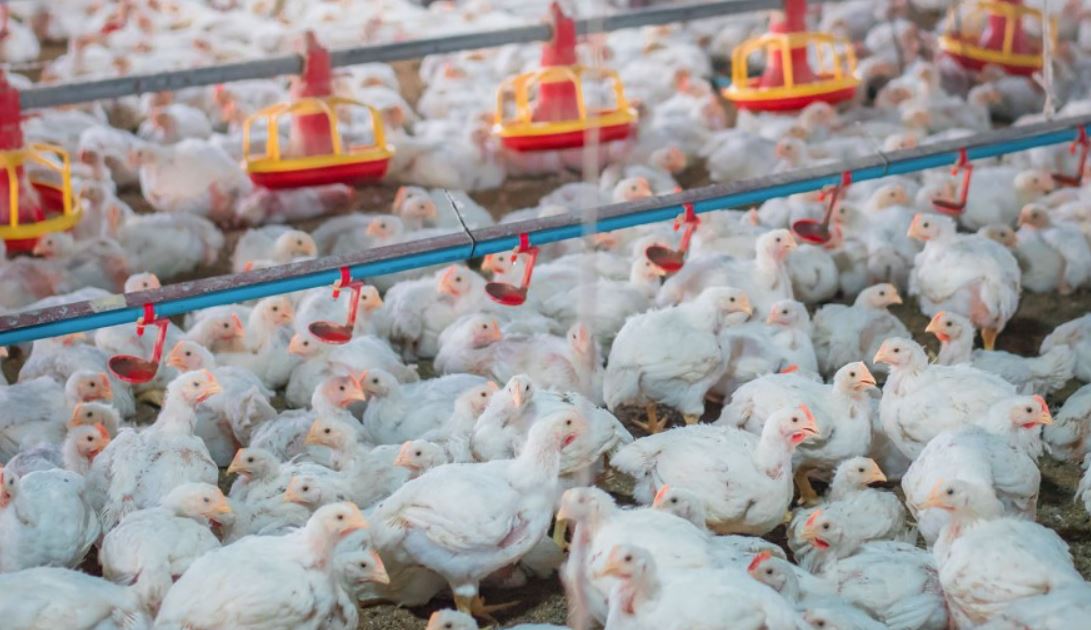
Intestinal health is a fundamental pillar for successful broiler production. Enteric virus infections can cause conditions ranging from mild to severe enteritis, manifesting as diarrhoea, uneven growth, poor feed conversion and significant economic losses. Although in many cases birds show no evident clinical signs, the presence of these viruses can negatively impact productive performance.
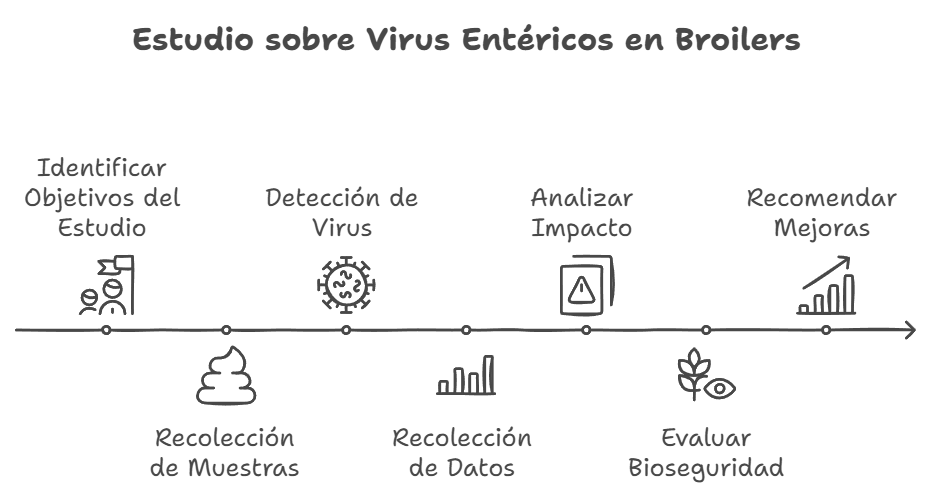
In order to study this subject, we carried out a study to:
1) investigate the prevalence of 5 enteric viruses associated with broiler runting-stunting syndrome and malabsorption: avian adenovirus (FAdV), parvovirus (ChPV), astrovirus (CAstV), reovirus (ARV) and avian rotavirus (AvRV),
2) evaluate the impact of these viral infections on productive performance, and
3) analyse the relationship between farm biosecurity and the prevalence of these viruses in order to recommend improvements and control measures.
The methodology employed consisted of:
1) collection of intestinal samples from 49 Ross broiler flocks on 17 different farms, carried out at: between 7–14 days and subsequently between 28–35 days of age,
2) analysis for viral isolation using PCR/RT–PCR techniques to detect the presence of the viruses under study, and
3) collection of productive performance data (mortality and live weight) and administration of a questionnaire to evaluate biosecurity and management practices on each farm.
Main results
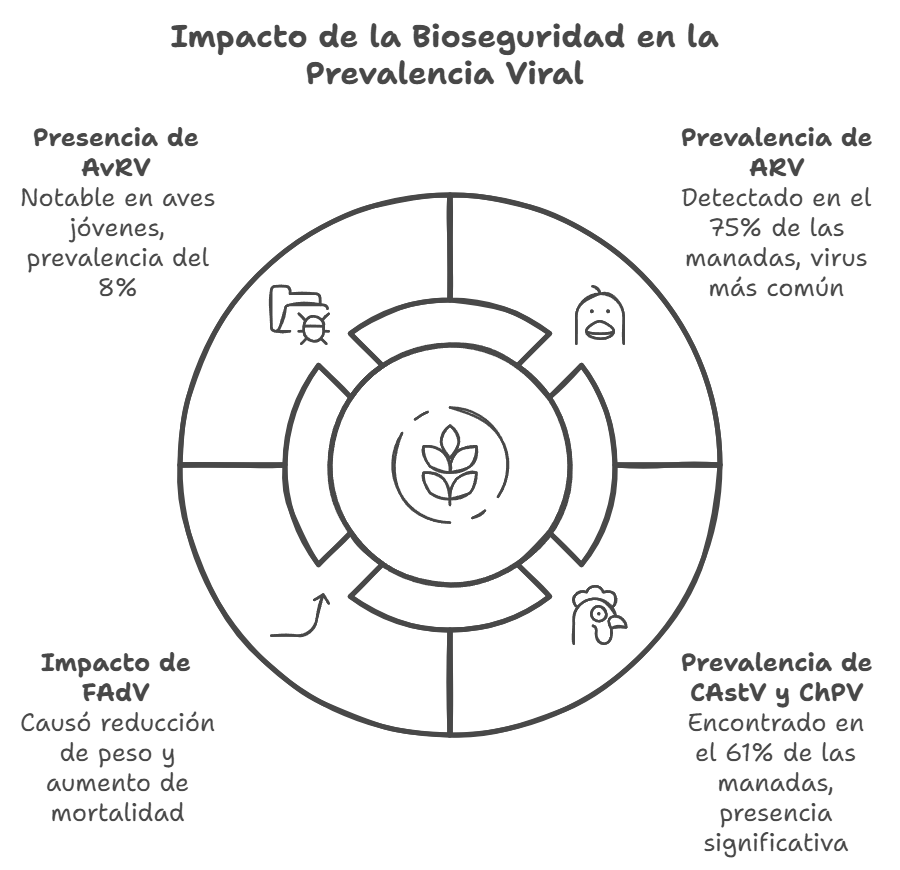
- ARV prevalence was detected in 75% of flocks, making it the most common virus; CAstV and ChPV were detected in 61% of flocks; FAdV in 57% (particularly towards the end of the rearing period); and AvRV in 8% of flocks, primarily in young birds.
- Absence of clinical signs: despite the high viral prevalence, no evidence of enteritis or significant pathological lesions was found in the birds examined.
- Impact on performance due to: reduced live weight, increased mortality in flocks infected with FAdV, CAstV and/or ARV, and a cumulative effect when multiple enteric viruses were present concurrently.
- Diversity and dynamics of infection were evidenced by flocks displaying highly heterogeneous infection profiles with no dominant viral pattern, and by changes in viral profiles between the two sampling time points, indicating possible horizontal viral introduction during the rearing period.
Regarding biosecurity measures, it was observed that:
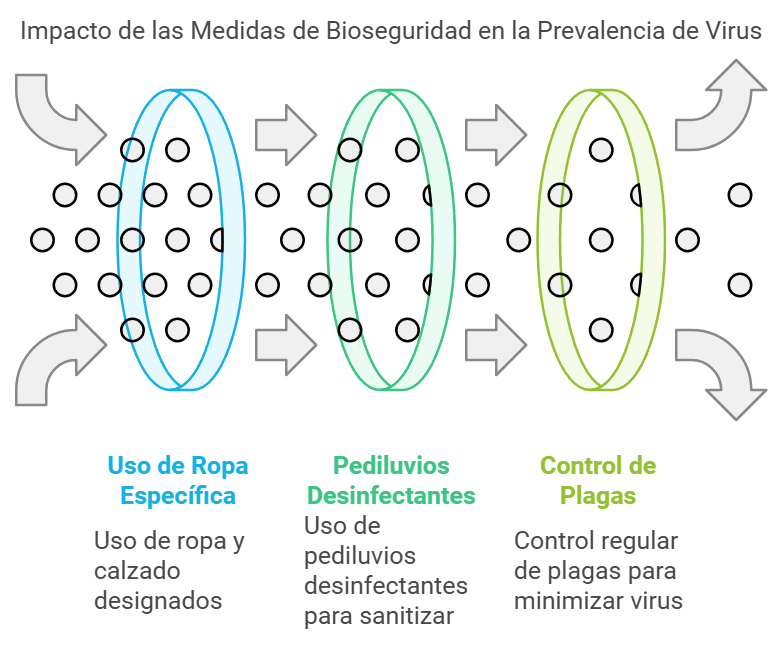
1) the use of dedicated clothing and footwear was associated with a lower prevalence of enteric viruses,
2) the implementation of disinfectant footbaths significantly reduced the presence of FAdV in flocks, and
3) regular pest control (insects and rodents) was associated with a reduction in the prevalence of FAdV and CAstV.
Conclusions
The presence of enteric viruses in broiler flocks is common, even in the absence of apparent clinical signs. Nevertheless, these infections can negatively affect productive performance, with associated economic losses.
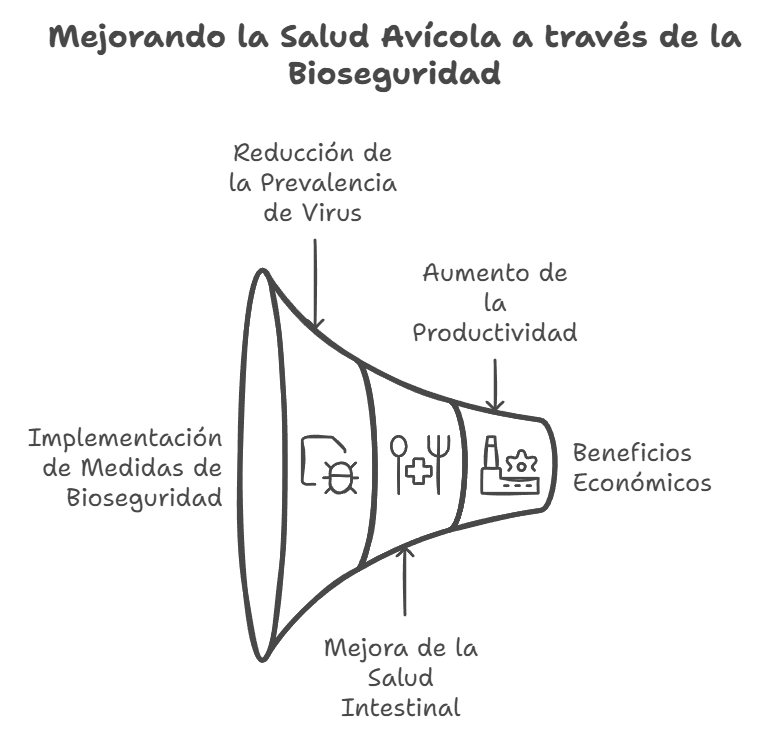
Biosecurity measures, though straightforward, have a significant impact on reducing the prevalence of enteric viruses. The consistent implementation of practices such as the use of dedicated clothing and footwear, disinfectant footbaths and regular pest control programmes can improve intestinal health in birds and optimise productive efficiency.
It is essential that veterinarians and poultry producers work together to establish and maintain high biosecurity standards. Ongoing education, staff training and a commitment to best practices are fundamental to preventing the introduction and spread of enteric viruses on farms.
By strengthening biosecurity practices and promoting proactive intestinal health management, producers can reduce the incidence of viral infections, improve animal welfare and increase the profitability of their operations.
Source:
Grafl, B., Gaußmann, B., Bilic, I., Folkertsma, R., & Hess, M. (2024). Influence of biosecurity on the occurrence of various enteric viruses in broiler flocks. Avian Pathology, 1–12. https://doi.org/10.1080/03079457.2024.2377337