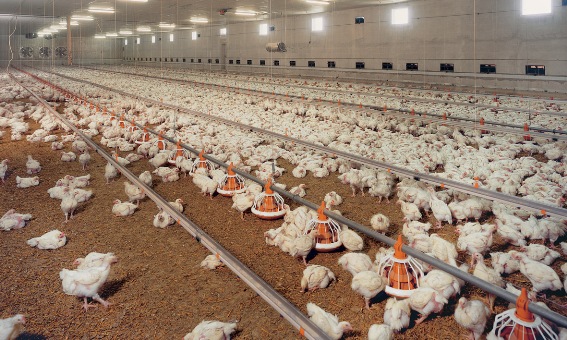

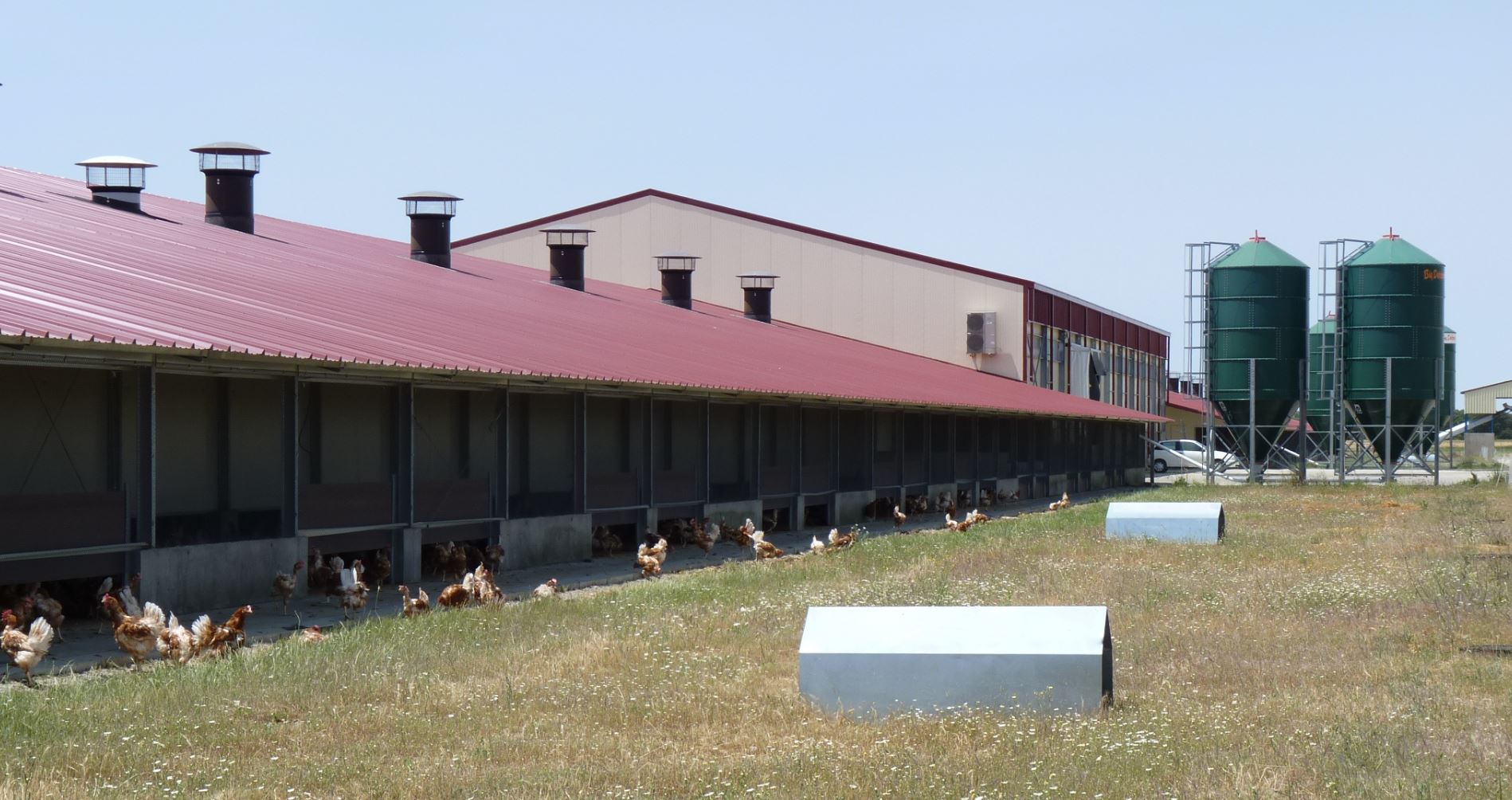
Valencia, 27 June 2025. The Valencian company Huevos Guillén, a leading egg supplier to Mercadona, is engaged in an ambitious expansion process and a complete transition to cage-free housing systems. The company has announced a strategic investment of 210 million euros over the next four years and the acquisition of two new poultry farms, with the aim of boosting its production capacity and meeting growing consumer demand for this protein. Huevos Guillén’s laying hen flock is expected to approach 6.2 million birds by the end of 2025.
A laying complex in Toledo and a broiler unit in Utiel to be converted to laying production have been acquired, adding half a million laying hens between them.
To strengthen its flock size and production under alternative systems, Huevos Guillén has completed two significant transactions. The first, finalised in January 2025, was the purchase of a free-range laying complex in the town of Consuegra, Toledo, from the Castilla-La Mancha company AVÍCOLA DORADO SL (which continues to retain ownership of another of its farms). This unit already has four laying houses, one rearing house and an egg grading centre, currently housing a flock of 140,000 birds. At the same site, a fifth free-range rearing house is under construction, with the aim of progressively reaching 250,000 hens throughout 2025, subject to the receipt of the required administrative permits.
In addition, the company acquired another unit at the close of 2024 in Utiel, in the province of Valencia. This facility, which was previously used for broiler rearing, is being converted to egg production and has the capacity to house up to 246,000 cage-free hens on a phased basis, distributed across seven laying houses. The company has emphasised that “these decisions represent a further step in our commitment to animal welfare, responding to societal concerns.”
In the province of Valencia, Guillén now operates two additional units in Sinarcas, dedicated to free-range egg production, barn eggs (previously floor-reared) and conventional production, while in Toledo its first organic centre is located, specifically in Villaluenga de la Sagra, where it also has additional houses for code 2 production.
By 2025, 75% of its hens will be housed in cage-free systems
The company’s commitment to alternative systems is reflected in its figures. At the close of 2024, 60% of its hens were already in alternative laying systems, with the remaining 40% in cages. The forecast for 2025 is that the cage-free flock will reach 75%. In total, Huevos Guillén is expected to add 824,000 more birds than in 2024, approaching 6.2 million laying hens by the end of 2025.
To achieve this modernisation and growth milestone, the poultry company has designed an ambitious investment plan worth 210 million euros over the next four years. The largest share of this budget will be allocated to the transition to cage-free systems, through the addition of new farm houses or pullet rearing facilities for free-range hens. The distribution of this multi-year investment will be 58 million euros in 2025, 55 million in 2026, 55 million in 2027 and 42 million in 2028.
“The transition to cage-free systems, through the addition of new farm houses or pullet rearing facilities for free-range hens, will account for the largest share of the investment budget over the next four years, totalling 210 million euros.”
A wall of “administrative red tape” is slowing the pace of new investment
Despite the notable boom in consumer demand, the egg sector faces challenges that prevent supply from growing at the same pace. The company has noted in its management report that, while consumption has grown by 16% since 2022, the laying hen flock has increased by only 1.7%. This disparity creates a gap that sustains high market prices and hampers the ability to meet consumer needs.
According to Huevos Guillén, several obstacles are responsible for this situation and the rise in prices:
- Production losses during transition: The process of converting from caged to cage-free systems results in a loss of production, as the new facilities house fewer birds.
- High investment costs: The capital cost per bird housed has increased by approximately 50% over the past five years.
- Administrative barriers: One of the greatest impediments is the “enormous administrative and bureaucratic obstacles”, which result in excessively long timelines for obtaining permits and licences, exceeding two years. Added to this is the construction period, meaning that “we are looking at a 4-year timeframe to have a new farm completed”.

Huevos Guillén closed 2024 with profits up 21%
These factors influenced the company’s 2024 results. Huevos Guillén closed the financial year with a turnover of 262.37 million euros, representing a 4% decrease compared with the 273.4 million recorded the previous year. The company attributed this lower sales volume to the reduction in average selling price and the lengthy timescales involved in converting to alternative systems due to delays in licensing and facility procurement.
Nevertheless, the company achieved a profit of 36.3 million euros, up 21%, driven by improved margins. The funds generated in 2024 were largely directed towards a 37% reduction in financial debt and investment expenditure totalling 24 million euros, of which 67% was allocated to increasing productive capacity.
For the current year, Huevos Guillén anticipates a stabilisation of prices and a 3% increase in the volume marketed, driven by the growth in the laying hen flock as a result of the investments made. On the cost side, the company does not anticipate significant changes for 2025, forecasting stable cereal and soya prices and overall inflationary control by central banks.
Target: 10 million laying hens by 2030
The planned organic flock growth “to 10 million hens by 2030”, together with the addition of new cage-free houses or pullet rearing facilities for free-range hens, will account for the largest share of the investment budget announced by Huevos Guillén for the next four years: €210M distributed across 2025 (€58M), 2026 (€55M), 2027 (€55M) and 2028 (€42M). Outside the fresh egg market, €3M will be allocated to expanding the productive capacity of its egg products plant in Utiel, to improve organisation and increase the turnover of this division. “We are going to double the available space, in order to reorganise production more efficiently, while also looking ahead to new future lines of business that we cannot yet anticipate,” the company told Alimarket. In 2024, this business unit reached a volume of 13.5 million litres of egg products and 6.2 million dozens of cooked eggs, figures that will rise to 14 million litres and 7 million dozens in 2025.

In the current year, the Guillén group will return to €273M in turnover, compared with the €262M recorded at the close of 2024, a 4% decrease due to the easing of egg prices during the year, while volume will stand at 117 million dozens of eggs — the undisputed market leader in Spain — with 90% destined for sale on Mercadona’s shelves and 77 million dozens already sourced from alternative systems.
For further information:
-. News on poultry companies at NeXusAvicultura.com