
European Foie Gras Convened in Madrid
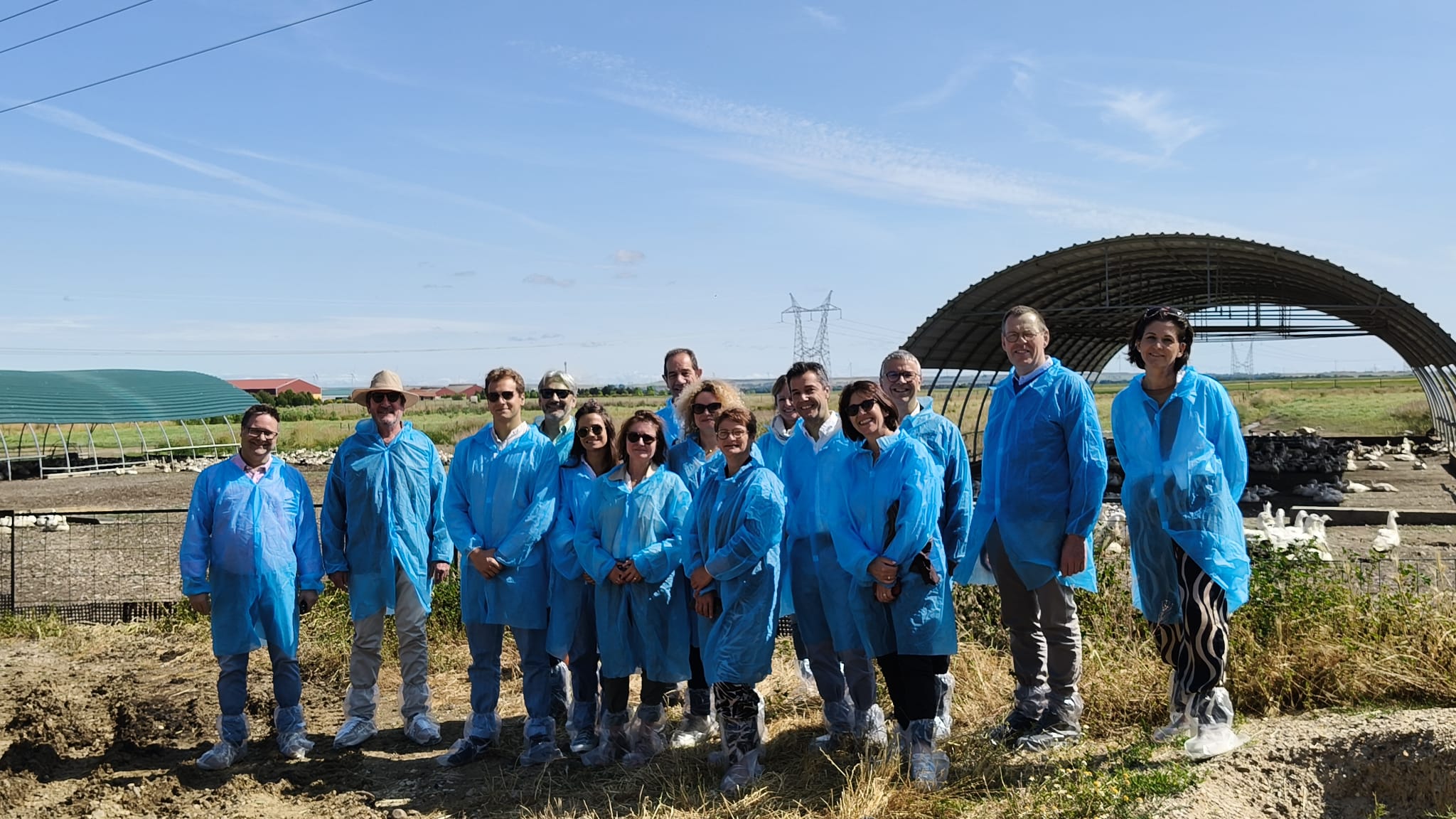
Madrid, 9 June 2025. Last week, the Spanish capital was at the centre of a crucial gathering for the European foie gras sector. On the occasion of the 15th anniversary of the Interprofessional Association of Fatty Waterfowl (Interpalm), Spain hosted for the second time the General Assembly of Euro Foie Gras, the federation representing the leading producers of this product in Europe.
Interpalm, officially recognised by the Ministry of Agriculture, Fisheries and Food in 2010, is celebrating fifteen years of dedication to an artisanal production model that not only creates jobs but also drives economic activity in rural areas. Delegations from France, Hungary, Bulgaria, Belgium and Spain gathered in a country that, with nearly 525 tonnes produced in 2024, ranks as the fourth largest foie gras producer in the European Union.
Emmanuel Chardat, President of Euro Foie Gras, congratulated Interpalm on its anniversary, highlighting the important work carried out by the Spanish foie gras interprofessional organisation. “The work that the Spanish interprofessional organisation has carried out over all this time is extremely important, both at the level of Public Administrations and in terms of communication to society, because we want European citizens to truly understand our European production model,” Chardat stated.
For Emmanuel Chardat, President of Euro Foie Gras, “the work that the Spanish interprofessional organisation has carried out over all this time is extremely important, both at the level of Public Administrations and in terms of communication to society, because we want European citizens to truly understand our European production model“.
In a context of constant regulatory change and growing social demands, the European foie gras sector, in line with other alternative poultry sectors, reaffirms its commitment to quality, animal welfare, biosecurity, territorial rootedness, responsible innovation and gastronomy with identity.
Enrique de Prado, President of Interpalm, emphasised the significance of the sector: “We do not only produce foie gras: we generate value, sustain rural employment, preserve a centuries-old craft and offer a product with European identity, and hosting this assembly in Spain is also an acknowledgement of the value of our profession.” De Prado also underlined the need to “defend the traditional livestock farming model against simplistic messages that criticise it and are far removed from the reality of the countryside and food producers.”
“We do not only produce foie gras: we generate value, sustain rural employment, preserve a centuries-old craft and offer a product with European identity, and hosting this assembly in Spain is also an acknowledgement of the value of our profession,” stated Enrique de Prado, President of Interpalm.
Production in Europe: a sector in recovery
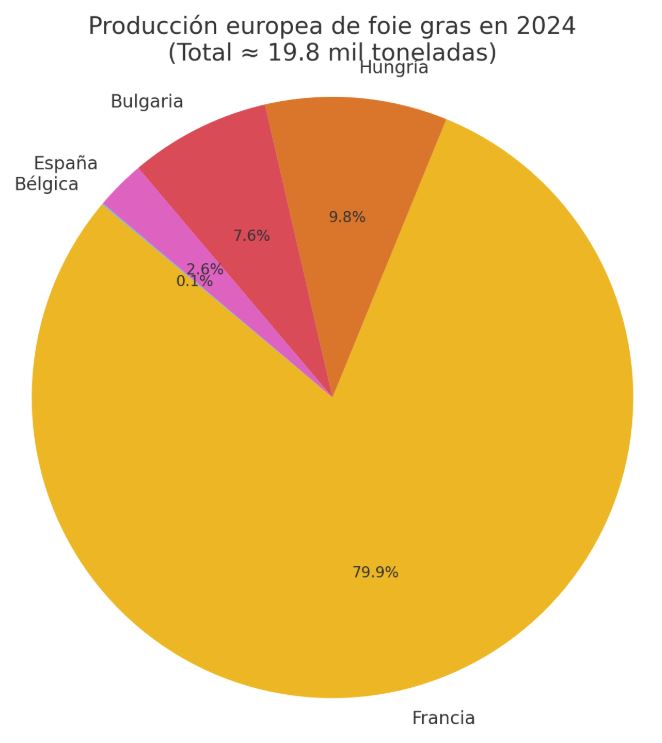
In 2024, European foie gras production exceeded 19,800 tonnes, demonstrating the sector’s recovery and dynamism. France leads production with approximately 15,840 tonnes (nearly 80% of the total), followed by Hungary with around 1,940 tonnes and Bulgaria with close to 1,500 tonnes. Spain, with nearly 525 tonnes, and Belgium, with around 12 tonnes, complete the picture. These figures reflect the sector’s strength, with France and Hungary as benchmarks and Spain consolidating its commitment to quality and international markets.
Connecting with the new generations
One of the key challenges for the sector is reaching younger audiences. In this vein, Interpalm has launched the campaign “Foie Gras in Reels“ on social media (IG: @tododelfoiegras; FB: Foie Gras en España and X: @elfoiegras).
Featuring Michelin-starred chef Juanlu Fernández (LÚ Cocina y Alma), the initiative aims to demystify the product through recipes, short videos, masterclasses and workshops targeted at young people aged 18 to 35, showcasing its culinary and cultural dimension as a European gastronomic heritage.

Origins and celebrations
Foie gras boasts a long and prestigious history. The earliest evidence of this delicacy dates back to ancient Egypt, over 3,000 years ago. The Egyptians observed the migratory hyperphagia of certain birds and their natural capacity to accumulate fat in the liver, and reproduced assisted feeding with domesticated animals. Over time the technique spread, particularly in classical Greece and Rome. Following the fall of the Roman Empire, the tradition survived in Jewish communities, who substituted butter with goose fat for cooking. These communities brought foie gras production to France — especially Alsace — to Hungary and along the Danube during migrations from Bohemia. Since waterfowl are fattened with maize, farms became established wherever this crop thrived, such as the south-west of France.
Today foie gras is a traditional gastronomic product closely linked to the culinary identity of several European countries. In France it forms part of the Protected Cultural and Gastronomic Heritage; in Hungary, goose liver holds the distinction of “Hungaricum”, a designation reserved for unique and highly valued products.
Festivals are held in its honour across Europe. In Hungary, the Goose Festival coincides with St Martin’s Day, marking the end of the harvest and the beginning of winter. In France, notable events include the Fest’Oie de Sarlat, dedicated to the Périgord goose, and the regional foie gras festival of Phalsbourg, near Strasbourg. All of these evoke tradition, culture, heritage, conviviality, pleasure and a spirit of sharing.

A diverse range of products
Although foie gras is the most prestigious and well-known product, there are other delicacies that delight the palate: magret (duck breast), confit, rillettes, and more.
Foie gras presentations
- Raw foie gras
Intended primarily for food manufacturers and restaurateurs to prepare terrines or serve pan-fried; also purchased by gourmets who prepare their own foie gras. - Processed foie gras
Ready to eat and purchased by the majority of consumers. European regulations require a minimum weight of 300 g (duck) or 400 g (goose) and that it must come from a specially force-fed animal.
Foie gras designations
- Whole foie gras
A complete liver or one or more intact lobes, with its seasoning. - Foie gras
A preparation composed of agglomerated pieces of foie gras lobes and seasonings. - Bloc de foie gras
Emulsified and reconstituted foie gras with seasonings. If it includes pieces of whole liver, it is referred to as bloc de foie gras with pieces.
Other emblematic products
- Magret
According to Regulation (EC) No 543/2008, this is the breast of an animal force-fed for foie gras production. It may be served as a main course or, smoked and cured, used to enhance mixed salads. - Confit
Duck or goose leg slowly cooked in its own fat.
Foie gras and its role as a driver of rural employment
In the European Union the sector generates more than 50,000 direct jobs and a turnover of 4 billion euros, in addition to numerous indirect positions in feed suppliers, hatcheries, slaughterhouses and trade.
Proud foie gras farmers committed to quality
Passionate about their craft, waterfowl fattening farmers live alongside their animals every day, monitoring their health and seeking optimal growth to produce an outstanding product. The majority of holdings are family-run and extensive; many producers grow the maize with which they feed their birds, thereby preserving a terroir and a savoir-faire that is a source of pride for European gastronomy.
Processors and chefs in the service of fine taste
Foie gras terrines, magret, confit… high value-added products capable of awakening the senses. Before reaching this stage, however, the essential steps of slaughter, evisceration and cutting are carried out either on farm or at specialist facilities.
At the table, foie gras lends itself to every kind of culinary creativity. The star of entire recipe books, it displays its silky texture and delicate flavour across countless restaurants throughout Europe and the world. It also inspires gastronomic competitions, such as the French “Foie Gras Challenge”, where young creators give free rein to their imagination. To honour foie gras is to honour a European culinary heritage sustained by every link in the production chain.
For further information:
-. Interprofessional Association of Fatty Waterfowl (Interpalm)
-. Alternative poultry sectors on NeXusAvicultura
-. European Federation of foie gras