
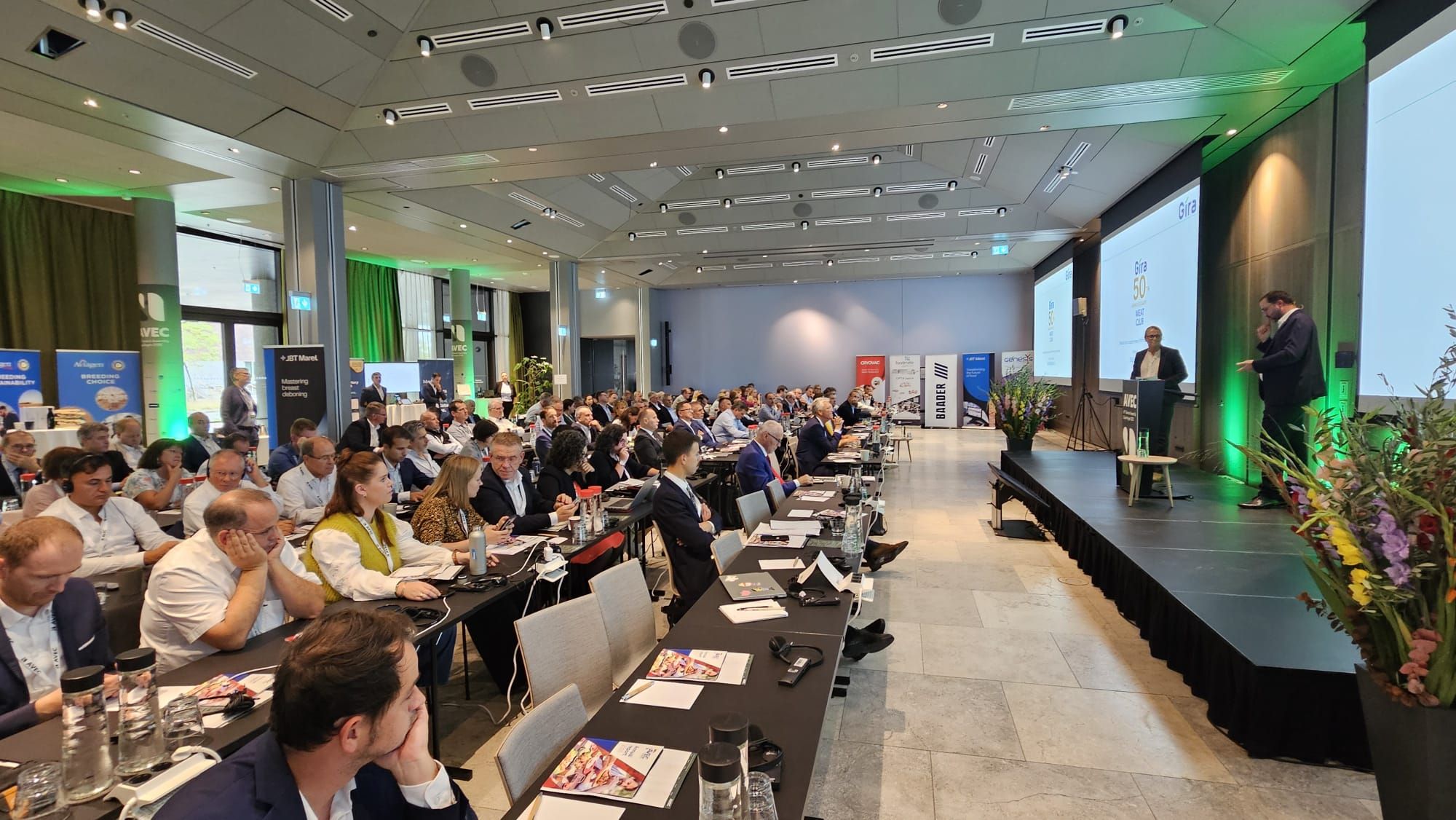
Copenhagen, Denmark – 9 September 2025 – The Association of Poultry Processors and Poultry Trade in the EU (AVEC) has concluded its 67th General Assembly in Copenhagen, organised by the Danish Agriculture & Food Council and held from 4 to 7 September 2025, with a clear and urgent message to European policymakers.
Against a backdrop of growing controversy surrounding the EU-Mercosur agreement, the conference, held under the theme “Competitiveness in a Changing World”, focused on Europe’s agri-food resilience and the crucial role of the poultry sector in ensuring sustainable growth and food security for the future.

The poultry meat sector: an indispensable yet overlooked pillar of Europe’s food supply
AVEC President Gert-Jan Oplaat highlighted the poultry sector as one of Europe’s “silent success stories”: an efficient, sustainable and truly circular model. Poultry provides high-quality protein with the lowest carbon footprint among meats, making use of every part of the animal across a range of industries, from food and pharmaceuticals to pet nutrition, fertilisers and energy. This versatility makes the sector “indispensable for Europe’s food security”.

Unfair imports, over-regulation and lack of generational renewal: the main challenges.
Despite its inherent strengths, the EU poultry sector is facing mounting pressure from multiple fronts:
- Unfair competition from imports: Poultry imports from third countries such as Brazil, China and Ukraine continue to rise. Oplaat warned that 25% of poultry breast meat consumed in the EU now comes from third countries, often produced under conditions that would not be permitted within the European Union.
- Regulatory burden and over-regulation: European poultry farmers and integrator companies are increasingly weighed down by ever more complex regulations, which deepens the competitiveness gap. EU over-regulation is generating new costs and distortions within the single market.
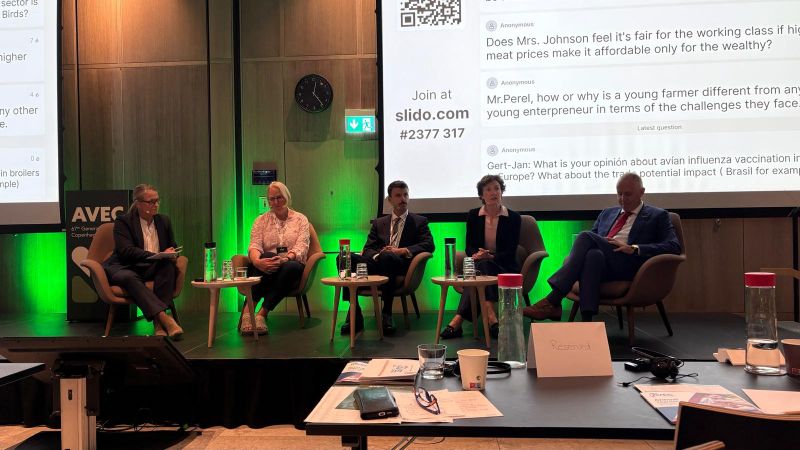
- Lack of generational renewal among poultry and livestock farmers: The poultry sector faces a demographic cliff edge, with only 6.5% of EU farmers under 35 years of age and 11.9% under 40. Sébastien Pérel of CEJA stressed that “without young farmers there is no future for livestock farming at all”.
The EU-Mercosur agreement: an unacceptable risk
The recent controversy surrounding the Mercosur agreement crystallises these concerns. AVEC, in a coalition with other agri-food organisations, has warned that the agreement does not respect the European sustainability model and threatens to expose EU producers to unfair competition. Oplaat stressed that “our standards, our sustainability efforts and the trust of EU consumers must not be sacrificed”, urging the Council and the European Parliament to reject the proposal and defend European agriculture.
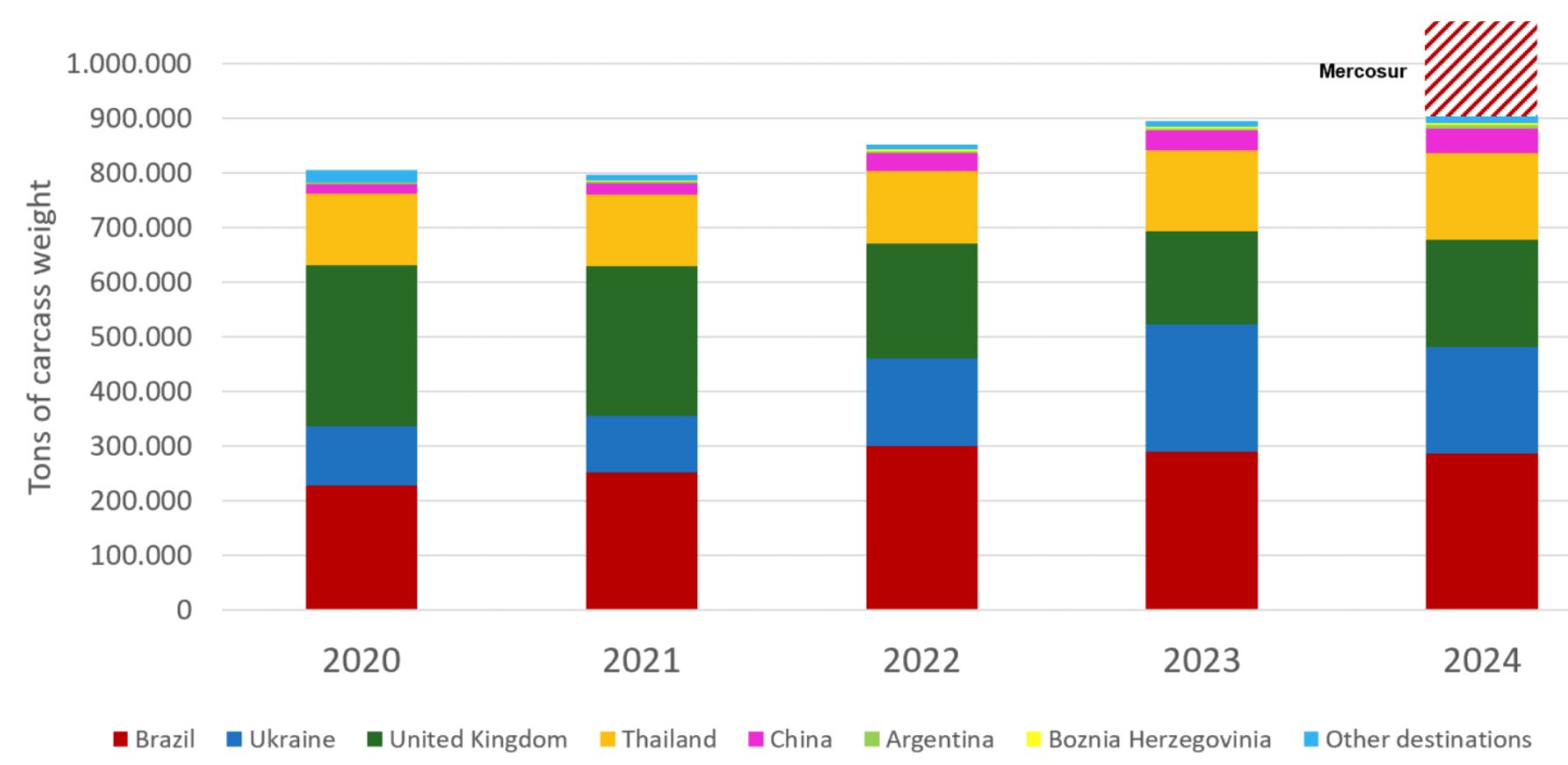
Figure 1: EU poultry meat imports — Source: DG Agri
The poultry meat sector in Europe is facing growing pressure. Poultry meat imports from third countries, such as Brazil, China and Ukraine, continue to rise, and are often produced under conditions that would never be authorised in the EU. “Currently, 25% of chicken breast consumption in the EU comes from third countries”, stated AVEC President Gert-Jan Oplaat.
Recent global geopolitical shifts open a door to optimism and greater alignment between Brussels policies and the defence of the European poultry sector.
New EU Vision and Strategic Collaboration. Looking to the future, the new EU Vision for Agriculture and Food places competitiveness, food security and fair trade at the heart of its agenda — a shift that reflects AVEC’s own priorities. Catherine Geslain-Lanéelle, Director of the European Commission’s DG Agri, confirmed greater alignment between the EU poultry sector and the Commission. AVEC Secretary General Birthe Steenberg highlighted that an evidence-based dialogue and partnership will enable sustainable competitiveness for Europe’s citizens, farmers and the environment.
To underpin this new strategic direction with concrete data, AVEC announced the publication of a new Competitiveness Study in early 2026. Drawing on 2024 cost data, this study will quantify the impact of EU legislation, assess competitiveness against third-country producers and model trade policy scenarios. The aim is to “provide the evidence that policymakers need to ensure that Europe’s high standards remain an advantage, not a disadvantage”, explained Steenberg.
Spanish interests were represented by AVIANZA
Avianza, the Spanish Broiler Meat Interprofessional Organisation, participated in the AVEC General Assembly in Copenhagen, which focused on the competitiveness of the European poultry sector. The organisation underlines that sustainability must be the cornerstone of the production model: greater efficiency, reduced resource use and improved feed conversion, without compromising animal welfare or the environment. The interprofessional body has welcomed the fact that the European Commission is finally prioritising the competitiveness of European products and considers that progress is being made towards the production of safe, healthy, nutritious and accessible food. At the Assembly, Avianza reaffirmed its commitment to ensuring that Spanish and European poultry meat continues to be a benchmark for quality, trust and sustainability.

The 3 urgent policy priorities the EU must adopt, according to AVEC
AVEC’s final message to policymakers in Copenhagen is clear and imperative:
- Simplify regulations by reducing unnecessary bureaucracy.
- Protect EU producers from unfair competition through border reciprocity.
- Support investment in innovation and generational renewal.
Oplaat concluded by affirming the sector’s determination to remain competitive, but emphasised that “we need Europe to stand with us. Without reciprocity in trade and without a level playing field at home, Europe risks outsourcing its own food security”.
In addition to the General Assembly, AVEC published its Annual Report 2025, which provides a comprehensive overview of the sector’s priorities, challenges and achievements over the past year, as well as its future strategic objectives.

Further reading:
-. Protecting competition in a changing world (EC Report, 2024) . Evidence on the evolution of competition in the EU during the past 25 years
-. Video (3 hours and a half) of the Workshop Protecting competition in a changing world (EC Report, 2024) .
-. The Draghi report on EU competitiveness (9 Sep 2024).
-. 44% lower economic return per m² if the EU mandates adoption of the European Chicken Commitment (8 Oct. 2024)
-. Official website of AVEC
-. News on the activities of AVEC and AVIANZA