
Summary of the First Annual Report on the Implementation of Best Available Techniques (ECOGAN) – Year 2023
The Ministry of Agriculture, Fisheries and Food (MAPA) published in June 2024 the first annual report on the implementation of Best Available Techniques (BATs) in the broiler poultry sector. This document, based on 2023 data and managed through the ECOGAN computing platform, provides for the first time a clear picture of the sector’s environmental efforts and marks the starting point for compliance with international emissions reduction commitments.
Below, we detail the most relevant points of this pioneering report, publicly presented in April 2024.
1. Level of participation and scope
The report analyses data declared by 2,745 farms, representing 53% of the farms required to report at national level and 60.2% of the animal census.
- Notable absences: The analysis does not include data from Catalonia, as that region did not notify the minimum mandatory information within the established deadline for the preparation of the report.
- High compliance: When analysing only the Autonomous Communities that did adhere to the ECOGAN system, the notification rate was very high, reaching 67% of the farms required to report.
2. Feeding: The sector’s greatest strength (BAT 3)
The area where the Spanish poultry sector demonstrates the greatest efficiency and commitment is nutritional management. Feeding strategies to reduce nitrogen excretion are implemented on an almost universal basis:
- Crude protein: 99.64% of farms reduce the crude protein content of feeds.
- Multiphase feeding: 97.19% of farms adapt feed formulation to the specific nutritional requirements of each production phase.
- Results: Thanks to these techniques, the average nitrogen excreted per broiler place (0.390 kg N/place/year) remains within the most stringent European reference ranges, confirming the sector’s productive efficiency.
3. Housing and ammonia reduction
The report distinguishes the degree of implementation according to animal category, revealing mixed results:
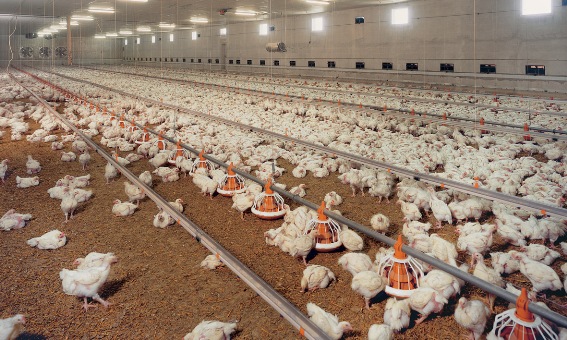
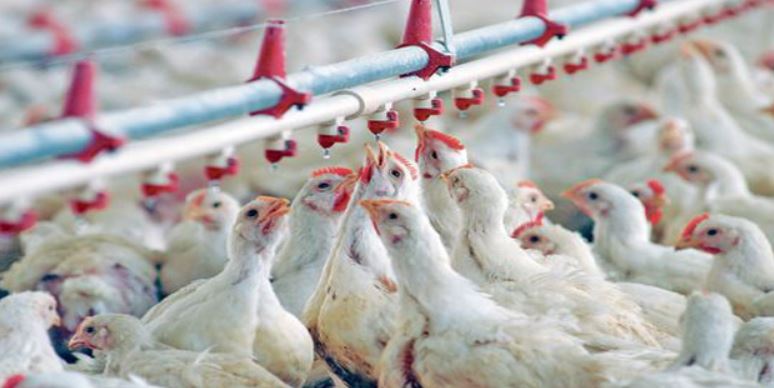
- Broilers (BAT 32): Show a high level of compliance (90%). The predominant technique is the combination of forced ventilation with nipple drinkers (used by 69.8% of farms) together with forced litter desiccation. Ammonia emissions are within permitted ranges.
- Breeders and Pullets (BAT 31): Compliance is more moderate, at around 50% implementation. This is due, in part, to the fact that many techniques are designed for cage systems, which are less common for these production categories in Spain.
4. The pending challenge: Manure management and land application
The report identifies significant room for improvement in the final stage of the production cycle: the storage and agronomic utilisation of waste.
Storage (BAT 14 and 15)
Only 30% of farms declared having external storage systems. Within this group, the adoption of emission-reduction techniques remains low:
- Only 21.32% of farms with storage cover their manure heaps, a simple yet key technique for preventing atmospheric emissions.
- On-site manure treatment (BAT 19), through techniques such as biogas production or composting, is virtually non-existent (0.15% of farms).
Land application (BAT 20 and 22)
This is the most critical point of the analysis. Although 48% of farms direct their manure to agricultural land, there is a significant lack of awareness regarding how this task is carried out, as it is frequently delegated to external contractors.
- Lack of information: More than half of permit holders (50.34%) are unaware of which environmental techniques are actually applied on their land.
- Rapid incorporation (BAT 22): Only 3% of farms confirm that manure is incorporated into the soil within 4 hours of application. This practice is essential for reducing ammonia volatilisation and maximising fertiliser value.
Conclusion
The first ECOGAN report for the broiler sector confirms that the industry has fulfilled its obligations regarding nutrition and broiler housing, achieving high standards of efficiency and technical sophistication.
However, the data reveal the urgent need to improve traceability and practices in manure management. The challenge for the coming years will be to increase the available information on the final destination of waste and to promote the adoption of storage and agricultural application techniques (such as covering and rapid incorporation) that minimise environmental impact.
To find out more:
-. ECOGAN: General Register of BATs and Emissions Calculation. Official MAPA website.