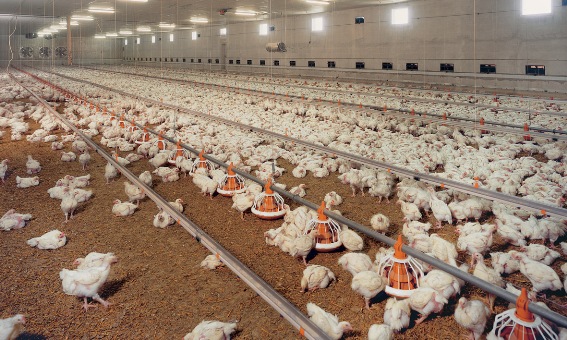

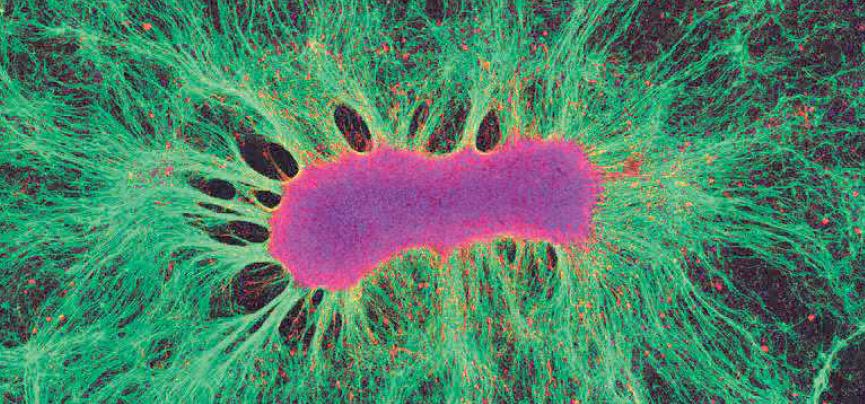
Miniature organic tissues from pigs, chickens and ruminants will be recreated for use in the various experimental phases to find treatments and vaccines.
In the field of biomedical and veterinary research, animal experimentation using model animals is fundamental to understanding how certain diseases function and to investigating possible therapies or vaccines. However, the trend is towards reducing the instances in which animals are used and replacing them with alternative methods.
It is the first biobank of this kind to be established in Spain.
In the field of biomedical and veterinary research, animal experimentation using model animals is fundamental to understanding how certain diseases function and to investigating possible therapies or vaccines. However, the trend is towards reducing the instances in which animals are used and replacing them with alternative methods. To this end, the FARMBANK project, led by the Animal Health Research Centre (CReSA) of the Institute of Agrifood Research and Technology (IRTA), in collaboration with the IrsiCaixa AIDS Research Institute, the Barcelona Supercomputing Center–National Supercomputing Centre (BSC-CNS) and biopharmaceutical company PharmaMar, is creating a biobank of organoids from various farm animal species, available for research into infectious diseases in animals and also in humans of zoonotic origin, i.e. transmitted from animals to people.
It is the first biobank of this kind to be established in Spain.
¿An alternative to experimentation with live animals?
Organoids are three-dimensional structures that recreate the characteristics of an organic tissue in miniature. They are a promising alternative because they are easily cultured from stem cells and retain many of the properties of the source tissue. They can therefore be used as an in vitro system to study tissue development and function, and to study the effects of pathogen infections. Organoids recreate miniature organic tissues from pigs, chickens and ruminants, which are used in the various experimental phases to find treatments and vaccines. In its initial phases, the FARMBANK project has worked to generate organoids of the nasal cavity, lung and intestine from approximately one hundred pigs, and in a subsequent phase this will be extended to other farm animals such as chickens and ruminants.
For IRTA Animal Health programme researcher Júlia Vergara-Alert, and co-leader of the project:
“Thanks to this project, we are moving towards a more ethical and sustainable future in biomedical research, as we will be able to dispense with the live animals that are currently necessary”.
A biobank to accelerate the development of multi-species antiviral drugs
Another line of work to be addressed by the biobank is its potential to become a valuable resource for developing antiviral drugs. “It will allow us to investigate, for example, how viruses can cross between animal species, or to test new antiviral treatments rapidly and under experimental conditions very similar to real-world ones”, explained Karl Kochanowski, IRTA Animal Health programme researcher and co-leader of the project. The organoids will be prepared to begin research with antivirals to treat porcine coronaviruses, but also with coronaviruses affecting humans, such as Middle East Respiratory Syndrome, caused by the MERS coronavirus, and SARS-CoV-2, responsible for COVID-19. With regard to the latter, the biobank will also be used to study the mechanisms by which coronaviruses develop resistance to antivirals.
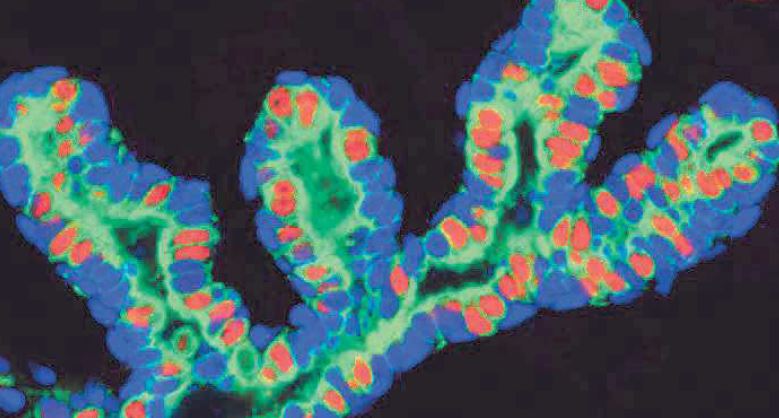
What are organoids?
Organoids are three-dimensional (3D) multicellular micro-tissues derived from stem cells that recreate the complexity and functionality of human organs such as the lung, liver or brain. Organoids are multicellular and display a high degree of self-assembly, enabling an even better representation of complex in vivo cellular responses and interactions compared with traditional 2D cell cultures. They are a 3D biological micro-tissue containing multiple cell types. They represent the complexity, organisation and structure of a tissue. They resemble at least some aspect of the functionality of a tissue.
Organoids are becoming increasingly important in the fields of cancer research, neurobiology, stem cell research and drug discovery, as they allow the creation of improved models of human tissues. Organoids, derived from stem cells, can be differentiated into a wide variety of tissue types, including liver, lung, brain, kidney, stomach and intestine. Since these 3D micro-tissues recreate organs in vivo, they can provide researchers with greater insight into human developmental and pathological mechanisms. For example, researchers can grow organoids to study how healthy organs develop and what happens when development goes wrong. Organoids can also facilitate the study of infectious diseases and host-pathogen interactions. Finally, the ability to use patient-derived organoids for drug screening and toxicity assessments allows researchers to make further advances in personalised medicine.
Throughout the ambitious FARMBANK project, it will be essential to have an appropriate state-of-the-art bioimaging platform, which will be highly useful for validating the function and use of the organoids. This involves confocal microscopy equipment unique in Southern Europe, available at the laboratories of the IRTA-CReSA Biocontainment Unit.