
Nutritional composition of eggs from white and brown laying hens: Are there any differences?
Eggs are an excellent source of protein for the human population worldwide, offering a nutrient-rich option for many diets. It is well established that the nutritional composition of eggs can vary depending on several factors, and can be greatly influenced by nutrition, but also by disease. Hendrix Genetics, as a poultry genetics company, frequently receives the question of whether there are differences in the nutritional composition of eggs among its various laying hen breeds, particularly between white-egg and brown-egg layers — and if so, which is nutritionally superior to the other.
Nutritional composition: white-shell eggs versus brown-shell eggs from commercial laying hens.
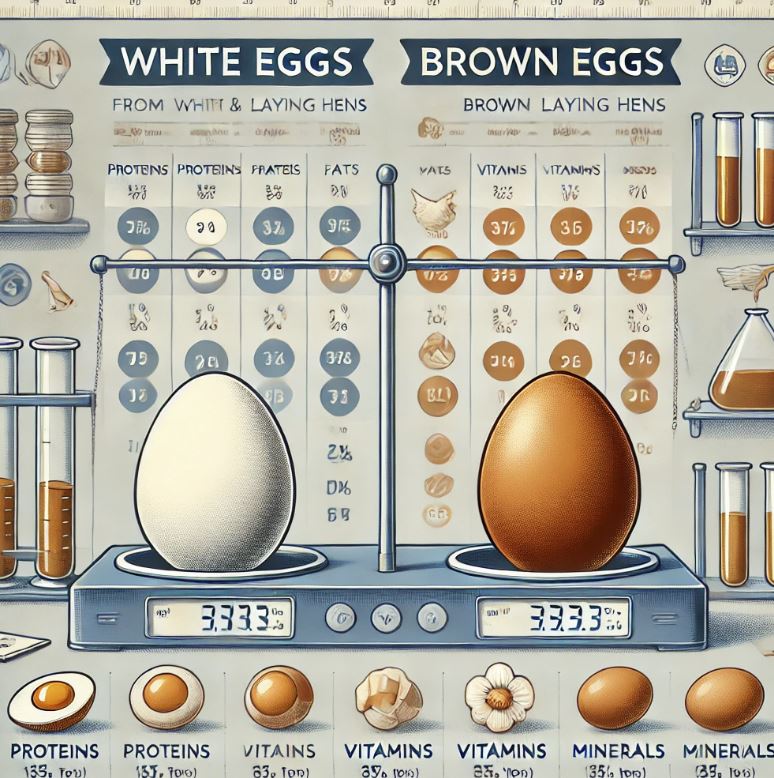
At a fundamental level, white and brown eggs are very similar in terms of nutrient content (Washburn, 1979). Both types of eggs provide essential nutrients such as proteins, vitamins, and minerals. Internal research shows no differences in moisture content (75.6–76.3%), protein (12.2–12.8%), fat (9.1–9.3%), or minerals. These results are consistent with the values reported by the Dutch Nutrition Centre (12% protein and 9.1% fat). (Voedingscentrum, 2024).
Although brown-shell eggs are, on average, 1 gram heavier than white-shell eggs, differences in moisture, protein, and fat content are minimal and do not indicate meaningful distinctions.
For nutritional composition, Hendrix Genetics conducted a test on 8 groups of eggs, comprising a total of 58 eggs. The eggs came from flocks in the Netherlands and France, collected at different ages, and included both white and brown flocks. Each comparison between white and brown was carried out on the same farm, with the same diet and the same hatch week. The ages included were 26, 60, and 66 weeks of age.
Two different laboratories, NutriControl in Veghel and Lavetan in Turnhout, sampled the eggs. Laboratory analyses included ash, protein, moisture, fibre, sugar, sodium, and fatty acid analyses.
It has long been established that diet has a greater impact on the variation in egg composition compared to the breed of the hens (Washburn, 1979).
External factors significantly affect the nutritional content of eggs, as demonstrated by studies on nutrition (Gao, Qin, Zheng, & Xu, 2024; Doppenberg & van der Aar, 2010) and housing system (Szymanek, Andraszek, Banaszewska, Drabik, & Batkowska, 2019; Rakonjac, et al., 2018).
In our research, we did not analyse different housing systems, and differences in feeding were primarily reflected in variations in egg fat content. Fat content and fatty acid profiles are relatively easy to adjust through nutrition (Doppenberg & van der Aar, 2010). It is therefore possible to obtain omega-3-enriched eggs by feeding laying hens diets richer in omega-3 fatty acids, such as poultry diets containing linseed or fish oil. The level and type of minerals, as well as the level of vitamins, are also known to affect their concentrations in the egg (Elnesr, et al., 2024).
Changes in egg nutritional composition in ageing hens
Our study shows slightly higher protein levels in eggs from younger laying hens and slightly higher fat levels, including unsaturated fatty acids and omega-6 fatty acids, in eggs from older laying hens. Other studies have also demonstrated that the nutritional composition of eggs changes over time (Lešić, Krešić, Cvetnić, Petrović, and Pleadin, 2017).
Although there may be minor differences in the nutritional composition of white and brown eggs, these variations are primarily influenced by the hens’ diet or age. Research indicates that the diet of laying hens plays a more decisive role in the nutritional composition of eggs than the breed itself.
Consequently, whether you choose white or brown eggs, the nutritional value you receive is largely dictated by the quality and composition of the feed provided to the hens, rather than by the breed of the laying hen. Therefore, when selecting eggs for their nutritional benefits, it is more important to consider the farming practices and feed quality than the shell colour.
| Nutrient | Unit | White Eggs | Brown Eggs |
|---|---|---|---|
| Energy kJ ME | kJ/100g | 558.0 | 572.5 |
| Energy kcal ME | kcal/100g | 133.5 | 137.0 |
| Ash | g/100g | 1.05 | 0.98 |
| Moisture by NMR | g/100g | 76.28 | 75.68 |
| Nitrogen conversion factor | — | 6.25 | 6.25 |
| Protein | g/100g | 12.23 | 12.80 |
| Total carbohydrates | g/100g | 0.90 | 0.75 |
| Glucose | g/100g | 0.33 | 0.33 |
| Fat by NMR | g/100g | 9.10 | 9.25 |
| Saturated fatty acids | g/100g | 3.30 | 3.17 |
| Monounsaturated fatty acids | g/100g | 4.23 | 4.45 |
| Polyunsaturated fatty acids | g/100g | 1.57 | 1.63 |
| Trans fatty acids | g/100g | 0.04 | 0.02 |
| Omega-3 fatty acids | g/100g | <0.10 | <0.10 |
| Omega-6 fatty acids | g/100g | 1.53 | 1.57 |
| Sodium | mg/100g | 132.2 | 136.0 |
| Sodium expressed as salt | g/100g | 0.33 | 0.34 |
Source: LAYER VISION No. 31 [HENDRIX GENETICS]