
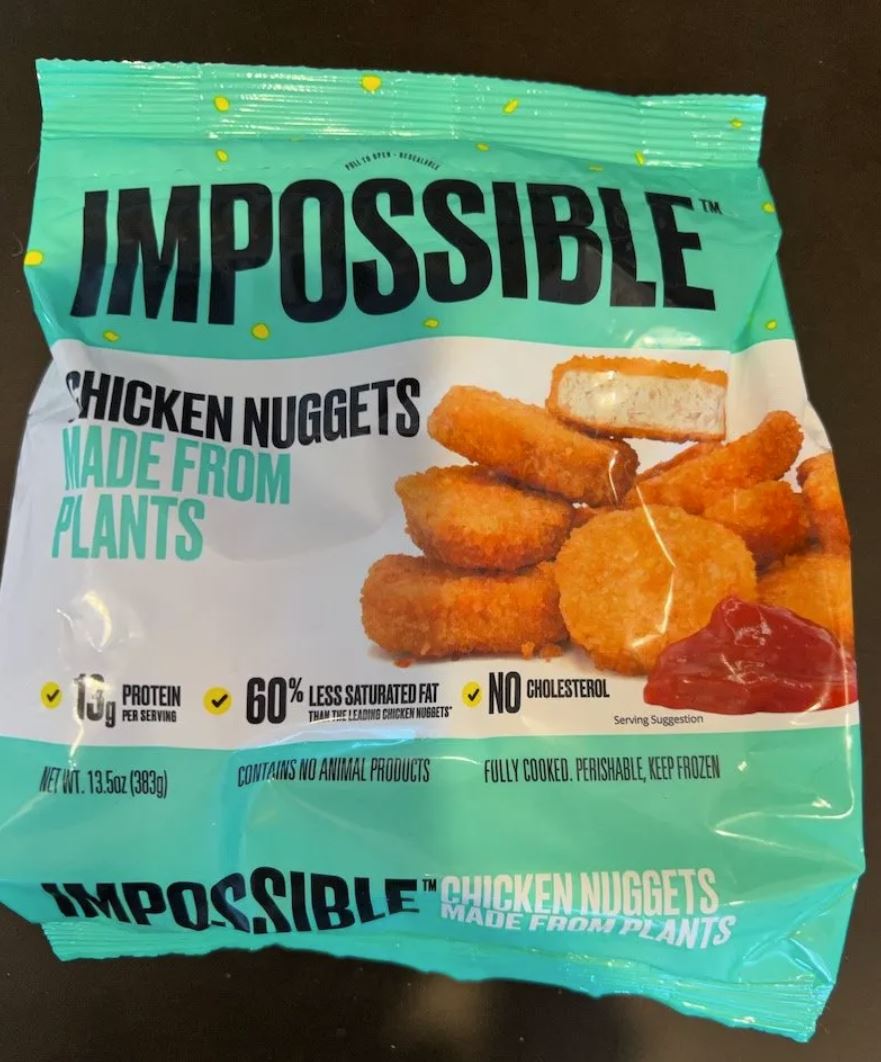
Brussels confronts the artificial meat industry following the vote for label transparency and consumer protection against misleading information.
The European Parliament restricts meat names to animal-origin products
The Community chamber backs the agri-food sector’s initiative, although the measure must still be negotiated with Member States before becoming law.
Members of the European Parliament voted on Wednesday 8 October 2025 to restrict the use of terms such as “burger”, “steak”, “sausage” and other meat-related names exclusively to products made from animal meat. The measure was approved by a large majority of 532 votes in favour, 78 against and 25 abstentions.
The proposal, which would also affect terms such as “escalope,” “hamburger,” “egg yolks” and “egg whites,” defines meat as “the edible parts of animals”.

The vote has been hailed as a “key step forward” by associations such as ANICE, which view it as a protection of the authenticity of product designations and a move towards transparent labelling. This development reflects the importance of constant vigilance towards European legislators on the part of the European agri-food sector, which has insisted for years that the misuse of terms associated with meat cuts should be sanctioned.

Arguments for and against
Céline Imart, a French MEP representing a predominantly agricultural constituency who sponsored the proposal, celebrated the outcome as a “victory” for livestock farmers and agricultural producers and for consumer transparency. Imart argued that allowing meat-free alternatives to share terminology with animal-origin products could mislead consumers, stating: “Words have meaning… A steak is meat. Full stop”. German Chancellor Friedrich Merz has also backed the ban, asserting that “sausage is not vegan”.
However, the debate has been heated. Advocates of artificial meat alternatives argue that the use of these familiar terms is reasonable, as consumers are sufficiently informed to identify the protein source of the products they purchase. A 2020 survey by the European Consumer Organisation (BEUC) found that the majority of Europeans were not confused when packaging clearly labelled products as “vegan” or “plant-based”.
“Words have meaning… A steak is meat. Full stop”.
The artificial protein industry, which has grown exponentially, has criticised the measure. Rügenwalder Mühle, Germany’s leading producer of meat alternatives, stated that a change in the law could cost the company several million euros. Major German supermarket chains such as Aldi Süd and Lidl, along with Burger King and Beyond Meat, urged legislators to allow the free use of such terms, arguing that imposing restrictions would hinder “informed consumer decisions”.

Anna Strolenberg, a Dutch MEP, criticised the vote as “identity politics for burgers” and as a distraction at a time when Parliament should be focusing on more pressing issues. Other critics, such as Anna Cavazzini of Germany’s Green Party, described the adopted text as “pointless” in the context of the climate crisis.

The dairy precedent and the legal situation
The proposed ban follows an earlier legal precedent: in 2013, the European Union legally defined “milk” as the product resulting from the milking of one or more cows, requiring producers of plant-based drinks to use terms such as “oat drink”.
Nevertheless, implementation of the new meat restriction is neither immediate nor guaranteed. The text must now be negotiated and considered by the Council and the European Commission, the executive arm of the 27-nation bloc, before the proposal can become law.
It is worth recalling that, in 2021, a similar ban imposed by the French government faced legal challenges. In 2024, the Court of Justice of the European Union ruled that a Member State could not legally prevent the use of terms such as “sausage” or “burger” on labels, as these had not been defined as specific to animal-origin products.
For further reading:
-. 13 Oct 2025: Beyond Meat collapses 58% after approving a debt swap with creditors, now down 99.5% from its peak
-. MEPs back changes to strengthen farmers’ position in the food supply chain. European Parliament, 8 Oct. 2025
-. Demand for meat alternatives is slowing down.
-. Artificial meat: investment in 2023 fell to one quarter of the amount invested in 2022
-. Artificial meat on NexusAvicultura.com