
The great crisis of artificial “meat”: McDonald’s has abandoned the McPlant and Beyond Meat is sinking
Artificial meat: investments fall 75% in 2023 compared to 2022, specifically dropping from $922M USD in 2022 to $226M USD in 2023
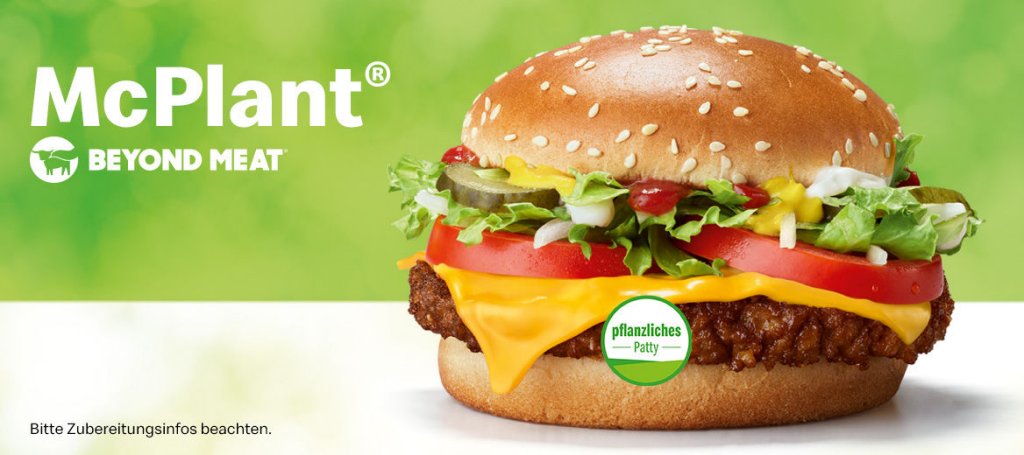
McDonald’s has confirmed it will not offer its plant-based burger, the McPlant, in the US again, at least in the near future. This announcement marks the beginning of a downward trend for meat alternatives, at least in this market.
This move not only affects McDonald’s, but reflects a broader trend of decline in “plant-based meat”, until recently considered the future of food.
What has happened?
- McDonald’s introduced the McPlant, developed with Beyond Meat, in hundreds of locations in California and Texas in 2022. Demand has been insufficient.
- Beyond Meat, the leader in the plant-based meat sector, has seen its sales fall 18% in the last quarter. This is its eighth consecutive quarter of decline.
- Beyond Meat’s shares went public in 2019. Over the past five years they have fallen 90%. Down 97% from their peak, exactly five years ago.
The context. The rise of plant-based meat alternatives seemed unstoppable a few years ago, with investors and an increasing number of consumers excited by their potential. Market reality is now clashing with those expectations.
Joe Erlinger, President of McDonald’s USA, made a telling remark at the Wall Street Journal‘s Global Food Forum: “I don’t think the American consumer comes to McDonald’s looking for the McPlant or other plant-based proteins.”
Reading between the lines. The failure of the McPlant in the US contrasts with its apparent acceptance in Europe, where it remains available in several markets, such as Germany, the United Kingdom and the Netherlands, but not in Spain.
Further developments in Europe will be needed to understand whether McDonald’s decision in its domestic market will spread to the other side of the Atlantic. For the time being, Spain has not embraced this alternative.
Looking further ahead. Beyond McDonald’s, the situation raises questions about the future of alternative meats. Beyond Meat is promoting its new range of burgers and sausages, Beyond IV, but faces an increasingly sceptical market: it grew on the back of rising concern over the sustainability of meat consumption, but now faces another growing concern — that of ultra-processed foods.
In perspective. The McPlant case in the US may be an inflection point for the plant-based meat industry, which may need to scale back its projections and initial enthusiasm.
In Spain, unlike many of its European neighbours, this alternative has never made it onto McDonald’s menus, and no one can say whether it ever will.
Current commercial landscape of Artificial Meat
Key milestones for cultivated meat companies
● In the United States, cultivated chicken products from UPSIDE Foods and GOOD Meat made their debut in two restaurants.
The approval in June of cultivated meat sales in the United States generated significant media coverage in outlets such as The New York Times, NPR, TIME, CBS Sunday Morning and more.
● Huber’s Butchery in Singapore became the world’s first butcher shop to sell cultivated meat when it began selling GOOD Meat’s cultivated chicken at its bistro.
● In January 2024, Israel became the third country in the world to advance approval of cultivated meat (Aleph Farms’ cultivated beef product) and the first country to advance approval of cultivated beef. Company landscape
● Worldwide, the number of publicly announced cultivated meat companies (focused primarily on cultivated meat inputs or end products) increased to 174 in 2023, up from 166 in 2022.
● A growing number of companies are focusing on the cultivated meat value chain beyond end-product manufacturing. At least 50 companies identify bioprocess design, cell line development and cell culture media as areas of interest. Participation of major food companies
● ADM partnered with Believer Meats to refine and expand the cultivated meat production process.
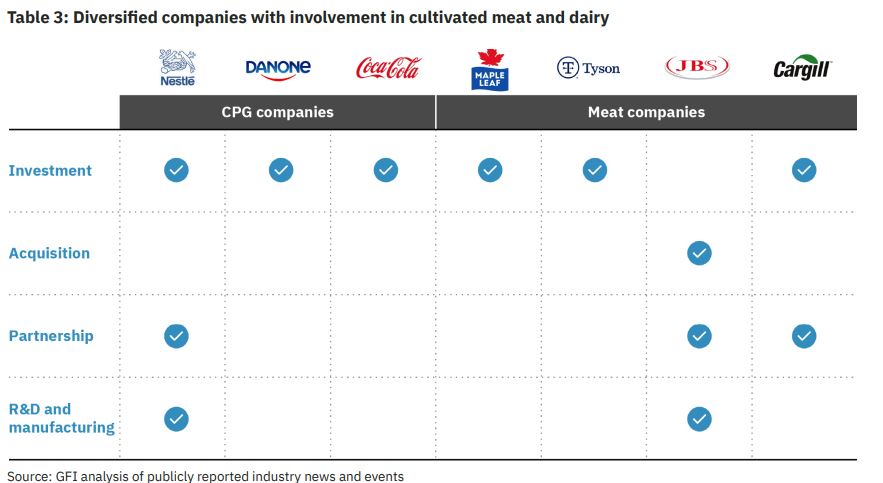
● The involvement of major corporations in cultivated meat deepened, with Danone and Central Bottling Co., owner of Coca-Cola Israel, investing in cultivated milk.
The power of partnerships
● JBS, the world’s largest meat company, partnered with the Federal University of Santa Catarina on cultivated meat research and development.
● Aleph Farms partnered with chef Marcus Samuelsson to serve the company’s Aleph Cuts steaks in the United States once they receive regulatory approval. This follows trends set by other cultivated meat companies, such as UPSIDE Foods and GOOD Meat, which are partnering with chefs to bring their products to the US market.
Infrastructure momentum for cultivated artificial meat
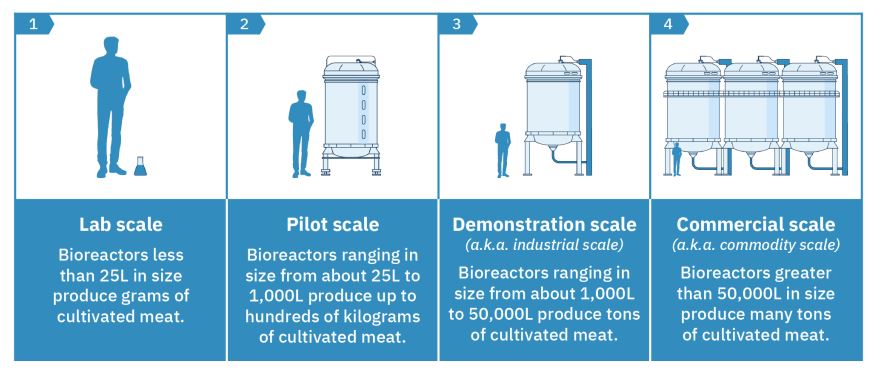
● In 2023, 10 new cultivated meat facilities opened across Asia, Australia, Europe, North America and the Middle East. Two large-scale plants were inaugurated in 2023: Mosa Meat’s 30,000-square-foot facility in the Netherlands and CellX’s factory in Shanghai.
● At least seven additional cultivated meat facilities were announced in 2023.
Investments made
Cultivated meat and seafood companies raised $225.9 million globally in 2023, bringing the industry total (since 2013) to $3.1 billion — a fraction of the investment flowing into other technologies and innovations, such as renewable energy, with the potential to reduce emissions and address climate targets.
Although the 2023 figures represent a considerable decrease from the $922.3 million raised in 2022, this reflects the broader tepid private funding environment. In 2023, both companies and investors faced high inflation, rising interest rates and mixed economic prospects. As a result, global venture funding fell 42 per cent year-on-year in 2023 to its lowest levels since 2017 (for context, investment in food technology start-ups fell 61 per cent year-on-year).
The largest deal raised in 2023 was Meatable’s $35 million Series B round.
Meanwhile, the number of unique investors in cultivated meat and seafood stood at 111 in 2023, compared with 204 in 2022.
For further reading:
-. Marco Springmann, environmental scientist at the University of Oxford (UK), told CNBC that the amount of energy required for the production process is so great that cultivated meat has a carbon footprint five times greater than that of chicken.
-. Full report (76 pages) on the current state of the artificial meat market
-. Artificial meat on NexusAvicultura.com