
Overview of laying hen housing systems in the EU (2024 Data)
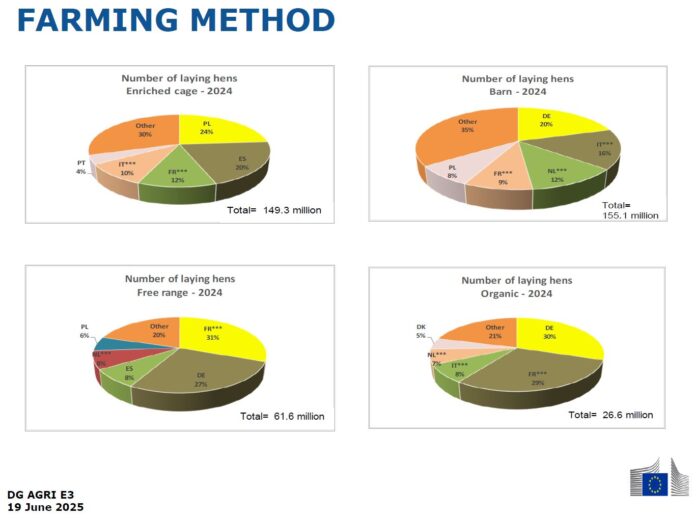
The report “Market Situation for Eggs – CMO GREX on Animal Products” dated 19 June 2025 provides an overview of how laying hens are distributed by production system in the EU, with a total of 392.6 million birds.
Below are the most relevant figures regarding the current situation of housing systems:
- Enriched cage: With 149.3 million hens, this system remains one of the cornerstones of European production. Countries such as Poland (24%), Spain (20%) and France (12%) lead this segment.
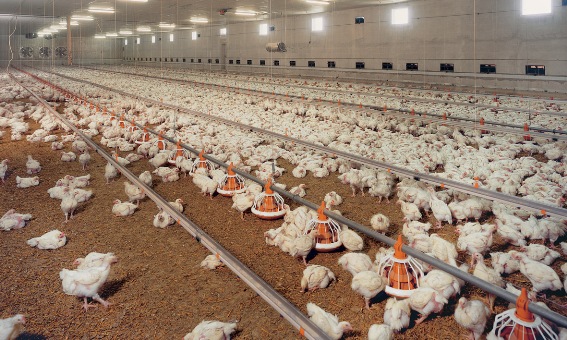
- Barn (floor housing): This method has become the leading system in the EU, slightly surpassing cage housing with 155.1 million hens. Germany (20%), the Netherlands (12%) and France (9%) are the main producers. 35% of barn production is spread across many other member states, indicating very widespread adoption.
- Free-range hens: These account for a total of 61.6 million birds. France (31%) and Germany (27%) clearly dominate this market, demonstrating the strong demand for this egg type in their domestic markets.
- Organic production: Although the smallest segment with 26.6 million hens, it is the highest-value-added one. Once again, Germany (30%) and France (29%) are the undisputed leaders.

What trends does this report highlight for egg producers?
- A diversifying market: The data confirm a clear trend: although cage eggs maintain strong prices, flock census figures show that barn housing is already the predominant production system in the EU. This transition, driven by consumer demand and commitments from major retailers, is a strategic factor to consider for future investments or conversions.
- National leadership positions: It is essential to understand the context and the different pace of change in each country. While Spain and Poland remain major players in cage production, Germany and France are setting the pace in alternative systems (barn, free-range and organic). This defines different market realities and opportunities depending on our location.
- Opportunity through differentiation: Alternative systems (free-range and organic) account for more than 88 million hens. Although still a minority, they represent a well-established, high-value segment. For producers seeking differentiation, these markets continue to offer significant growth potential.

The European poultry sector is experiencing a period of elevated prices for conventional production, but within a context of irreversible structural transformation towards cage-free systems. Staying informed about both these dimensions — price and production method — and maintaining feedback from our current buyers, is essential for successfully navigating a competitive and constantly evolving market.
Source: Member State (MS) notifications to the European Commission (DG AGRI E3). Price data are preliminary and subject to change. Report “Market Situation for Eggs – CMO GREX on Animal Products” dated 19 June 2025
For further reading:
-. Cage-free systems on NeXusAvicultura.com
-. Analysis of the EGG PRODUCTION SECTOR