
Since peaking in April 2025, EU egg prices have slowed their rise and have even declined, with a further fall of 3% during June. Nevertheless, they remain 30% higher than at the same time in 2024. Eggs stood at the end of June at an average of €2.56, having contracted a further 0.5% in the last week.
Meanwhile, the US market continues to outprice the EU market, although the gap has begun to narrow as egg prices there fall back to €3.77/kg. The United Kingdom maintained its position as the largest destination for EU egg exports in the early months of 2025, importing 23,600 t between January and February. At the same time, EU egg imports experienced a sharp year-on-year increase, reaching some 26,000 t, 60% more than the same period in 2024.

Eggs produced in Europe see their price rises slow
Brussels, 9 July 2025 – The egg market in the European Union (EU) is in a state of constant flux, shaped by consumption trends, animal welfare policies, international trade fluctuations and avian influenza outbreaks.
A detailed analysis of recent data, up to 2 July 2025, reveals significant changes in prices, a notable evolution in laying hen housing systems, and a reconfiguration of import and export flows. This report seeks to unravel these complexities, offering an in-depth view of the current situation and the outlook for the coming years.
Egg prices in the European Union have shown significant development, reflecting both internal market conditions and global influences. The weekly average price for Class A eggs at packing stations stood at EUR 256.81/100 kg, representing a slight decrease of 0.6% compared to the previous week and 1.8% compared to the previous month, but an increase of 28% compared to the same week in 2024.
However, as reported in the latest official EU “Egg Market Dashboard” of 2 July 2025, the average egg price for 2024 has remained above the 2020–2024 average and 2023 prices, although 2025 data show a downward trend compared to 2024 up to March.

The US reached a stratospheric price of over 1,100 EUR/100 kg, but US egg costs are gradually returning to relative normality (subject to any further AI outbreaks)
Comparing EU egg prices with those in other global markets reveals a notable disparity. While the average egg price in the EU is EUR 256.81/100 kg, the United States records a price of EUR 375.22/100 kg (Grade A eggs, Chicago), Brazil EUR 135.66/100 kg (average prices across the main producing states) and India EUR 90.89/100 kg (NECC average prices). These differences can be attributed to various factors, including production costs (primarily raw material costs), animal welfare regulations, and local supply and demand dynamics.

More m² per hen means higher costs — entirely predictable.
What is harder to predict is what market shares the different cage-free systems will ultimately settle at.
As would be expected, egg prices in the EU vary significantly according to the laying hen housing system. Organic and free-range eggs typically achieve higher prices than those from enriched-cage or barn systems. The data reflect the obvious fact that prices for organic and free-range eggs remain in the upper ranges, while those from enriched cages and barn systems sit at the lower end. This trend underlines the growing consumer demand for products that prioritise animal welfare, whose higher costs ultimately translate into a superior market value for these categories.

The transition to cage-free systems is irreversible, but not immediate.
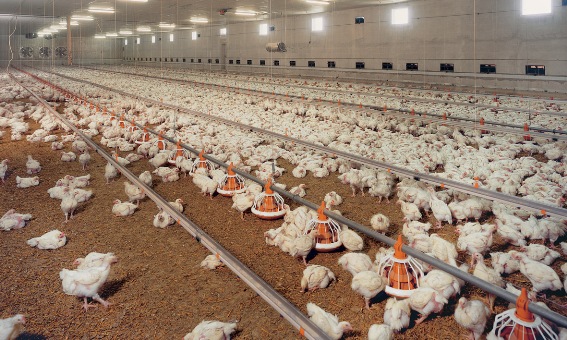
The European Union is experiencing a notable shift towards fully cage-free laying hen production systems, driven by animal welfare regulations and consumer preferences.
In 2024, the total number of laying hens in the EU stands at 392.5 million, of which 62.0% (243.2 million) are kept in “cage-free systems“, encompassing barn (floor-housed) hens, free-range hens (with outdoor access) and organic hens. The remaining 38.0% (149.3 million) remain (for now) in enriched cages.

Breaking down by production method, barn (floor) systems account for the largest share at 39.5% (155.1 million), closely followed by enriched cages at 38% (149.3 million). Free-range hens make up 15.8% (61.6 million) and organic 6.7% (26.6 million).
The transition of the laying flock to cage-free systems shows major differences between countries
The distribution of these systems varies considerably between Member States. Germany (DE) and Sweden (SE) stand out for having a very low proportion of hens in enriched cages (3.7% and 2.7% respectively) and a high proportion in barn systems (53.8% and 78.2% respectively). Austria (AT) is a notable case, with 0% of hens in enriched cages, relying entirely on barn (56.1%), free-range (31.1%) and organic (12.9%) systems. In contrast, countries such as Poland (PL) and Spain (ES) still maintain a majority of hens in enriched cages, at 67.7% and 64.0% respectively. The Czech Republic (CZ) and Lithuania (LT) also show high enriched-cage percentages, exceeding 70%.

Pullet placements are progressing at a healthy pace
Trends in laying hen placements also show interesting patterns. Placement data for 2025 indicate monthly fluctuations, with some months exceeding 2023 and 2024 levels. These placements are crucial to future market equilibrium, as they directly affect egg supply.

France, Germany, Spain and Italy produce 56% of Europe’s eggs
Egg production in the European Union is a vital activity, with several Member States leading in production volumes. In 2024, total EU egg production (including eggs for consumption and hatching eggs, based on forecast data) is estimated at 6,664 thousand tonnes.

The leading EU egg producers in 2024 are:
- France (FR): Leads with 1,008 thousand tonnes, accounting for 15% of total EU production.
- Germany (DE): Closely follows with 970 thousand tonnes, also holding a 15% share of EU production.
- Spain (ES): Contributes 962 thousand tonnes, equivalent to 14% of production.
- Italy (IT): Accounts for 804 thousand tonnes, 12% of the total.
- Poland (PL): With 670 thousand tonnes, represents 10%.
- Netherlands (NL): Produces 573 thousand tonnes, 9% of EU output. The remaining 25% (1,677 thousand tonnes) comes from other Member States.
In terms of total laying hen numbers, which directly influences production capacity, the distribution across Member States is also significant:
- France (FR) and Germany (DE) have the largest flock populations, both with approximately 58.4 million hens, each representing around 14.9% of the EU total.
- Poland (PL) ranks third with 52.9 million hens (13.5%).
- Spain (ES) and Italy (IT) are also significant, with 47.9 million (12.2%) and 43.3 million (11%) respectively.
These countries are not only fundamental to EU domestic supply, but also influence its position in global egg trade.
In Q1 2025, the EU imported 52% more eggs while its exports grew by only 5.4%
EU egg trade reflects its role as a significant player in the global market, with both inward and outward flows having shown considerable evolution in recent years. EU egg imports have experienced substantial growth. In the period January to March 2025, extra-EU imports reached 39,630 egg-equivalent tonnes, representing an increase of 52.1% compared to the 26,061 tonnes recorded in the same period of 2024.

The main import partners in 2025/2024 are:
- Ukraine: Has been the primary driver of this growth, with an impressive increase of 81.4%, rising from 16,579 tonnes in January–March 2024 to 30,077 tonnes in 2025. This volume accounts for the largest share of extra-EU imports.
- North Macedonia: Showed an even more dramatic percentage increase, with a rise of 118.9%, from 664 to 1,454 tonnes.
- China: Imports from China increased by 44.3%, from 356 to 513 tonnes.
- Argentina: Imports from Argentina also grew by 34.1%, from 980 to 1,314 tonnes.
- United Kingdom: Unlike other partners, imports from the United Kingdom declined by 6.6%, from 3,743 to 3,498 tonnes. Imports from “Other” countries fell by 25.8%.
At global level, the EU is also a significant importer of egg products. In the period to March 2025, the EU ranks among the leading importers, although China + Hong Kong and the United Kingdom (HMRC) exceed its volumes in some periods. It is important to note that TDM “Mirrored” data for some importing countries (such as Afghanistan and the United Arab Emirates) are derived from their partners’ export data.
The United Kingdom, a “non-European” country, remains the leading export destination
EU egg exports have also shown growth, albeit at a more moderate pace than imports. Extra-EU exports for January–March 2025 reached 97,557 egg-equivalent tonnes, representing an increase of 5.4% compared to the 92,555 tonnes recorded in the same period of 2024. In a broader perspective, EU exports in the first quarter of 2025 remained above 2024 and 2023 levels.

The main EU export destinations in 2025/2024 are:
- United Kingdom: Continues to be the leading destination, with a 13.3% increase in exports, from 33,976 to 38,509 tonnes.
- Australia: Experienced exceptional growth of 164.6%, from 919 to 2,430 tonnes.
- Israel: Exports to Israel increased by 38.1%, from 2,645 to 3,653 tonnes.
- Japan: Exports to Japan declined by 5.6%, from 16,961 to 16,016 tonnes.
- Switzerland: Exports to Switzerland fell by 4.3%, from 13,493 to 12,912 tonnes. Exports to “Other” destinations decreased by 2.1%.
At global level, the EU ranks as one of the leading exporters of egg products. In the period to March 2025, the EU is among the most significant exporters, alongside Iran, China + Hong Kong, Ukraine, India and the United States. This underlines the EU’s export capacity and its interconnection with global egg trade.

If anything, the European egg industry is demonstrating an enormous capacity for adaptation
The egg market in the European Union is a sector in constant evolution, marked by the interplay of volatile prices, structural changes in production and international trade dynamics. The trend towards laying hen production systems that prioritise animal welfare, and the reduction in laying flock numbers in some countries — both within and outside Europe — due to avian influenza outbreaks, are reshaping the industry and affecting market prices. As the EU strengthens its trade ties with partners such as Ukraine for imports and the United Kingdom for exports, the European poultry sector is adapting to a changing global landscape.
For further information:
-. Quarterly update on Avian Influenza from March to June 2025.
-. Avian Influenza on NeXusAvicultura.com
-. Cage-free systems on NeXusAvicultura.com
-. Analysis of the LAYING SECTOR