
Agricultural raw materials: 2025, the year of tariffs
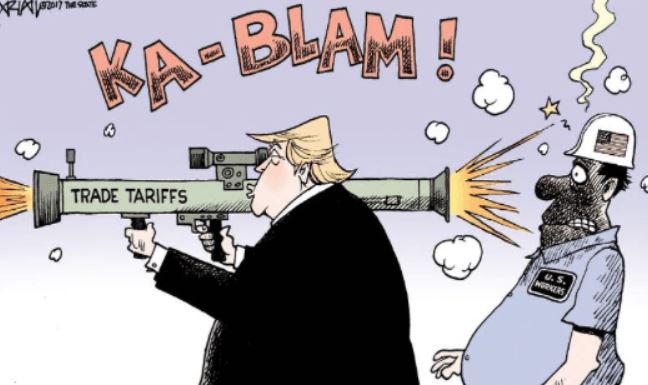
In December we predicted a quiet year for agricultural raw materials based on the fundamentals, believing that, although geopolitical factors are important in these markets, their effect would not be particularly significant. But then the tariffs arrived — the United States imposed tariffs on virtually all countries and many products, and in response the affected countries retaliated with their own tariffs, and from here anything can happen.
What we know so far is that agricultural commodities will be affected to a greater or lesser extent, meaning changes in trade flows and price increases in some origins, and price decreases in others.
There is another important factor beyond tariffs that affects freight: a one-million-dollar levy on vessels loading in the United States that were built in China on a specific date. This undoubtedly implies higher freight costs for ships loading in the United States, as the available fleet is reduced. For US producers, it will mean selling at lower prices if they wish to compete with other origins, in cases where those vessels are used.
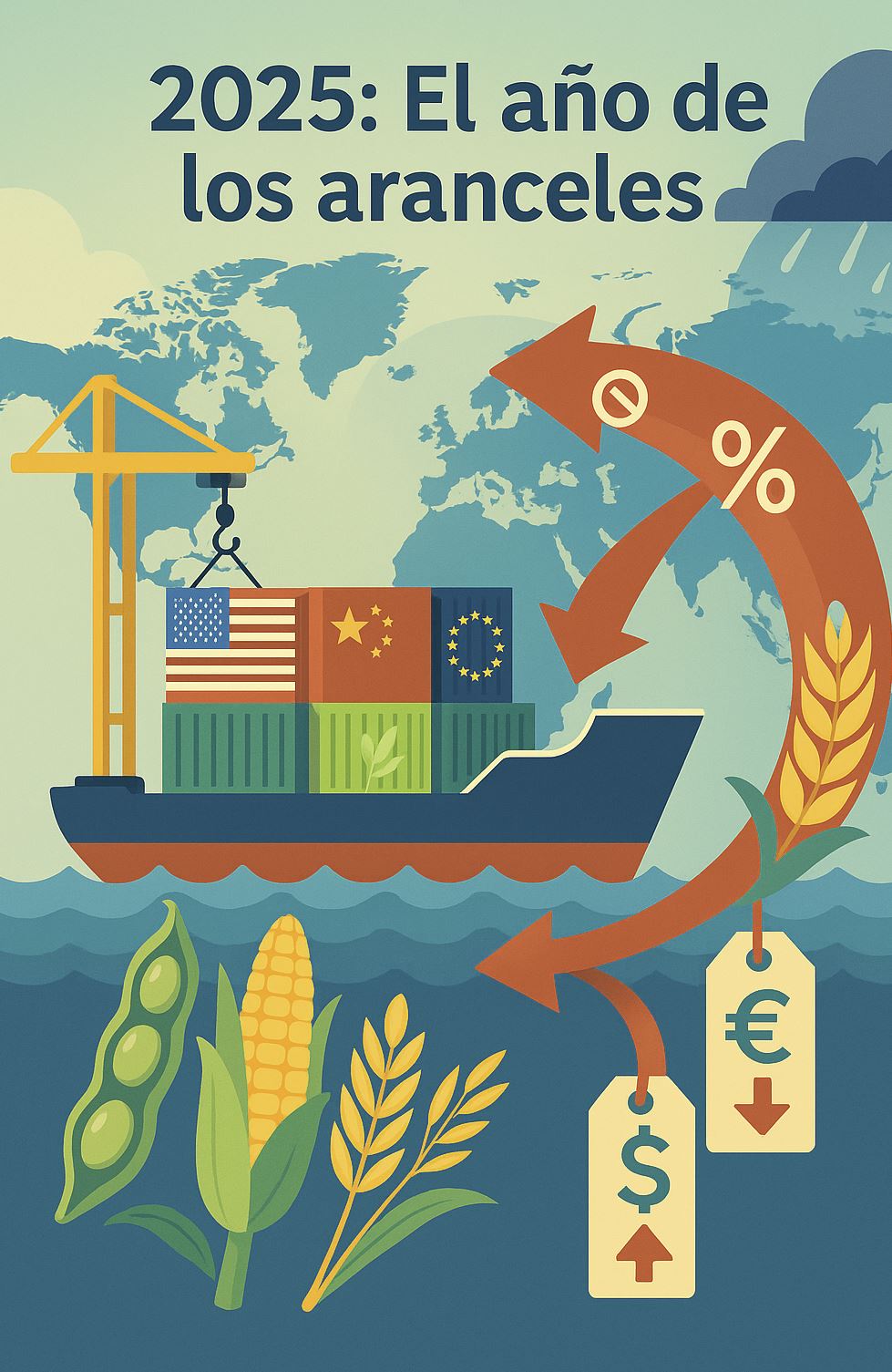
Regarding tariffs, it is reasonable to expect negotiations, but for now uncertainty is enormous and is limiting operators’ activity, as it is difficult to hedge risks in this situation.
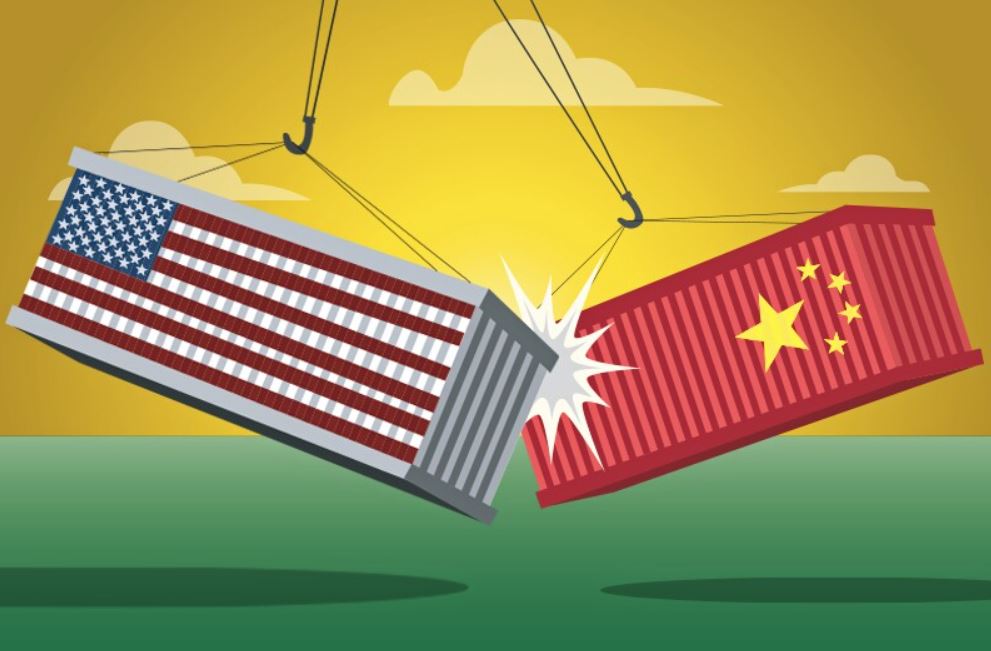
In addition to all of the above, we must continue to address the ongoing conflicts. The Middle East situation is intensifying, and the war in Ukraine, although it appears to be approaching an end, has nothing clear or guaranteed. The tariffs on Chinese products imported by the United States and those imposed by China on the United States — given the volumes involved — are the ones most affecting our markets, as is the possibility of the European Union imposing tariffs on agricultural products originating from the United States.
Import duties
What we know so far is that China is imposing import duties of 15% and 10% on virtually all agricultural and livestock products originating from the United States. For example, 10% on soybeans and 15% on maize, which means China will seek alternative origins for these products. It should be noted that China imports more than 100 million tonnes of soybeans per year, a portion of which comes from the United States. This is clearly affecting prices at those origins — soybean basis prices in Brazil have risen significantly since this announcement was made, as China will need to source virtually all of its soybeans from that origin.
Another implication is that other countries sourcing from Brazil will also have to pay more for soybeans if they likewise impose tariffs on imports from the United States. The European Union would be the most significant case if such tariffs were implemented, given that it is the world’s second-largest importer of soybeans, meaning the 13 million tonnes imported annually will come at a much higher cost.
Another development over the past three months has been observed in the dollar exchange rate. Following the US elections, it appeared the dollar/euro was heading towards parity, but this has changed. It now seems to be trending towards 1.10. There is also considerable uncertainty on this matter.
In summary: volatile markets and uncertainty. As a counterbalance, Chicago futures — which largely reflect what is happening in the United States — will be under pressure if no negotiations take place to mitigate the tariff situation. Beyond all of the above, it will be necessary to continue analysing the fundamentals, as at some point it is to be expected that everything will return to normality.
Grains
Global stock levels remain very strong (Fig. 1). Southern hemisphere harvests are being gathered in line with forecasts, and those in the northern hemisphere are progressing well. Brazil’s second maize crop, although delayed, appears likely to meet expectations. In the United States, more maize will be planted, and rainfall in wheat-producing countries is favouring what could be excellent harvests this year, although three months remain before they are confirmed.
| WHEAT 000 MT | 2021/2022 | 2022/2023 | 2023/2024 | 2024/2025 |
|---|---|---|---|---|
| OPENING STOCKS | 283.67 | 275.58 | 276.14 | 269.50 |
| HARVEST | 780.35 | 789.89 | 791.21 | 793.23 |
| CONSUMPTION | 791.34 | 789.33 | 797.85 | 806.65 |
| CLOSING STOCKS | 275.58 | 276.14 | 269.5 | 260.08 |
Fig. 1 – Global stock situation USDA March 2025 (wheat)
| MAIZE 000 MT | 2021/2022 | 2022/2023 | 2023/2024 | 2024/2025 |
|---|---|---|---|---|
| OPENING STOCKS | 292.94 | 313.91 | 304.83 | 316.95 |
| HARVEST | 1216.13 | 1163.33 | 1228.09 | 1214.17 |
| CONSUMPTION | 1198.29 | 1172.41 | 1218.97 | 1239.19 |
| CLOSING STOCKS | 313.91 | 304.83 | 313.95 | 288.94 |
Fig. 1 – Global stock situation USDA March 2025 (maize)
At the local level, in recent months domestic supply has come onto the market, presenting a significant opportunity for feed manufacturers, who have secured prices at the campaign lows. At ports, prices are firmer, as the available supply from origin countries — in this case Ukraine — becomes more limited as the months progress.
In recent months domestic supply has come onto the market, presenting a significant opportunity for feed manufacturers
Maize is perhaps the most sought-after commodity, since until Brazil’s crop arrives — which will be around mid-August — the only viable origin is Ukraine. With the sword of Damocles hanging over US maize tariffs, no one dares to source from the United States, which in previous months had been the most competitive origin.
For the new crop in wheat and maize, from a fundamentals standpoint the outlook would be fairly clear: adequate supply from virtually all origins, including domestic production, as rainfall conditions appear very favourable. However, given the tariff situation, no one dares to make forecasts, and even the August-to-December supply outlook — for both wheat and maize — appears to carry a risk premium that would not otherwise be present.
Market hedging in this environment and current prices for the new crop are low, but they do not appear likely to widen significantly until the situation becomes somewhat clearer.
On the futures side, wheat is at lows not seen in years, and maize is also under pressure (Fig. 2).


Fig. 2 – Historical maize and wheat futures market.
Furthermore, funds that had been carrying a long position in maize have shifted to a short position of 14,173 contracts on the basis of the tariff situation, although the position remains long when options are included (Fig. 3), while maintaining a very short position in wheat of more than 90,000 contracts.

Fig. 3 – Fund positions in maize futures and options.
Prices
Regarding port prices, new-crop wheat and maize are trading at around €230/MT and €225/MT respectively. Wheat is currently considerably more competitive, although this may change. Taking into account the prevailing market uncertainty, these would be reasonable levels historically — not at the lows but also not at the highs. For last year’s lows to be revisited, a combination of factors would need to materialise:
- A peace agreement to end the war in Ukraine.
- Northern hemisphere harvests proceeding as forecast.
- Brazil’s second maize crop meeting expectations.
- The United States negotiating the tariff issue, particularly with China and the European Union.
- US planting and crop development meeting expectations.
We shall see whether common sense prevails and whether the harvests come through.
Soybeans
The soy complex is the most affected by the tariff situation, as already discussed, given that it involves China and the European Union — the world’s first and second largest soybean importers respectively. With regard to the European Union, it is also the world’s largest importer of soybean meal. Mexico and Canada should not be overlooked either — Mexico as a significant importer of soybeans from the United States, and Canada as a major canola producer.
Futures prices across the soy complex are under pressure, particularly for soybeans and meal. Soyoil is more volatile, driven by its role in the biofuels sector. The pressure stems not only from the tariff situation but also from the large harvests being gathered in the southern hemisphere, which are resulting in more-than-generous global stocks (Fig. 4). For the coming season, it appears that plantings in the United States will decrease, but there is already talk of expanded planting area in Brazil, so there is no reason to expect stocks not to be maintained.
| SOYBEANS | 2021/2022 | 2022/2023 | 2023/2024 | 2024/2025 |
|---|---|---|---|---|
| OPENING STOCKS | 98.64 | 92.90 | 101.24 | 112.55 |
| HARVEST | 360.45 | 378.16 | 394.97 | 420.76 |
| CONSUMPTION | 366.03 | 366.67 | 384.44 | 409.16 |
| CLOSING STOCKS | 92.90 | 101.24 | 112.55 | 121.41 |
Fig. 4 – Global soybean stocks in million tonnes

How do tariffs affect the soybean market?
- Lower futures, as demand in the United States will decrease.
- Higher soybean basis prices in Brazil and Argentina due to the concentration of demand in the southern hemisphere.
- Deteriorating crushing margins in Brazil and Argentina, as local crushers will have to compete for raw material against import demand. Crushing margins at destination will also worsen.
- Higher meal basis prices in the southern hemisphere, as crushing margins would need to be optimised, with meal being the key driver.
- Lower soybean and meal basis prices in the United States for countries able to purchase from there — i.e., those exempt from import tariffs on US origin.
Given this situation, with destination prices at multi-year lows and futures levels also close to lows — at 1,027 c/bu for soybeans and $296/ST for meal — there would be no reason to anticipate significant price movements, except for the trade flow shifts driven by tariffs and their consequences. Funds, meanwhile, are carrying a short position in both soybeans (Fig. 5) and soy products, with a particularly short position in meal.

Fig. 5 – Fund positions in soybean futures plus options
At present, soybean meal supply is only being offered through to September, reflecting the uncertainty generated by the current situation. There is a paradox in that if a buyer wished to cover their purchasing needs through to December or for the following year, this would be impossible — even if they found the price of €360 attractive — as the tariff situation creates supply security concerns if sourcing from the United States is not viable. The EUDR issue must also be added to this, should imports become limited exclusively to southern hemisphere origins.

Given the above, the level of confusion is total, making it extremely difficult to take decisions — both for buyers who, even when willing, cannot execute them, and for sellers alike.
Conclusions
The tariff situation is not beneficial for any country — this has been experienced in other periods — but what it will drive is the search for alternative solutions and new alliances. It may seem that we are not in the best position, particularly in the European Union, or at least that is what we are being led to believe, but perhaps this also represents an opportunity. If we have been able to overcome a pandemic, and to withstand a war on our borders, we will be capable of overcoming this as well.

With regard to our sector — the most regulated in the world and, despite this, one of the most powerful — the current situation presents major challenges but also significant opportunities. Beyond the United States, there are other markets where EU products will be welcomed. China, with its tariffs on US agricultural and livestock products, will be one of them, but not the only one.
At the Spain level, with healthy margins on finished products, we would be in the best possible position. The dilemma for meat producers at this moment is whether to lock in margins at current raw material prices — which would arguably not be a bad idea — or, alternatively, to wait and see if they can be improved. This undoubtedly carries risk, but taking that risk given current broiler, pork, beef and egg prices appears manageable.
Source:
-. Lola Herrera, Editor of the LH Market Report
Global Rogah Global, SL (Revista MUNDO CESFAC, nº 67, March 2025)
For further information:
-. CESFAC . Spanish Confederation of Manufacturers of Compound Feed for Animals. A non-profit professional organisation that integrates and represents the interests of member manufacturers and the animal feed sector in general, before public authorities and third parties.
-. Animal Nutrition at NeXusAvicultura.com