
The principle of food safety encompasses the entire agri-food chain, from primary production through to the point at which food reaches the consumer. Food safety in primary production is of particular importance, as hazards, if left uncontrolled, accumulate throughout the chain. Furthermore, supplying high-quality raw materials incentivises the rest of the chain to implement and invest in efficient hygiene practice methods.

It is for this reason that FAC (Federació Avícola Catalana) and CESAC (Centre de Sanitat Avícola de Catalunya i Aragó) published in June 2024, on behalf of the Generalitat de Catalunya, the “Guide to Correct Hygiene Practices for Poultry Farms“
The Guide to Good Hygiene Practices for Poultry Farms is a self-monitoring tool designed to help control hazards and demonstrate regulatory compliance, and ultimately to enable poultry farms to produce safe animals.
In recent years, numerous regulations have been published on matters relating to biosecurity, animal health, veterinary treatments, the environment, training… This document compiles all these requirements in a clear and orderly manner.
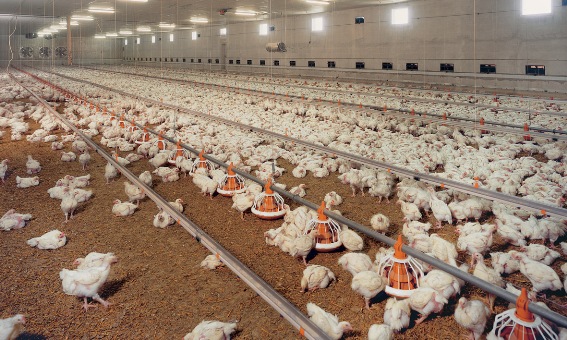
The guide covers different types of production: broiler chicken, turkey and other poultry meat production; breeder and hatching egg production; and laying hen production across various housing systems (free-range layers, barn layers, and layers in enriched cages).

In recent years, numerous regulations have been published on matters relating to biosecurity, animal health, veterinary treatments, the environment, training… This document compiles all these requirements in a clear and orderly manner.
The guide covers different types of production: broiler chicken, turkey and other poultry meat production; breeder and hatching egg production; and laying hen production across various housing systems (free-range layers, barn layers, and layers in enriched cages).
Each section of the guide sets out the general principles and specific requirements for each production scenario.
Poultry accounts for 10% of Catalonia’s total agricultural output. The participation of the sector — represented in Catalonia by FAC and CESAC — in the drafting of this guide reflects the commitment of the Catalan poultry industry to working jointly with public authorities with the aim of offering consumers poultry protein of the highest quality and food safety standards.
This Guide is a document that assists poultry farmers and the veterinary services responsible for the farm in implementing self-monitoring, and does not exempt them from complying with regulations published subsequently.
2024 Update:
This edition also includes and highlights the specifications for organic production, identified by a logo and displayed in green.
Download the Complete Guide:
-. “Guide to Correct Hygiene Practices for Poultry Farms” Written by FAC and CESAC and published by the Generalitat de Catalunya (June 2024)
Other guides from previous years:
-. “Guide to Correct Hygiene Practices for Poultry Farms: broiler chicken, turkey and other poultry meat production” Published in 2012.
-. “Guide to Correct Hygiene Practices for Poultry Farms: breeders and hatcheries“. Published in 2011.
FULL TABLE OF CONTENTS of the “2024 Guide to Correct Hygiene Practices for Poultry Farms: broiler chicken, turkey and other poultry meat production”
- INTRODUCTION
Obligations under current regulations - CORRECT HYGIENE PRACTICES
2.1. Facilities and biosecurity
Objective
General aspects
Biosecurity in facilities
Biosecurity in management
2.2. Cleaning, disinfection, pest control and rodent control
Objective
General aspects
Pest control (insect control)
Cleaning
Disinfection
Rodent control
2.3. Animal health
Objective
Animal health
Movements and identification
2.4. Veterinary treatments
Objective
Treatments in production
2.5. Animal welfare
Objective
General aspects
Mutilations
2.6. Water and feed
Objective
General aspects
Feed
Water
2.7. Environment
Objective
General aspects
Manure management
Carcass management
Waste
Greenhouse gas emissions to the atmosphere
2.8. Training
Objective
Training
3. REGULATIONS
4. ANNEXES
ANNEX I: Contents of the record book
ANNEX II: Identification of the farm veterinarian
ANNEX III: Contents of the Comprehensive Health Plan
ANNEX IV: Contents of the Training Plan
ANNEX V: Contents of the Non-Sanitary Waste Management Plan
ANNEX VI: Contents of the Facilities Maintenance Plan
ANNEX VII: Contents of the Environmental Management Plan
ANNEX VIII: Contents of the Animal Welfare Plan
ANNEX IX: Summary table of self-monitoring controls under the zoonotic Salmonella surveillance and control programme
ANNEX X: Movements of animals and eggs
ANNEX XI: Document templates
ANNEX XII: Animal welfare in indoor broilers
ANNEX XIII: Animal welfare in laying hens
ANNEX XIV: Welfare in organic production
ANNEX XV: Hatcheries
ANNEX XVI: Organic pullets