
Two bioacoustics and artificial intelligence (AI) projects monitor the welfare of broilers and predict production indicators in poultry facilities
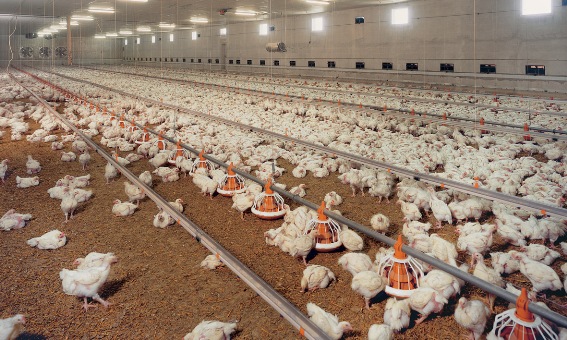
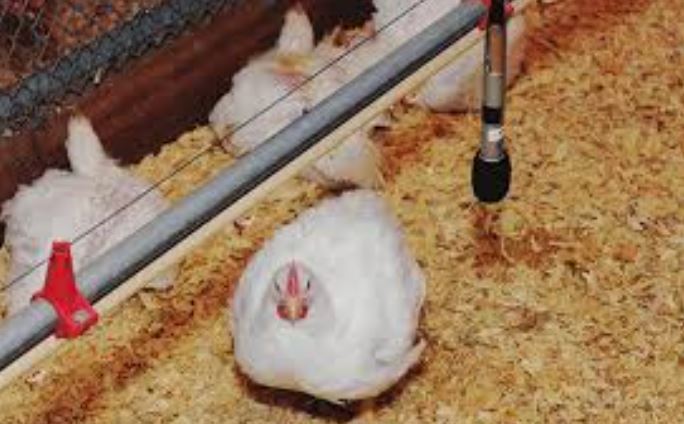
For several years, Grupo AN has been working on a project in bioacoustics applied to poultry farming focused on studying broiler welfare and the prediction of management indicators in production units based on the sounds they emit. By installing a sensor inside the houses, all generated sound is captured, yielding data on the number, frequency, bandwidth, and energy centre of the birds’ vocalisations.
These data, combined with information from farmers, veterinarians, and technicians, generate a set of parameters used to train an artificial intelligence algorithm, whose purpose is to identify indicators related to animal welfare and to predict productive performance parameters.
Using this AI tool, Grupo AN is making weight predictions four days in advance on farms and determining the welfare level of chicks in hatchery rooms. According to Javier Lacalle, livestock director at Grupo AN, the importance of understanding the opportunities offered by AI is “to recognise that it is one more tool that helps us improve our work and a new resource for ensuring competitiveness and operational efficiency”.
Origin of the project
In 2021, the poultry division, together with the company Cealvet, began working on an early feeding programme to improve chick performance. By administering a complementary feed in the hatchery room, the animal begins feeding as early as possible, facilitating enzymatic activity and digestive efficiency. “Over these years we have conducted a study involving millions of broilers, with and without the gel, in order to measure the product’s benefit on bird welfare, studying the improvement achieved and the reduction in stress,” specifies Javier Lacalle.
In the hatchery
The next step of the project was the incorporation of bioacoustics as a measurement tool to obtain a quantitative assessment of the welfare level of chicks in hatcheries. “Birds are one of the animal groups capable of vocal communication, as they have stress calls, sexual calls, and alarm calls, which makes it possible to determine their welfare level based on how they are vocalising,” he explains.
In this regard, the technology developed detects and captures bird vocalisations to obtain acoustic descriptors that are subsequently assigned an interpretation. Data collection has been ongoing for one year, amounting to more than 2.7 terabytes of vocalisations. “This vast quantity of data would be impossible to process without AI, which helps us identify relationships between descriptors in a supervised and automated manner,” comments Javier Lacalle.
Since February 2024, several parameters obtained through a sensor system have been added to the AI algorithm, namely relative humidity, temperature, and light intensity. This generates flock-specific standards that allow stress to be differentiated according to the time of year, day of the week, workload, or noise levels, and enables identification of the optimal conditions.
On the farm
In parallel, for the past eighteen months, frequency curves determining the welfare level have been measured at one of Grupo AN’s rearing farms, with the aim of predicting broiler weight. “It is essential for us that the birds arrive at the processing centre at the correct weight so that yield is optimised, costs are reduced, and waste is avoided,” clarifies Lacalle. Currently, to determine the live weight at which broilers leave the house, veterinarians carry out weighings at days 0, 7, 14, and 28. A prediction of the animal’s final weight is then made drawing on knowledge of the house, the time of year, and the strain.
Javier Lacalle explains how AI has once again been incorporated at this stage: “we have continued to feed the algorithm with the manually collected weights, and a correlation has been developed between the welfare level and how the broilers will grow, enabling weight to be predicted more than 4 days in advance with a margin of error of 2%.”
In closing, Javier Lacalle notes that, in the short term, the objective is to have the model validated under the specific conditions of AN in terms of feed, poultry strain, and climate, and to progressively roll out its installation across other houses.