
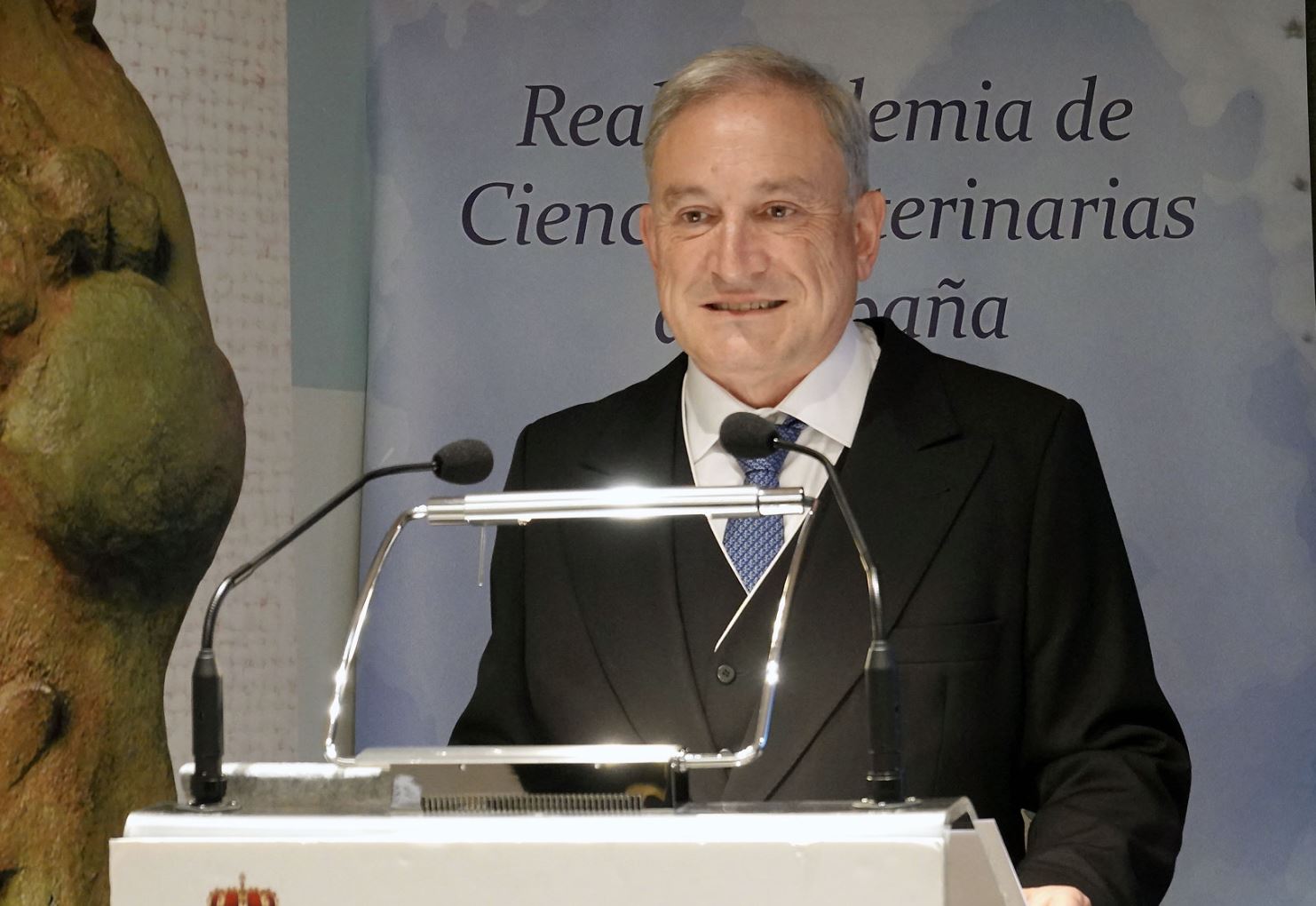
On 29 April 2024, veterinarian José A. Mendizábal Aizpuru was inducted as Corresponding Academician of the Royal Academy of Veterinary Sciences of Spain at a ceremony in which he was presented by fellow member José Manuel Etxaniz Macazaga, who outlined the honouree’s personal career and the merits that qualified him for this appointment.
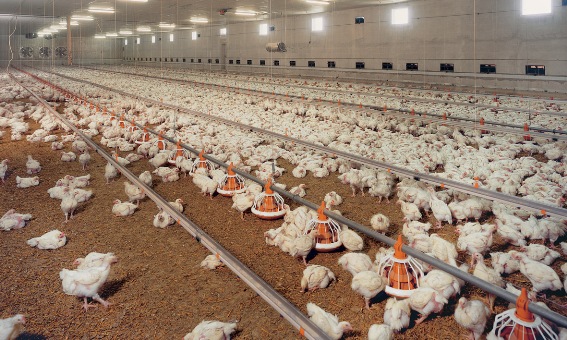
As a result of the ceremony, we now have access to the published version of Mendizábal’s address, spanning more than 100 pages, in which he provided a detailed review of the longstanding relationship between the veterinary profession and the progress of poultry farming. To this end, he began with the domestication of chickens in South-East Asia, their gradual spread through Mesopotamia and the Mediterranean towards continental Europe, the earliest surviving bibliographic references — from the Roman Cato and the Hispanic Columella — and the slow development throughout the Middle Ages, up to the beginning of its expansion, which was largely linked to changes in veterinary faculty curricula, including the introduction of zootechnics and the establishment of two new faculties, in Córdoba and Zaragoza.

From this point onwards, beginning with the mention of the first veterinarian to take up poultry rearing, Nicolás Casas de Menzona, the speaker referred to the establishment of the first poultry farms, the beginnings of artificial incubation, and the figure of Professor Salvador Castelló, with the founding of the Real Escuela de Avicultura (Royal School of Aviculture), which became the origin of a large proportion of the professionals who subsequently devoted their careers to this activity.
Thus, while tracing the various events that have taken place in Spain throughout the past century and up to the present day — such as the International Poultry Exhibition in Madrid in 1902, the interruption caused by the Civil War, and the World Poultry Congresses held in Barcelona and Madrid in 1924 and 1970 respectively — the speaker referred to the various veterinarians who have played an important role in the development of the poultry sector. In this way, he reviewed the contributions of Darder, Director of the Barcelona Zoo, of Cayetano López for his advances in the study of avian diphtheria and fowlpox, and of those who followed in the first half of the last century, such as José Mª Tutor, Félix Gordón Ordás, Juan Rof Codina, Juan Talavera Boto, and others.
He finally turned to all those other veterinarians who, in the second half of the previous century and for many years thereafter, also played a prominent role in the spectacular leap forward achieved by the Spanish poultry sector, including Andrés Blanco Loizelier, Rafael Sánchez Botija, Carlos Luis de Cuenta, José A. Romagosa Vilá, Francisco Polo Jover, Magín Brufau Estrada, Alberto San Gabriel Closas, Francesc Puchal Mas, and others.
In summary, this work, through an exhaustive review of the role played by outstanding professionals in the History of Poultry Farming, ultimately extends to the present day, addressing the challenges facing this sector in the future, including concerns over animal welfare, the One Health concept, the spread of avian influenza, sustainability, and more.
TEACHING AND MANAGEMENT ACTIVITIES
José Antonio Mendizabal, who holds a degree and doctorate in Veterinary Science from the University of Zaragoza, joined the Higher Technical School of Agronomy and Biosciences (ETSIAB) at the UPNA in 1990 as a lecturer in Animal Production and, since 2019, has held the position of Full Professor in the same field. As a lecturer, he has taught various subjects within animal production, including Biosecurity and Animal Welfare, Feeding and Rationing, Animal Reproduction, and Animal Production Systems. As a researcher, his field of study has been carcass and meat quality, as well as the development and metabolism of adipose tissue.
Part of his research work was carried out at the INRAE centre in Clermont-Ferrand (France) during a postdoctoral fellowship in 1996 and 1997. Finally, his university management activities have encompassed the responsibilities of academic secretary, deputy director, and director of the Department of Agricultural Production, the coordination of several doctoral programmes, and the coordination of a research action group on “Meat production: biodiversity and sustainability”, comprising researchers from the University of Lleida, the University of Zaragoza, and the Public University of Navarre.