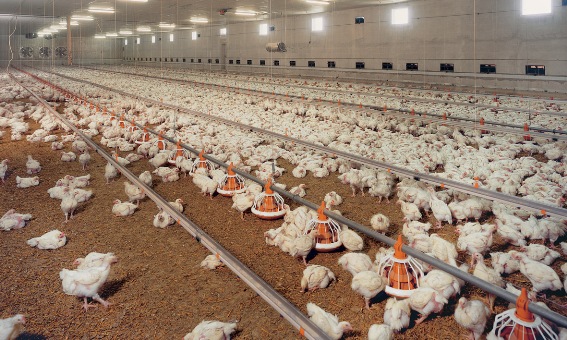

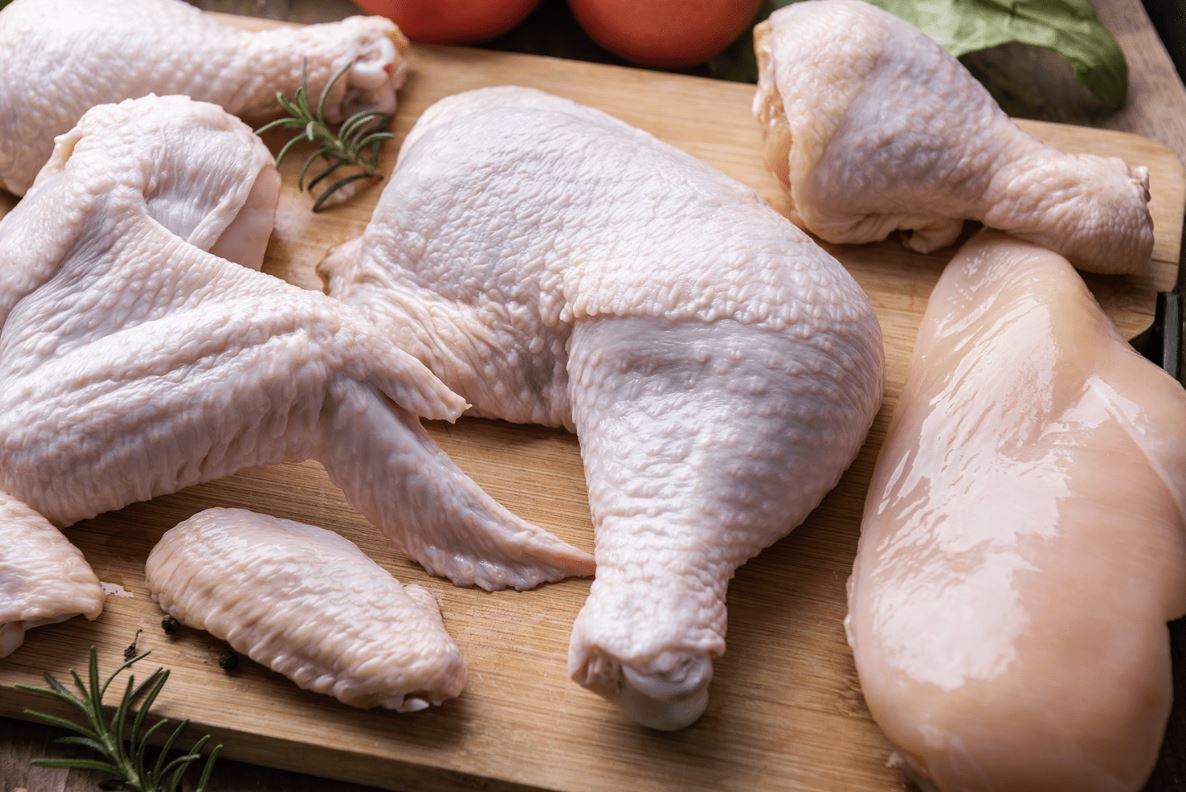
The issue of white striping found on some chicken breasts in the market is fuelling widespread positions among activists and ill-informed individuals who miss no opportunity to exploit any aspect found in animals to attack poultry production — one of the leading sectors in the food industry, which produces in accordance with European legislation, employs tens of thousands of people and, above all, manages to meet, at prices accessible to all, the nutritional needs of different social strata of the population.
MAC (More About Chicken) is working to debunk the myths and fears reaching consumers by providing them with information based on real facts and scientific arguments, contributed by researchers, health authorities and expert veterinarians in the sector.
To this end, they have compiled the most relevant observations regarding white striping in chickens, summarised below:
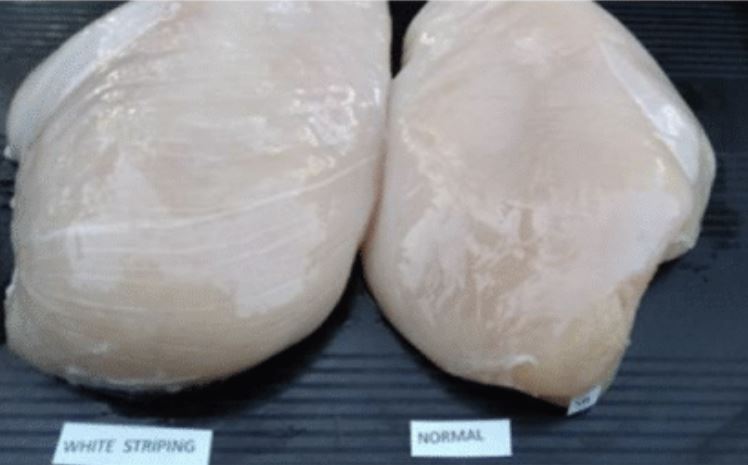
White striping on the surface of the chicken breast muscle can vary in quantity and thickness and may even be absent. It can be found in all commercial types of chickens, including slower-growing breeds and those from organic production.
At present, there is no scientific evidence that white striping is related to specific pathological conditions or diseases, nor that its presence poses any risk to human health.
Likewise, there is no evidence that its presence means the birds’ welfare has been negatively affected, nor that it indicates abnormal behaviour or shows symptoms of poor health or disease.
Furthermore, it must be borne in mind that animals destined for the human food chain cannot (by law and by common sense) have been affected by any disease. If, on the contrary, this were to occur and an animal suffering from a disease were to reach an authorised and controlled slaughterhouse by error, it would be directly excluded by the Health Authorities, who are legally required to be present at all such facilities throughout Europe.
Indeed, the Health Authorities responsible for overseeing farms and slaughterhouses constantly monitor through audits, inspections and sampling, to ensure that products intended for human consumption comply with the quality, organoleptic and sanitary standards that legislators require for European consumers.
European food quality standards are the highest in the world, meaning that any third country wishing to export food products to the European Union must raise the quality level of its production and adopt a kind of dual production standard within its own territory. Indeed, one of the pillars underpinning the European “farm to fork” food quality strategy is the protection of the health and welfare of farm animals through disease prevention and, as a direct consequence, the protection of consumer health.
Furthermore, we know that white striping appears in only a proportion of birds — an observation of fundamental importance, as it is enabling the establishment of genetic selection programmes to identify it, which, in a completely natural way, allow birds displaying white striping to be separated from the pedigree population and only those free from this defect to be subsequently reared.
In the specific case of white striping, the selection process has already begun and the first data on the reduction of its incidence in chicken breasts are emerging. Only a few more years of work will be needed to achieve its complete elimination, or a reduction to minimal levels.
It is therefore important to have the opportunity to understand these details in order to appreciate how false and distorted the statements of animal welfare associations are when they describe fast-growing chickens as “sick and deformed, unable to maintain their balance due to the enormous weight of their breasts.” It is also important to recognise that, contrary to what activists claim, high productivity is positively associated with health, welfare, the absence of injuries in animals and high sustainability in poultry farming, because professional farm management maximises welfare and minimises the wastage of raw materials and the carbon footprint.
Sources:
-. More About Chicken (MAC)
-. “White Striping: What is white striping in chicken? Does white striping affect the nutritional value of chicken meat?” by Chicken Facts (USA)
-. “Breast muscle myopathies in broiler: mechanism, status and their impact on meat quality“, Ali Hassan Nawaz, Annals of Animal Science
ER