
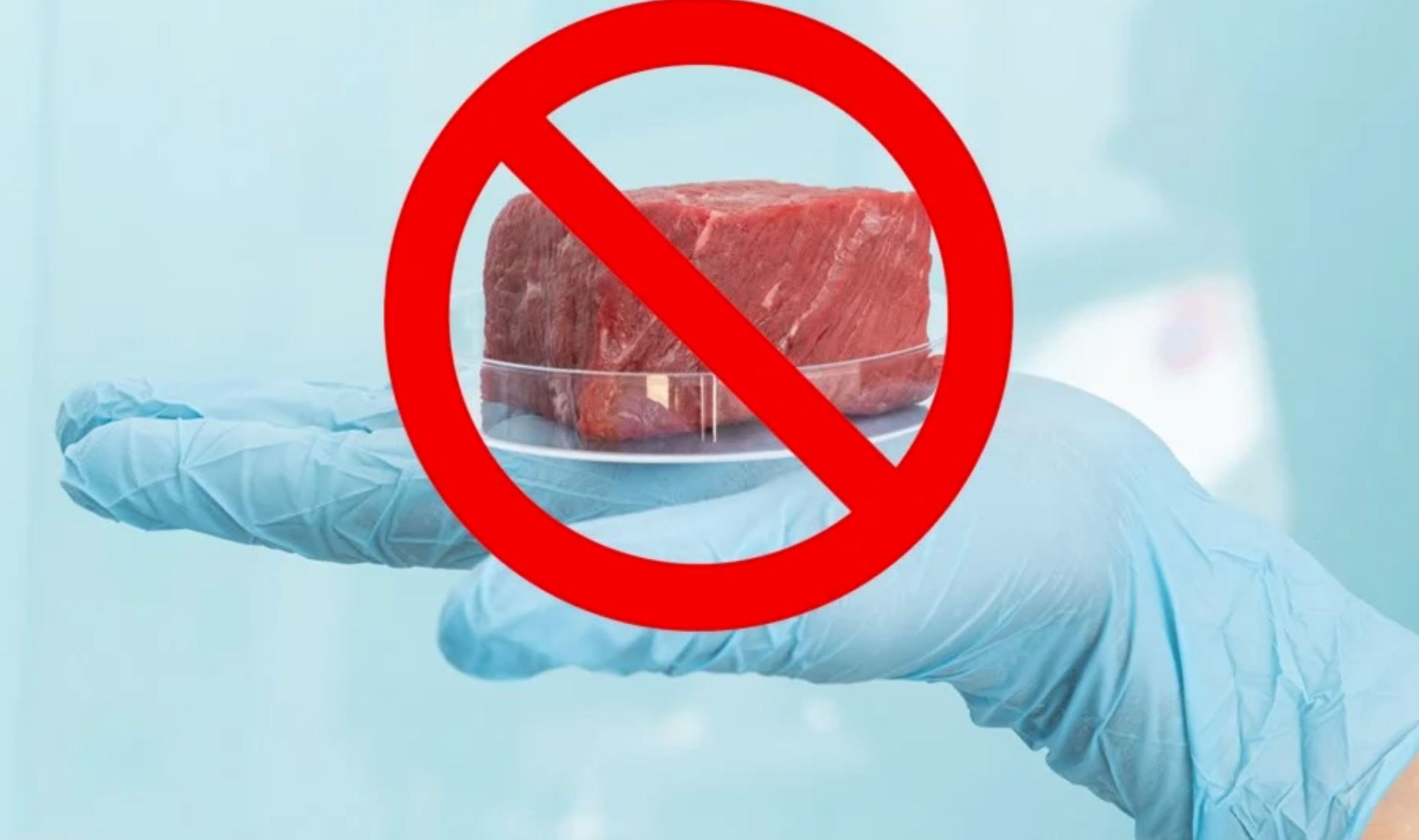
Alabama has become the second US state to ban the sale of cultivated meat. On Tuesday, Governor Kay Ivey signed into law SB23, which makes the manufacture, sale or distribution of food products produced from cultured animal cells a Class C misdemeanour as of 1 October.
According to the bill’s fiscal note, civil penalties could range from $100 for a Class II violation to $10,000 for a Class V violation for food retail establishments that violate the bill’s provisions.
However, the legislation does not prevent any federal institution of higher education, or a person associated with a government entity or institution of higher education, from conducting research in Alabama on the production of cultivated food products.
Alabama’s ban follows the legal precedent set by Florida in early May 2024. Governor Ron DeSantis signed SB 1084 into law, stating that the action aims to “stop the World Economic Forum’s goal of forcing the world to eat lab-grown meat and insects, an ‘overlooked protein source'”. Instead, the “State of Florida will increase meat production and encourage residents to continue consuming and enjoying 100% real Florida beef“.
The first lab-grown meat was created in 2013 by Mark Post of the University of Maastricht. The cultivated meat burger was made from more than 20,000 strands of muscle tissue, cost over $325,000 and took two years to produce.
Today, more than 150 companies worldwide sell cell-cultured meat, including 43 in the United States.
At least seven states have considered bills so far in 2024 to ban the sale, production or distribution of lab-grown meat, including Arizona, Iowa, Tennessee and Texas.
Crisis in the plant-based meat sector in the US
In recent years, the plant-based meat industry has faced a significant sales crisis. According to a recent report from the Good Food Institute, an alternative protein advocacy organisation, sales of plant-based meat and seafood in the US have fallen by 13% over the past two years.
During the early months of the pandemic, this sector experienced a significant boom due to disruptions in conventional meat supply chains and consumer interest in trying plant-based alternatives. As a result, between 2018 and 2021, sales of plant-based foods in the United States grew from $4.8 billion to $7.4 billion, driven primarily by plant-based meat.
However, enthusiasm for these products appears to be waning, and one of the main challenges is price. In the US, plant-based meats are, on average, 77% more expensive than their animal-derived equivalents, and in the case of more affordable meats such as chicken, this difference exceeds 150%.
Furthermore, many consumers continue to find plant-based products unsatisfactory in terms of flavour, texture and price.
Despite the buzz surrounding meat alternatives, plant-based milk remains the best-selling product among plant-derived foods. Soy, oat and almond beverages account for nearly 15% of total plant-based food sales in the United States, while plant-based meat and seafood barely reach 1%.
To address this situation, some companies are adopting new strategies with a view to relaunching sales. Impossible Foods has launched products with meatier textures that more closely resemble those of animal-derived meat products. Meanwhile, Beyond Meat unveiled in February 2024 a fourth-generation version of its burgers and ground meat, describing them as its “meatiest and juiciest products to date”.
Another factor affecting these types of products is the growing public awareness around avoiding ultra-processed foods. This has led companies in the sector to attempt to reduce the number of ingredients in their products, although they remain foods with an additive load far exceeding that of any animal-derived product.
Finally, alongside these commercial challenges, the plant-based meat industry also faces increasing political and cultural opposition, with seven Republican-governed US states now pushing to ban the production and consumption of ‘plant-based alternative meats’, including products such as tuna and pork manufactured in laboratories from animal-derived cells.
At the global level, the Italian parliament has banned the technology in its country. The bill is similar to one proposed in France, and Austria and Croatia could soon follow suit.
For further reading:
-. Marco Springmann, an environmental scientist at the University of Oxford (UK), told CNBC that the amount of energy required for the production process is so great that cultivated meat has a carbon footprint five times greater than that of chicken.
-. Artificial meat on NexusAvicultura.com