
What conclusions does this article reach?
Over the past three decades, a great deal of work has been carried out on fibre and its quantification, its chemical structures and physical properties, together with in-depth research into the functional attributes of various types of fibre on intestinal health, nutrition, welfare and the physiology of poultry and pigs. It has been proposed that certain types of fibre — not just any fibre — may be more effective in inducing satiety in birds, resulting in behavioural modification and improved welfare.
Significant restrictions on nutrient intake during pullet rearing and broiler breeder management serve to optimise body weight, an essential measure for maximising performance during the laying period and bird longevity. The use of fibre types with high water-holding capacity but limited fermentability in the large intestine may offer benefits in breeder birds by inducing satiety, moderating hunger and maintaining performance.
This review has analysed the literature on the use of fibre as a tool to control feed intake and modulate behaviour in breeders. A much deeper understanding of fibre types and the establishment of minimum and maximum levels in diet formulation will only follow from a comprehensive dietary fibre database, together with a clear elucidation of the types of fibre present in various ingredients.
Abstract
Precise management of feed intake is essential for broiler breeder productivity, as it is the only way to control body weight and ensure reproductive performance. Currently, feed intake in breeders is managed by restricting the allocated amount, typically through once-daily feeding. There is no practical alternative to physical restriction, but modulation of intake through nutrients such as salt, tryptophan and fibre has been explored. This review focuses on how fibre with specific physicochemical properties can be used to achieve a feeling of fullness and satiety in breeders, which in turn helps to moderate bird behaviour and alleviate welfare concerns.
INTRODUCTION
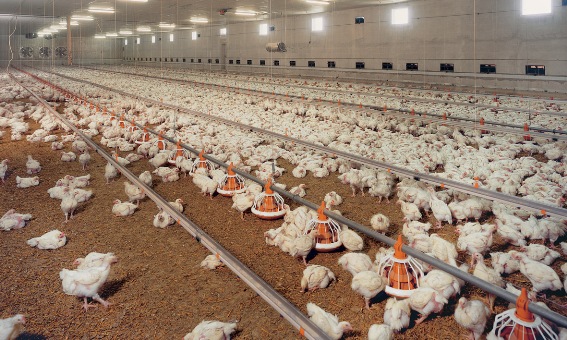
The significant genetic improvement that enables the modern broiler to reach market weight in 30 days is largely due to the bird’s ability to consume more than 15% of its body weight daily. However, this extremely high growth rate creates challenges for the body weight management of breeder hens and roosters — that is, the breeding birds in their later life.
Limiting feed intake and, therefore, live weight — particularly during the rearing period — is essential to maximise reproductive performance and longevity in breeders (Leeson and Summers, 2000). However, restricting nutrient intake without creating welfare problems and reproductive deficiencies is not easy to manage. For example, feed allocation must be reduced to 20% of ad libitum feeding levels during the 8 to 12 weeks of rearing (Riber and Tahamtani, 2020) in order to control body weight to 1.8 kg at the onset of lay, at around 25 weeks of age. Given that the modern broiler can reach 1.8 kg in 30 days under ad libitum feeding, rearing and managing breeder birds poses considerable challenges.
The traditional practice of “skip-a-day feeding” is no longer a commercially viable option due to welfare concerns. Similarly, nutritional manipulation of feed intake and appetite suppression (for example, the inclusion of high levels of salt, sand and clay to depress and dilute feed intake, or high levels of tryptophan to increase serotonin and reduce aggression, particularly during rearing) is not commonly used. This is because individual birds react very differently to nutrient deficiencies and excesses, and these practices create variation in egg production and weight uniformity, causing significant losses of hatchable eggs.
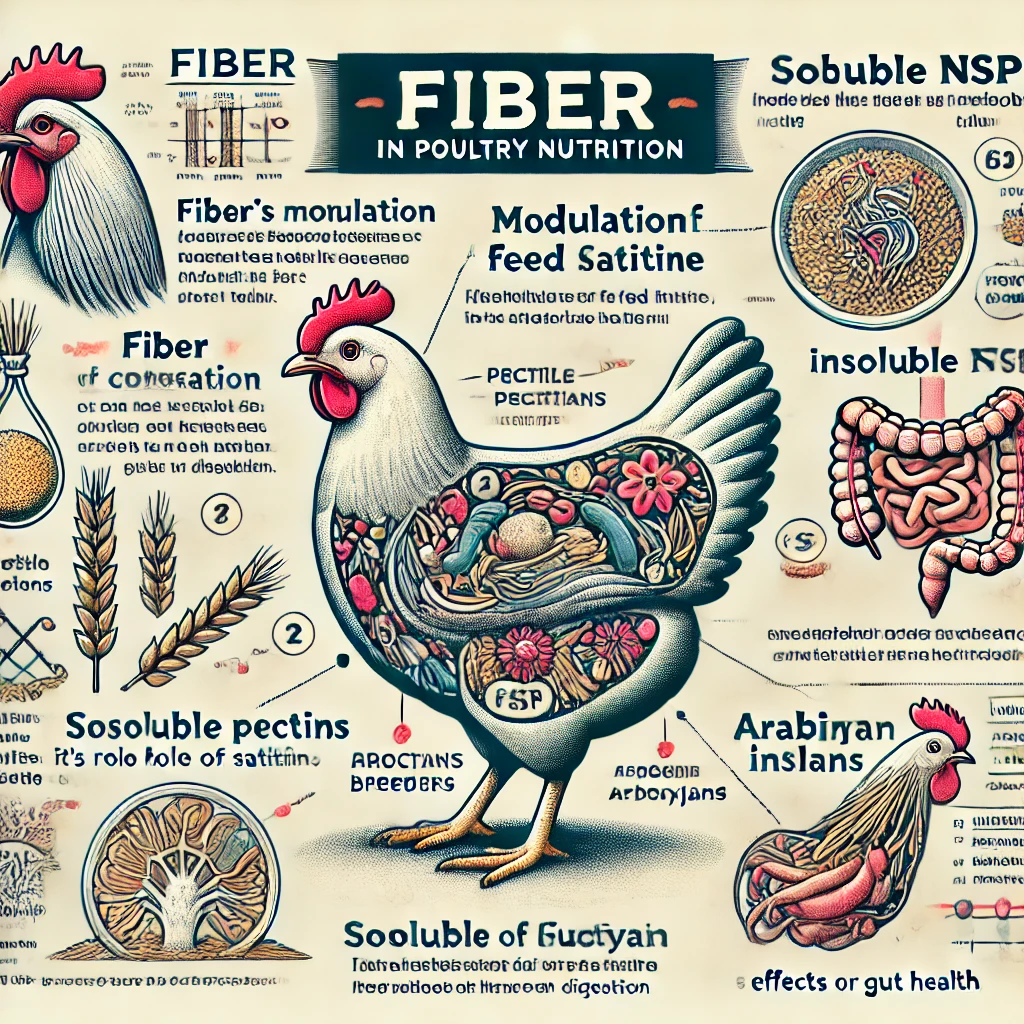
Another potential means of reducing feed intake is the use of fibre (Nielsen et al., 2011; Hocking et al., 2004). Fibre can also modulate behaviour and alter the outcomes of cannibalism in laying hens (Hartini et al., 2002; Hetland et al., 2004). There is significant evidence that dietary fibre — defined as the sum of non-starch polysaccharides (NSP) and lignin — influences behaviour and satiety in pigs (de Leeuw et al., 2008). However, what is lacking is the characterisation of the specific forms and types of soluble and insoluble NSP that modulate voluntary feed intake, as well as the sources of such fibre for use in commercial feeds. This article will describe dietary fibre in the context of feed from chemical, physical and functional perspectives, and will speculate on how certain NSP may be used to manage intake in breeders without affecting egg production and hatchability.
Source (Contact the authors to request the full article):
“IMPORTANCE OF FIBRE AND FIBRE CHARACTERISTICS IN MODULATING FEED INTAKE IN BROILER BREEDERS“
D.J. CADOGAN1 and M. CHOCT2
1 Feedworks Pty Ltd PO Box 369 Romsey VIC 3434 Australia; david.cadogan@feedworks.com.au
2 Poultry Research Foundation The University of Sydney 425 Werombi Road Brownlow Hill NSW 2570 Australia; mingan.choct@sydney.edu.au