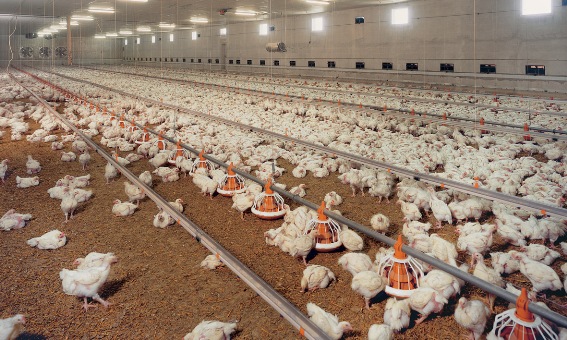

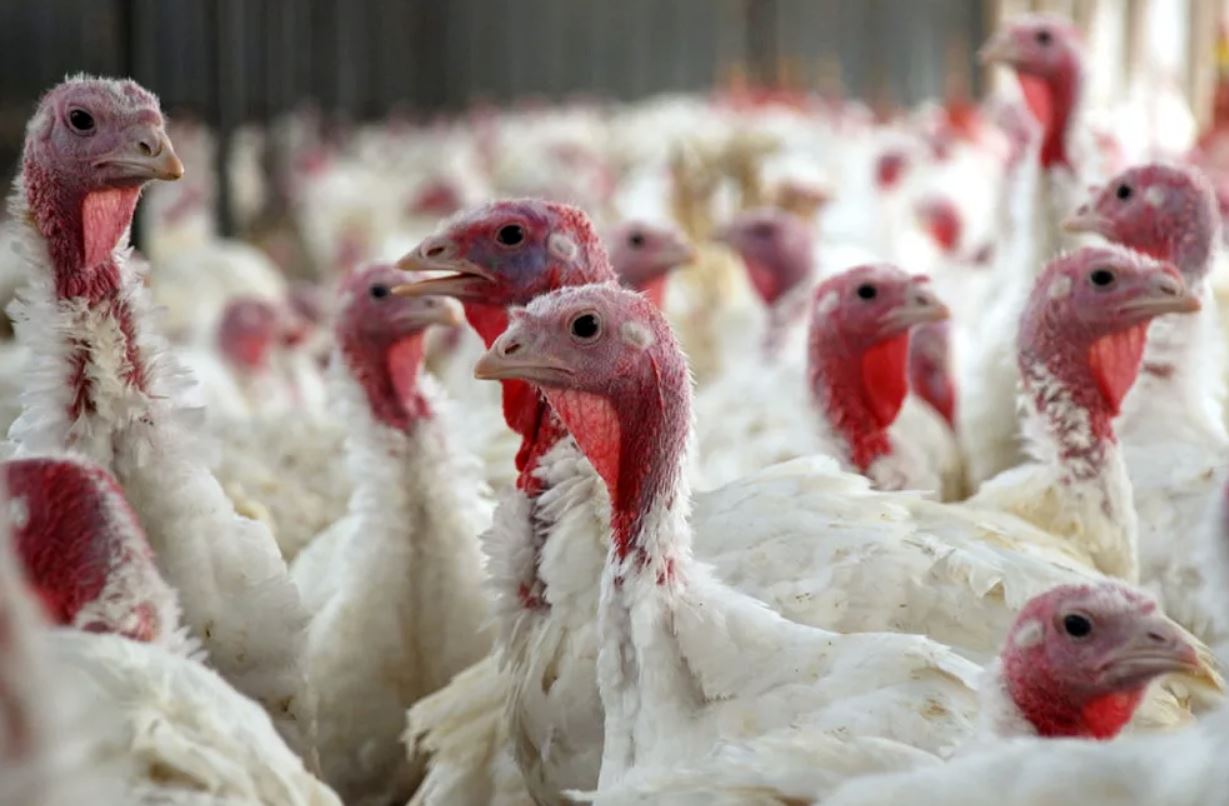
The Andalusian Ministry of Agriculture has declared an outbreak of highly pathogenic avian influenza on a turkey poultry farm in El Cerro de Andévalo, Huelva. The swift action of Andalusia’s veterinary authorities has enabled the culling of the farm’s 8,500 birds and the disposal of contaminated materials, with the animal health protocol activated immediately following confirmation of the H5N1 virus. This outbreak adds to other cases detected in wild birds in Seville and possible notifications in Málaga, reinforcing surveillance across the whole of Andalusia.
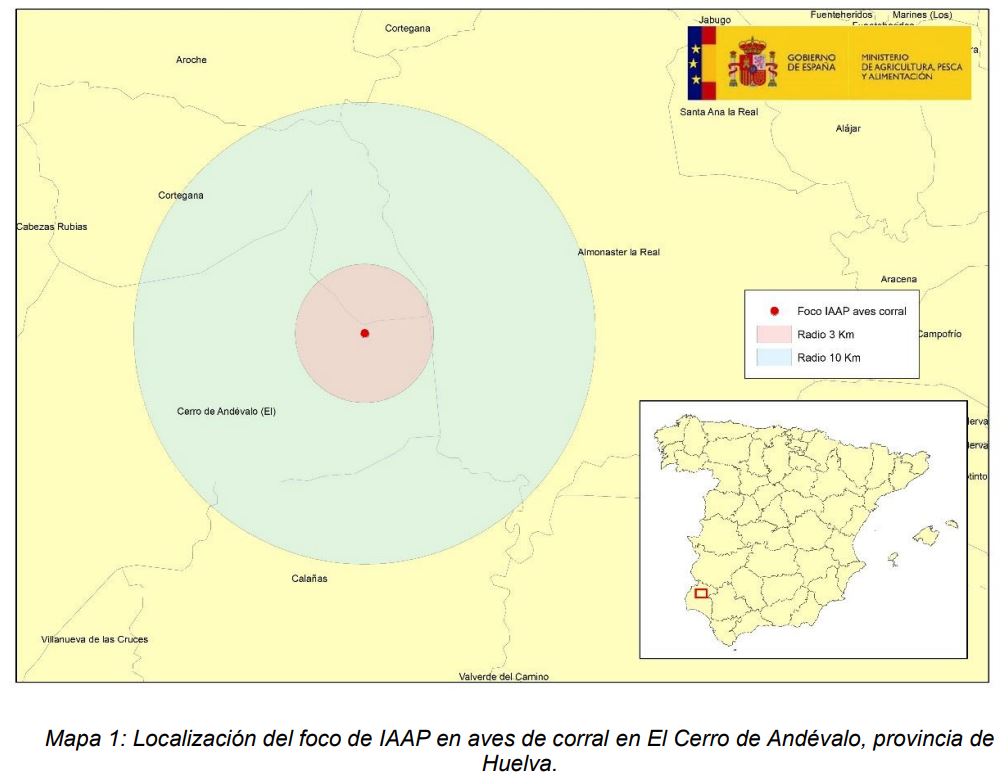
The outbreak was detected on a fattening farm in the municipality of El Cerro de Andévalo, in the Andévalo Oriental district (Valverde del Camino). Suspicion of the disease arose on 1 September 2025, when an abnormal increase in mortality and compatible clinical signs in the birds were reported to the Official Veterinary Services (OVS) of the Junta de Andalucía. Following sample collection, the National Reference Laboratory, located in Algete, confirmed the presence of Highly Pathogenic Avian Influenza (HPAI) virus subtype H5N1.
It should be recalled that Andalusia’s turkey farms in 2022 were unfortunately in the spotlight when the majority of the more than 30 AI outbreaks recorded that year occurred in fattening turkeys, as well as in laying hens, broilers and breeder hens. It is worth noting that the clinical signs and lesions of HPAI are not always indicative of the disease, making it important to include it in differential diagnosis as soon as increased mortality, reduced water consumption, drops in egg production or respiratory signs are detected.
This outbreak is considered “very localised and isolated” due to the low density of farms in the area, which facilitates the implementation of biosecurity measures.
Control measures were applied swiftly, even before official confirmation from the Ministry of Agriculture’s laboratory. Immediate actions included the standstill of the affected holding and others located within a 10 km radius, the culling of approximately 8,500 fattening turkeys, the official destruction of carcasses, feed and other materials that could serve as vehicles for the virus, and the commencement of disinfection operations. In addition, an epidemiological investigation has been conducted to determine the source of the outbreak, and a 3 km protection zone and a 3–10 km surveillance zone have been established, within which biosecurity measures have been reinforced. The Junta de Andalucía has stressed that the outbreak is “very localised and isolated”, facilitating the implementation of biosecurity measures owing to the low density of farms in the area. The official MAPA list of Latest registered notifications of notifiable animal diseases in Spain provides daily updates from the authorities.
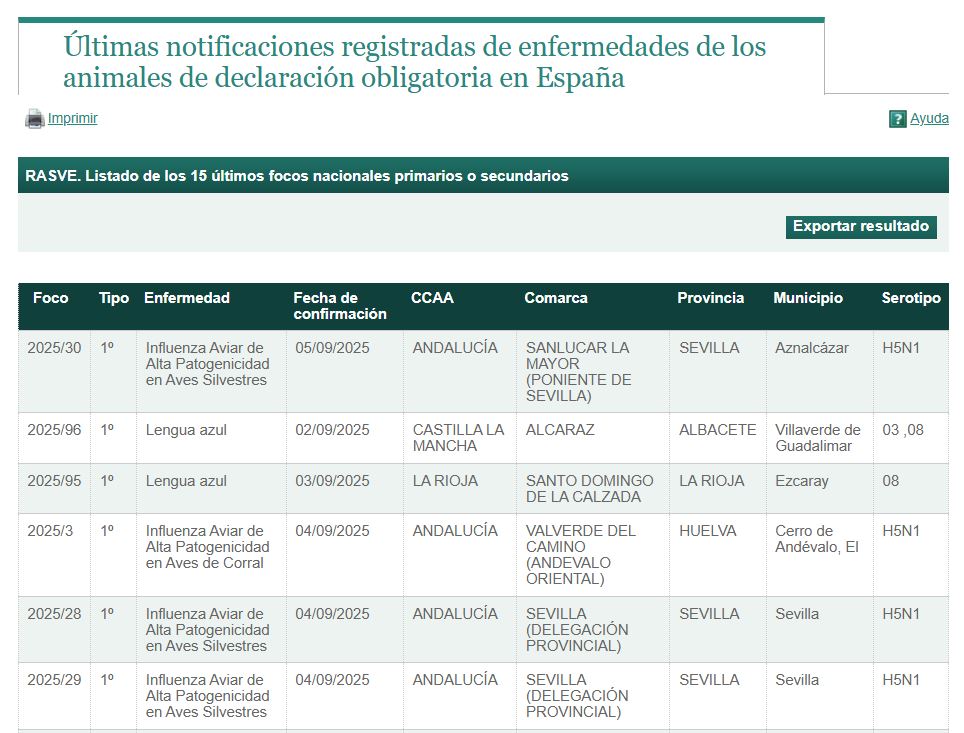
This incident in Huelva forms part of a broader context of avian influenza outbreaks in Spain in 2025. In poultry farms, it is the third case in Spain in 2025, following two cases in July — the first on another turkey farm in Extremadura and a second case on a breeder farm in Toledo.
To these must be added 31 cases in wild birds across various autonomous communities, including Catalonia, the Basque Country, Castilla-León, Asturias, Galicia, etc. The most likely route of introduction of the virus into the Huelva farm is considered to be indirect contact with wild birds.

The H5N1 virus is transmitted via the respiratory route and causes the death of birds within hours or days. Although the risk of transmission to humans is extremely low, the Ministry of Health is monitoring 25 individuals in Seville following risk contact at the Tamarguillo Park, after AI cases were found in wild birds in that park, while in the Huelva case, health surveillance is being maintained for those who may have been in contact with the affected animals. It is reiterated that the consumption of cooked poultry meat, eggs or processed products derived therefrom poses no risk to humans.
The authorities have emphasised the need to reinforce biosecurity measures on poultry holdings to prevent direct or indirect contact with wild birds, as well as to maintain passive surveillance and report any suspicion of disease to the Official Veterinary Services. The Ministry of Agriculture, Fisheries and Food (MAPA) has notified the case to the European Union and to third countries, in accordance with international protocols.
For further information:
-. Official Communiqué of 4 September 2025 from the Spanish Ministry of Agriculture
-. Avian Influenza on NeXusAvicultura
Tracking of Avian Influenza cases on poultry farms in Spain in 2025:
-. First case of 2025 (18 July, Extremadura): Alert over an Avian Influenza outbreak on a 7,000-turkey farm in Extremadura
-. Second case (28 July, Toledo): Second AI outbreak detected, this time on a breeder farm in Toledo
-. Third case (1 Sept., Huelva): The ghost of H5N1 returns to Andalusia: 8,500 turkeys culled due to avian influenza in Huelva.
-. Fourth case (8 Sept., Guadalajara): Spain records its fourth AI outbreak of 2025, this time on a breeder farm in Guadalajara
-. Fifth case (9 Sept., Huelva): H5N1 positive confirmed on the 8,400-bird poultry farm in Valverde del Camino, Huelva, Andalusia