

Analysis of the EU Egg Market: Trends, Prices and Trade in 2023–2024
In January 2025, the EU published the Market Dashboard and the Market Report for eggs in the EU. The change in methodology used to track the respective national statistics complicates comparisons with previous years.
In any case, we consider it vital that readers of NeXusAvicultura.com have this comprehensive and up-to-date view of the market. In this article, we take an in-depth look at the most recent data, trends and opportunities for 2025, based on official European Commission reports.
1. Egg Production and Consumption in the EU
– Total production and supply trends
In 2024, total egg production in the EU reached 6,664 thousand tonnes, with 6,042 thousand tonnes destined for consumption and 622 thousand tonnes for hatching. These figures reflect the stability of the sector, albeit with variations among Member States due to production conditions and market demand.
The egg market in the European Union is characterised by substantial production, active trade and diversity in rearing methods. In 2024, total egg production is estimated at 6,664,000 tonnes, of which 90.7% was destined for consumption. Hatching eggs account for 9.3% of total egg production in the EU.

– Main producing countries
Production figures for 2024 show that France, Germany and Spain are the leading egg producers in the EU. However, due to a change made by the EU in spring 2024 to the methodology used for its statistics, it is not possible to compare the data with previous years. Furthermore, we have detected slight discrepancies that may cause Spain to fluctuate between second and third place as the largest egg producer depending on the statistical system used. In any case, production in Germany declined slightly, down 0.7% compared to 2023, while production in Spain continues to rise, meaning that if it has not already done so in 2024, Spain will in all likelihood become the second largest egg producer in the EU in 2025.

- In 2023 the EU produced 6,788 tonnes of eggs, of which 54% were produced by 4 countries. Noteworthy is the growing production of Poland:
France: 891 thousand tonnes - Germany: 958 thousand tonnes
- Spain: 914 thousand tonnes
- Italy: 798 thousand tonnes
- Poland: 554 thousand tonnes
📌 The EU egg market maintains its strength, with more than 6.7 million tonnes produced in 2023.
2. Changes in Production Systems
– Distribution of production by housing system
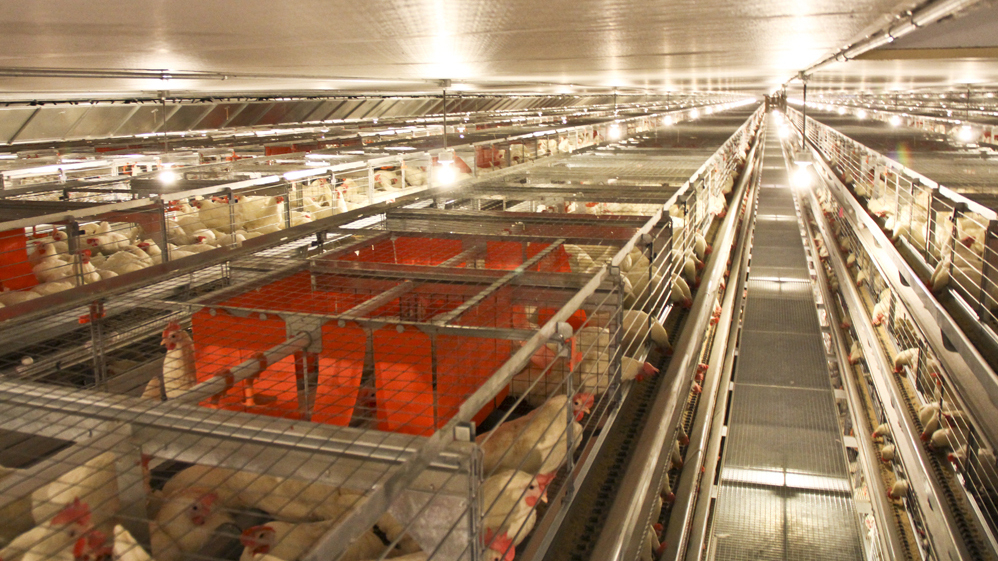
One of the most significant changes in the sector is the evolution driven by greater social awareness among European consumers, marking a trend towards more sustainable and animal welfare-friendly production systems. Laying hen housing in the EU is divided into four main categories: enriched cages, barn, free-range and organic. In 2023, the total number of laying hens in the EU was 387.4 million. Cage-free housing systems account for 60.8% of the total.
• Enriched cages: 151.7 million laying hens, representing 39.2% of the total
• Barn: 150.7 million laying hens, accounting for 38.9% of the total
• Free-range: 58.7 million laying hens, accounting for 15.1%
• Organic: 26.4 million laying hens, accounting for 6.8%
Country-level data reveal very significant differences in housing system preferences. For example, Poland and Spain have a high proportion of hens in enriched cages, while Sweden and Austria have a greater proportion of hens in barn and free-range systems.

📌 OF THE 387 MILLION LAYING HENS IN THE EU,
60.8% ARE ALREADY CAGE-FREE
– Impact of European regulation
EU regulations continue to promote animal welfare, which has driven greater investment in infrastructure to adapt production. However, this has generated additional costs for producers, affecting profitability on some farms.
Some countries, such as Germany, Slovenia and Sweden, have already banned or are in the process of completely banning the use of any type of cage for laying hens.
The sector, however, is confident that given the new global geopolitical context, the EC will be somewhat more lenient and will not impose a legal ban on cages across the EU, but will instead allow each country’s market to self-regulate.
If the EU were ultimately to ban current enriched cages and all types of cages, the cost would be enormous. In Spain alone, INPROVO has estimated the cost of this conversion at €2.3 billion.

📌 WHETHER DRIVEN BY LEGAL OBLIGATION OR BY PRESSURE FROM MAJOR FOOD RETAIL CHAINS, THE FACT IS THAT INVESTMENT IN CONVERTING TO CAGE-FREE SYSTEMS WILL CONTINUE TO RUN INTO THE HUNDREDS OF MILLIONS IN THE COMING YEARS.

3. Egg Prices: Trends and International Comparisons
– Price trends in the EU
Egg prices showed significant volatility in 2024. The average price of Grade A eggs at EU packing stations stood at 229.88 EUR/100 kg, reflecting fluctuations driven by input costs and market demand.

– Price differences by production system
Organic eggs (6.8% of the total) command the highest price, followed by free-range, barn and finally cage eggs. In week 51 of 2024, average prices per 100 kg were:
- Cage: €241.88/100 kg
- Barn: €249.00/100 kg
- Free-range: €304.89/100 kg
- Organic: €422.88/100 kg

📌 Organic eggs reached a record price of €422.88/100 kg, consolidating their position as a premium product in the European market.
– International comparison
The EU egg price remains higher (229.88 €/100 kg) than in other markets.
- USA: 910.31 €/100 kg (*)
- EU: 229.88 €/100 kg
- Brazil: 127.42 €/100 kg
India: 106.9 €/100 kg
(*) Worthy of special mention is the egg price in the USA, which closed 2024 and began 2025 with astronomical quotations of 910.31 €/100 kg, as the egg market has been thrown into turmoil by the shortage of laying hens caused by the rampant avian influenza ravaging the country. This chart says it all.

4. International Trade: Impact on the EU
The EU is a significant player in international egg trade, both in imports and exports.
– Increase in imports
The EU’s main trading partners for egg imports in 2024 are Ukraine, the United Kingdom, Argentina and the United States. Imports from the United States experienced a significant increase of 342.4% between 2023 and 2024. Overall, EU imports increased by 27.2% between 2023 and 2024, with notable supply increases from:
- Ukraine: +31.7%
- United Kingdom: +45.4%
- USA: +342.4%
The growth in imports reflects the need to stabilise prices and ensure supply following the crisis affecting some European producing countries.

– Exports and key markets
The main destinations for EU egg exports are the United Kingdom, Japan, Switzerland, Thailand and Russia. Exports to Russia grew by 932.3% between 2023 and 2024. Total EU exports increased by 11% between 2023 and 2024. In total, exports reached 303,975 tonnes, with the main destinations being:
- United Kingdom (+5.1%)
- Japan (+11.2%)
- Thailand (+62.4%)
- Russia (+932.3%)

📌 Egg imports from the USA increased by 342.4% in 2024, reflecting a shift in the EU’s trade strategy.
5. Other relevant data
•Pullet placements: Laying hen placements in the EU show monthly variation, with a notable increase during the spring months.

•Feed costs: Grain feed costs have a significant influence on egg prices; and, unlike 2022 or early 2023, in 2024 raw material costs continued to fall, allowing margins to improve.
•Egg types: The majority of eggs traded are shell eggs.
Key takeaway: The EU egg market is highly dynamic, with a well-balanced interplay between production, consumption and trade, and with clear business opportunities. The trend towards cage-free housing systems continues to grow, driven by consumer demand and regulatory requirements. Prices vary according to the production method, with organic eggs commanding the highest prices. International trade is of paramount importance, with Ukraine, the United Kingdom and the United States as the main import partners, and the United Kingdom and Japan as the leading export destinations. The data reveal an increase in imports from the United States (+342.4%), while exports to Russia grew significantly (+932.3%) between 2023 and 2024.
For further information:
-.EU Egg Market Situation Dashboard, EU Dashboard, (29/01/2025)
-.EU Egg Market Situation Report, EU Reports, (23/01/2025)