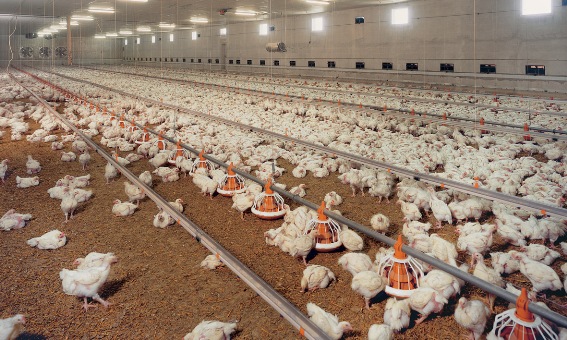


In early September 2024, the USDA (Food Safety and Inspection Service of the United States Department of Agriculture) updated its guidelines to substantiate “pasture-raised chicken” labelling claims related to animal husbandry and the environment, encouraging companies to provide additional documentation demonstrating that animal-sourced products sold under the labels “pasture raised“, “grass fed“, “pasture grown” or “meadow raised” come from animals “raised on land where the majority is rooted in vegetative cover of grass or other plants for most of their lives, from birth to slaughter”. The guidance clarifies that this is not the same as “free range”, which simply means that animals have “continuous free access to the outdoors” throughout the entire grazing season, but does not require animals to leave an enclosed building or structure.
The proposed change came at the initiative of Perdue Farms, which is well known for its commitment to raising birds without any antibiotic use and other efforts it champions to improve the welfare and living conditions of its chickens — a strategy rooted equally in empathy for animals and in commercial acumen, given consumers’ growing interest and willingness to pay a price premium for poultry and meat from animals they perceive as being raised more humanely.
Perdue Farms is one of the largest poultry integrators in the USA, with revenues exceeding USD 9 billion and 1,790 integrated poultry farms. One of its main strategic priorities in recent years has been antibiotic-free production and bringing to market chickens raised under less intensive conditions.
In a podcast interview with Ryan Perdue, fourth-generation member of the Perdue family and Senior Vice President of Perdue Premium Meats and Emerging Brands, conducted in November 2024 by the digital publication Food Navigator, he shares what the new standard is, how it compares with other animal husbandry claims and consumer expectations, and what it means for stakeholders across the value chain, from farmers to brands. He also shares new technologies and strategies for complying with the stricter guidelines while simultaneously improving animal welfare and environmental sustainability.
What is the difference between ‘pasture raised’ and ‘free range’, and why does it matter?
The USDA’s updated guidance on substantiating animal husbandry and environment-related labelling claims, proposed in late August 2024, responds to concerns that consumers were being misled by claims for which no codified federal definition exists across the entire United States, including “free range” and “pasture raised” — which Perdue Farms argued in a petition submitted to the USDA in March 2023 are not synonymous.
Ryan Perdue explains that the company filed the petition after he began visiting farms seven years ago to learn more about “pasture raising” and saw how it differs from other animal husbandry claims.
“What I found was that there was a wide variety of different practices being employed. Some poultry producers simply let the pasture become completely depleted. Some used a traditional stationary house and allowed the chickens access to the outdoors,” he said.
“But,” he added, “what really excited me once I started looking around was that this is something in which a lot of people were actually participating, more in their backyards — small lots sold by the producers themselves at local farmers’ markets. But there were, at that time, 700 different producers raising chickens they called pasture-raised using a method consistent with a man named Joel Salatin,” who developed a “chicken tractor” that moved chickens within an enclosure.
Many of these producers had joined forces to create the trade group known as the American Pastured Poultry Producers Association, and defined pasture-raised poultry as birds that spend the majority of their lives on pasture covered by a majority of rooted vegetation — the basis of the new USDA standard.
“The challenge is that this group had not been successful in getting this adopted as the standard definition. They had been trying for nearly a decade to get organisations such as the USDA to adopt that definition and simply didn’t really know how to go about it,” said Perdue.
This is where Perdue Farms could help, given its experience in submitting petitions to the USDA for other animal care standards, Ryan adds.
A standard definition is key to helping small farmers and brands succeed
Perdue argued that without USDA backing for this definition for poultry, there was a risk that some producers would make “pasture-raised” claims while actually adhering only to the “lower” standard of “free range”. This not only created an uneven competitive playing field, but could also mislead consumers and erode trust.
“I was very excited to find that there was a common definition that many small producers were already championing. What I also discovered at the same time, however, was that once you got into somewhat larger producers, they were not employing that method. By and large, they were taking fixed poultry houses that had outdoor access and calling them pasture-raised,” said Perdue.
Even Perdue Farms was guilty of this at one of its farms in Sonoma County, which held a higher animal welfare rating but in spirit did not meet the pasture-raised definition. Perdue said his first step was to discontinue the pasture-raised claims for poultry produced at that location.
How do consumers define pasture raised versus free range?
After putting his own house in order, Perdue said the company surveyed consumers to better understand what they believed “pasture raised” meant compared with other claims such as “free range”. The company then used those findings to support its petition for the USDA to differentiate between the two claims.
“If you are going to go to a government agency such as the USDA and try to push a common definition, you need to have a very solid understanding of what consumers currently believe,” said Perdue.
Perdue Farms conducted a survey and found that 89% of consumers believe that an animal or product that is pasture raised comes from an animal that should have spent at least part of its life living on pasture, and 69% believe it should have spent the majority of its life on pasture — which was the APPPA definition. Perdue said.

Some free-range chickens “could” meet this definition if they voluntarily chose to leave their enclosures, but Perdue explained that the majority of chickens, when given the option, remained inside the security of the enclosure where feed and water are available and never ventured outside.
By requiring labelling to distinguish between the two terms, Perdue says there is greater legal certainty for small and medium-sized farmers to obtain a premium when raising chickens on pasture, and less risk of greenwashing.
Similarly, by clearly defining what is meant by “pasture raised”, Perdue says that consumers purchasing chicken bearing this label can have greater confidence in its nutritional quality and in the benefits their purchasing decision brings to the land.
Given the benefits of pasture-raising practices and the protection the new USDA guidance offers to poultry producers who follow them, Perdue says he is optimistic that more poultry producers will upgrade their systems to meet the higher claim — which he believes is a win for animals, people, the planet and businesses alike.
Notable highlights:
-. Perdue Farms’ public-facing website where they offer guided tours of farms that have adopted pasture-raised chicken production