
Since mid-2023, the Netherlands has experienced a sharp and sustained increase in human infections caused by Salmonella enterica serovar Enteritidis (SE). This alarming trend coincides with a rise in SE-positive laying hen flocks, representing a growing concern for public health and the poultry sector.
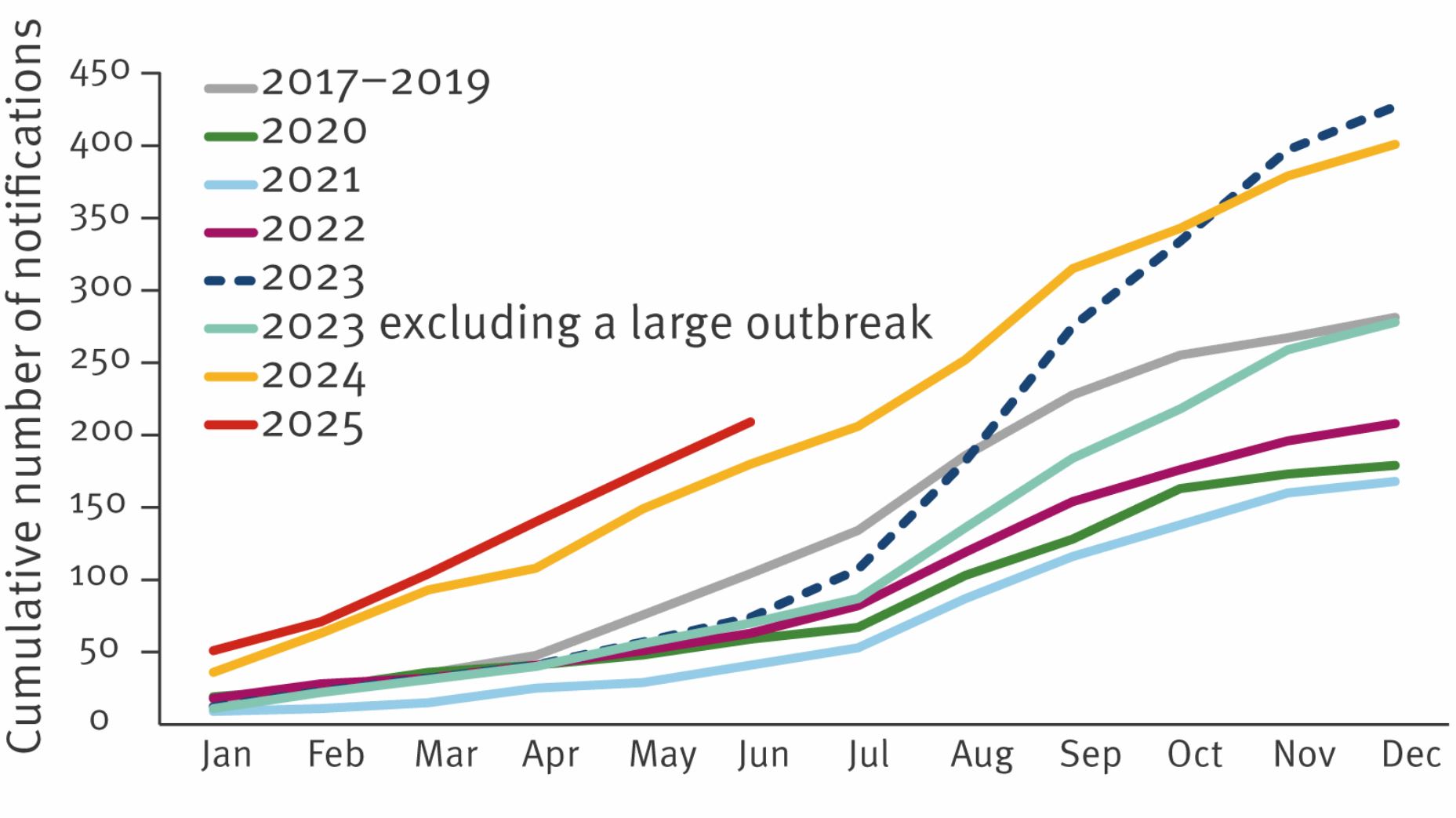
The number of laboratory-confirmed human cases, excluding those associated with travel abroad, has shown a significant upward trend. In 2023, 427 cases were recorded, compared with an annual average of 281 cases between 2017 and 2019 (prior to the COVID-19 pandemic). The situation continued into 2024 with 401 notified cases, and in the first six months of 2025, 209 cases have already been recorded, surpassing the 180 reported during the same period in 2024 and the pre-COVID average of 104 cases. The true number of cases is estimated to be considerably higher due to underreporting.
The increase in 2023 was largely attributed to a major outbreak, most likely linked to eggshells from SE-positive laying hen flocks that were inadequately treated before being ground up and added to poultry feed. This led to widespread infection across the laying hen sector and, subsequently, to human cases through the consumption of contaminated eggs. This outbreak contributed 151 cases in 2023, 27 in 2024 and 31 in 2025 up to June.
The increase in 2023 was largely attributed to a major outbreak, most likely linked to eggshells from Salmonella-positive laying hen flocks that were inadequately treated before being added to poultry feed.
In the wake of this large outbreak, the majority of cases in 2024 and 2025 have occurred in smaller clusters, which complicates investigations and the identification of transmission routes. Whole genome sequencing (WGS) analysis revealed an increase in cluster diversity, making traditional outbreak investigations more challenging.

Cumulative number of laboratory-confirmed human Salmonella Enteritidis cases, by month of isolate receipt at RIVM, the Netherlands, 2017–June 2025 (n = 2,436)
Animal health monitoring by the Netherlands Food and Consumer Product Safety Authority (NVWA) has revealed an increase in SE-positive laying hen flocks since May 2023, which has developed in parallel with the rise in human cases. Between 2018 and 2022, an average of 30 positive flocks were detected annually; by contrast, 74 were detected in 2023, 81 in 2024 and 50 in the first six months of 2025. A time-series analysis confirmed a significant correlation between the number of positive flocks and human cases, with infections in laying hen flocks predicting human cases with a lag of 1 to 6 months.
In response to the diffuse nature of the increase, the National Institute for Public Health and the Environment (RIVM) convened a Zoonosis Response Team (RT-Z) in early 2025. This team recommended a broader, sector-wide approach rather than focusing solely on individual farms, with the following potential interventions:
- Increasing the frequency of testing in laying hen flocks to reduce the period during which contaminated eggs reach the market.
- Sequencing more SE isolates from positive farms to better understand transmission routes, including environmental or feed-related pathways.
- Accelerating the depopulation of SE-positive flocks to reduce the overall infection pressure within the sector.
The exact reasons for the sustained increase in SE prevalence within the laying hen sector remain unclear. However, the possibility of greater susceptibility in laying hens due to extended productive life is being considered, as this may weaken vaccine-induced immunity over time. The higher prevalence and prolonged positivity in flocks may also increase infection pressure within and between farms.
This increase coincides with a rise in the productive lifespan of laying hens
Although the increase currently appears to be limited to the Netherlands, the authorities have issued an alert via EpiPulse to other European public health authorities. The possibility of spread to other European countries exists due to trade, travel and the movement of poultry products.
The widespread and diffuse nature of transmission calls for coordinated, cross-sectoral control strategies and more integrated surveillance. Coordinated action is essential to unravel the underlying causes and direct effective interventions to reduce the number of human SE cases.