
The Polish Association of Meat Poultry Producers will reduce the quota for Ukrainian chicken imports
The Polish Poultry Association plans to reduce the Ukrainian chicken import quota from 137,000 tonnes to 90,000 tonnes as of June 2025. This was announced on 24 December, according to Ukrainian media, by the President of the National Poultry Council of Poland, Dariusz Gościński, in a podcast for Puls Biznesu.
“The limit of 137,000 tonnes is not critical, but it is quite high to maintain stability. We now expect to return to the limit of 90,000 tonnes, a figure with which we ensure market balance”, Gościński stated.
According to the President, even if Ukraine were to implement all European animal welfare and sustainable production standards, Ukrainian producers will continue to hold competitive advantages due to the scale of their operations and lower production costs. This could drive price competition in the European market.
Polish poultry industry lobby groups also highlight that more than two-thirds of Ukraine’s poultry exports to the European Union originate from the agricultural holding MHP, which benefits from lower production costs.
As reported, the Ukrainian government began implementing a quota of 137,000 tonnes for the export of poultry meat and its by-products to the EU market as of 1 July 2024, as part of the tariff-free trade requirements. In May 2022, the EU had removed tariffs and quotas on Ukrainian exports due to the crisis, but partially reintroduced them in 2024 under pressure from European agricultural producers.
Poland, the EU’s largest broiler producer, and its medium-term challenges
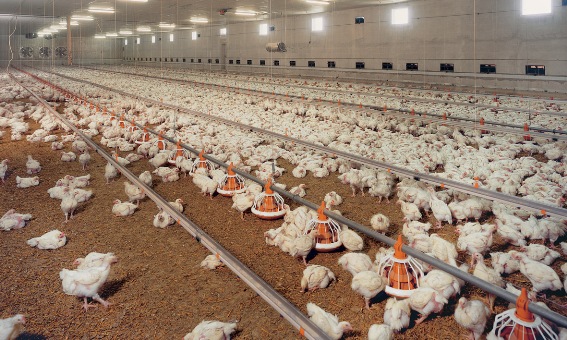
Over the past decade, broiler production in Poland has experienced a genuine boom, making it the EU’s largest producer. With nearly 1,400 broiler farms, the majority are large poultry complexes with multiple houses accommodating tens of thousands of birds in modern facilities built over the last decade.
The Polish poultry industry faces significant challenges in its efforts to balance domestic market protection with international trade obligations. The proposed quota reduction reflects a strategy to safeguard local poultry producers, but also underscores the need for closer cooperation and negotiations between the EU and Ukraine to address trade concerns in an equitable manner.
Factors Contributing to Ukrainian Competitiveness
The competitiveness of Ukrainian poultry meat in the European market is attributed to several factors:
- Lower Production Costs: Ukrainian producers benefit from lower operating costs, enabling them to offer more competitive prices compared to their Polish counterparts.
- Production Scale: Companies such as the agricultural holding MHP account for more than two-thirds of Ukraine’s poultry exports to the EU, leveraging economies of scale that confer significant advantages.
- Regulations and Standards: Although Ukraine has made progress in implementing animal welfare and sustainable production standards, regulatory differences can still influence costs and competitiveness.
Reactions and Measures in Poland
The proposed quota reduction has been welcomed by Polish producers, who seek to protect the domestic market from foreign competition. A number of other measures related to Ukrainian imports have also been observed:
- Prohibition of Wheat Consignments: The Trade Inspection for the Quality of Agricultural and Food Products in Rzeszów banned the marketing of a consignment of durum wheat totalling 21,998 tonnes imported from Ukraine, due to its low protein content.
- Fraud Investigations: The Polish public prosecutor’s office is investigating more than 70 companies suspected of fraud related to Ukrainian grain, indicating growing scrutiny of agricultural imports.
Implications for the European Poultry Market
Reducing Ukrainian chicken import quotas could have several consequences:
- Price Stabilisation: Restricting imports may help stabilise or even increase poultry meat prices in Poland, benefiting domestic producers.
- Trade Tensions: The measure could create friction between the EU and Ukraine, particularly in the context of existing trade agreements and European support for the Ukrainian economy.
- Market Diversification: Ukraine may seek new markets for its poultry products, diversifying its exports beyond the EU.

Ban on Ukrainian wheat in the Polish market
Furthermore, the Trade Inspection for the Quality of Agricultural and Food Products in Poland (IJHARS), headquartered in Rzeszów, has decided to ban from the Polish market a consignment of durum wheat with a total weight of 21,998 tonnes imported from Ukraine. The decision was taken due to the low protein content of the consignment.
In addition, the Polish minister is seeking to halt the transit of Ukrainian products and implement a licensing system.
Furthermore, the Polish public prosecutor’s office is investigating more than 70 companies suspected of fraud related to Ukrainian grain. According to the investigation, these companies may have imported thousands of tonnes of grain into Poland while concealing its origin and intended use.
Poland’s and the EU’s dilemma: supporting Ukraine without harming European poultry producers
Poland’s initiative to reduce Ukrainian chicken import quotas highlights the complexities of agricultural trade within the EU and the importance of balancing competition with the protection of domestic agri-food industries. As negotiations progress, it will be essential to take into account both the interests of Polish producers and trade relations with Ukraine, particularly within the current geopolitical context.