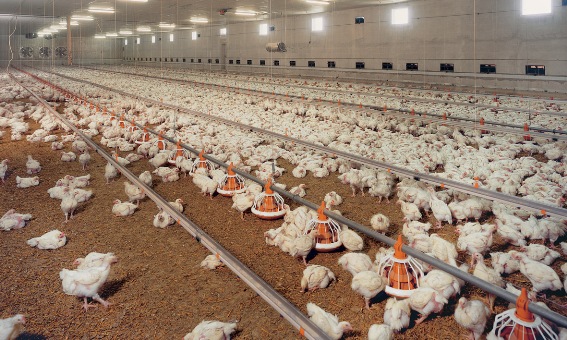

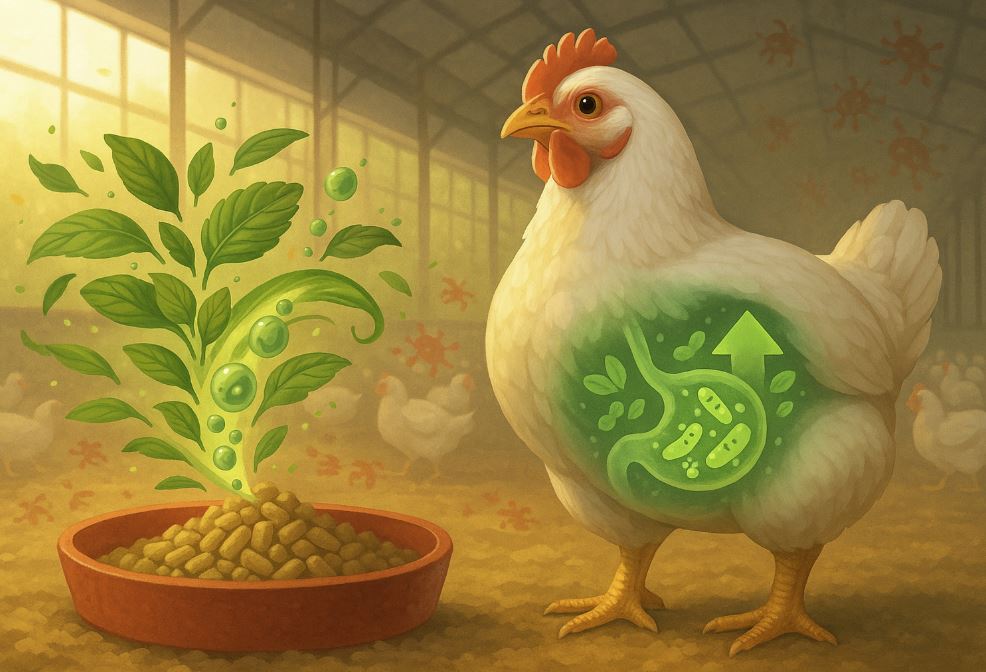
Modern poultry production faces the constant challenge of optimising production in a sustainable, cost-effective manner, in line with growing consumer demands and regulations on antibiotic use. In this context, a comprehensive meta-analysis published in the prestigious Italian Journal of Animal Science by Hayat, Marij and Riaz (2025) emerges as a crucial reference.
This study, which rigorously synthesised data from 24 independent studies involving 60 treatment groups, provides robust and compelling scientific evidence on the multiple benefits of incorporating plant extracts into broiler diets.
The findings not only reinforce the role of these natural additives in improving productive performance, but also highlight their capacity to positively modulate the gut microbiota and optimise various blood parameters, consolidating them as a viable and effective alternative to antibiotic growth promoters (AGPs).
Plant extracts have the potential to serve as natural alternatives to antibiotics.
Plant extracts in poultry production: a natural and efficient alternative for optimising performance and gut health
The growing global demand for animal protein, projected to feed 9 billion people by 2050, places considerable pressure on industries such as poultry production. In this context, optimising production and animal health is fundamental, especially given that feed costs account for approximately 70% of expenditure in broiler production. In parallel, there is a strong global trend towards reducing the use of antibiotics as growth promoters (AGPs) to mitigate the risk of antimicrobial resistance (AMR) and promote more sustainable practices.
In this search for natural and safe alternatives, plant-derived nutraceuticals have attracted sustained attention over the past two decades. These plant extracts contain a rich array of bioactive compounds with diverse beneficial properties, including antimicrobial, antioxidant and anti-inflammatory effects. They have been recognised as safe growth promoters with health-enhancing properties, offering an alternative to antibiotics in comparative studies.
Historically, the poultry industry has faced numerous health challenges, such as fowl cholera, salmonellosis and Escherichia coli infections caused by pathogenic bacteria. The World Health Organisation (WHO) identifies gut health as a major global concern, with research efforts focused on finding suitable, non-harmful alternatives to antibiotics.
The comprehensive meta-analysis “The dietary inclusion of plant extracts improves growth performance, gut microbiota and blood parameters of broilers: a meta-analysis“, published in May 2025 in the Italian Journal of Animal Science, set out to synthesise the results of multiple studies to determine the overall efficacy of nutraceutical plant extracts in broilers. This analysis, based on 24 studies involving 60 treatment groups, evaluated the impact of liquid plant extracts on growth performance, gut microbiota composition and blood parameters in broilers. The objective was to test the hypothesis that plant extracts have a positive impact on these parameters and can serve as alternatives to AGPs.
.
The inclusion of plant extracts improves productive performance by significantly reducing the feed conversion ratio
Key findings of the meta-analysis:
The study compiled data from a large number of animals across various parameters, including more than 7,000 for feed conversion ratio (FCR) and body weight gain (BWG), and thousands for gut microbiota and blood parameters. Different broiler strains were included, such as Arbor Acres, Ross, Cobb and Hubbard. Inclusion doses of plant nutraceuticals ranged from 0 to 10% of the diet, and trial periods lasted from 1 to 42 days (although initial selection criteria required at least 35 days). It is important to note that the analysis identified considerable heterogeneity among the included studies (variability in dose, duration, type of extract, country and broiler strain), which was managed statistically but contributes to variation in the results.
A significant reduction was observed in Salmonella spp. and Escherichia coli spp. counts.
1. Improved productive performance:
Although the meta-analysis showed no significant effect (p<.52) of plant extracts on body weight gain (BWG) nor a statistically significant reduction (p<.26) in feed intake (FI), the results were conclusive with regard to feed efficiency. The inclusion of plant extracts in the diet improves productive performance by significantly reducing the feed conversion ratio (FCR) (p<.001).
A lower feed conversion ratio is beneficial for broilers, as it means that birds require less feed to gain a unit of weight, which translates directly into greater economic efficiency in poultry production. The FCR analysis showed high heterogeneity (I²=93%), which led to a subgroup analysis based on the commercial broiler strains examined. The results nonetheless suggest that the response in feed efficiency may vary substantially depending on the commercial strain used.
Although body weight gain was not significantly affected at the overall level in the meta-analysis, the authors note that plant extracts had no detrimental effect on weight gain and that individual studies have reported increased BWG with the addition of various extracts. This supports the view that plant extracts can be used as alternatives to antibiotics without compromising growth.
Diets containing plant extracts significantly increased Lactobacillus spp. and Bifidobacterium spp. counts.
2. Optimised gut health:
Gut health is fundamental to the welfare and productivity of poultry, influencing nutrient absorption, metabolism and immune function. One of the most notable and consistent impacts of plant extracts was on the modulation of the gut microbiota.
The study found a significant reduction in Salmonella spp. counts (p=.04) and in Escherichia coli spp. (p=.001). Reducing pathogens such as Salmonella and E. coli is crucial for mitigating concerns related to antimicrobial resistance and reducing the risk of infections that cause health problems and impair performance. Studies included in the meta-analysis indicated that specific extracts, such as blends of fennel, anise, lemon balm, thyme, mint, oak and clove, or extracts of Achyranthes japonica and silymarin, demonstrated reductions in Salmonella. Similarly, extracts such as inulin, Moringa oleifera leaf and seed, cumin, Camellia, Artemisia, wheat bran, silymarin and A. japonica showed effective antibacterial properties against E. coli.
Alongside the reduction in pathogens, diets containing plant extracts promoted a significant increase in Lactobacillus spp. (p=.001) and Bifidobacterium spp. (p=.001). These beneficial bacteria are essential for a healthy microbiota. An increase in Lactobacillus limits the growth of harmful microbes and promotes better feed digestion and efficient nutrient absorption. An increase in Bifidobacterium contributes to better overall welfare and productivity by improving gut microbiome balance, preventing the growth of harmful organisms and enhancing nutrient efficiency. These changes in the microbiota contribute to improved gut health by modulating the microbiota, strengthening natural immunity and potentially improving FCR. Studies used extracts such as inulin, ginger, M. oleifera leaf and seed, Capsicum and A. japonica to improve this balance. The capacity of Lactobacillus to reduce inflammation and the need for antibiotics is also highlighted.
Overall, the analysis of total bacterial counts (TBC) also showed a significant decrease (p<.001), reflecting the changes observed in pathogenic and beneficial bacterial populations.
These changes in the microbiota contribute to improved gut health by modulating the microbiota
3. Positive effects on blood parameters:
Plant extracts also positively influenced blood biochemistry in broilers. A significant increase in haemoglobin levels (p=.01), which may improve oxygen transport, and in globulin (p=.03), which is associated with improved immune function, were observed. These immunomodulatory and haematopoietic effects had previously been observed in studies using extracts such as inulin, wheat bran, cumin, star anise, fennel and lemon balm.
In addition, there was a significant reduction in total cholesterol levels (p=.004) and triglycerides (p=.009). These results indicate that plant extracts improve the lipid profile. It is believed that these compounds inhibit lipid absorption and promote bile acid excretion. Specific extracts such as cumin, star anise and silymarin have demonstrated the capacity to reduce lipid levels. An improved lipid profile is important for healthy growth, the reduction of fat deposits and potentially for meat quality. Indeed, improvement in meat quality (with lower cholesterol and triglyceride levels) has been associated with feeding extracts such as inulin, wheat bran, cumin, fennel, star anise and silymarin.
Although other blood parameters such as white blood cells (WBC), red blood cells (RBC), total protein, albumin, HDL-C, HCT, AST, ALT and LDL-C showed slight but non-significant changes in this meta-analysis (p>.05), previous studies have suggested that some extracts may affect protein metabolism, HDL production, and have hepatoprotective activity that could influence AST, ALT and LDL. However, the lack of significance in the meta-analysis may be attributable to variability between studies.
Overall, these significant changes in key blood parameters benefit the physiological and metabolic health of broilers.
A summary table of blood parameters showing significant changes is presented below:
| Blood Parameter | Mean Difference (95% CI) | p-value | Heterogeneity (I²) | Significant Impact Observed |
|---|---|---|---|---|
| Haemoglobin | 0.61 [0.12, 1.11] | .010 | 87% | Significant increase |
| Globulin | 0.28 [0.03, 0.54] | .030 | 97% | Significant increase |
| Total Cholesterol | -11.16 [-18.65, -3.67] | .004 | 96% | Significant reduction |
| Triglycerides | -5.38 [-9.41, -1.35] | .009 | 95% | Significant reduction |
(Data adapted from Table 3 in the source. Values in brackets indicate the 95% confidence interval.)
Plant extracts improve the lipid profile (significant reduction in total cholesterol and triglycerides).
Which extracts reduced Salmonella in broilers?
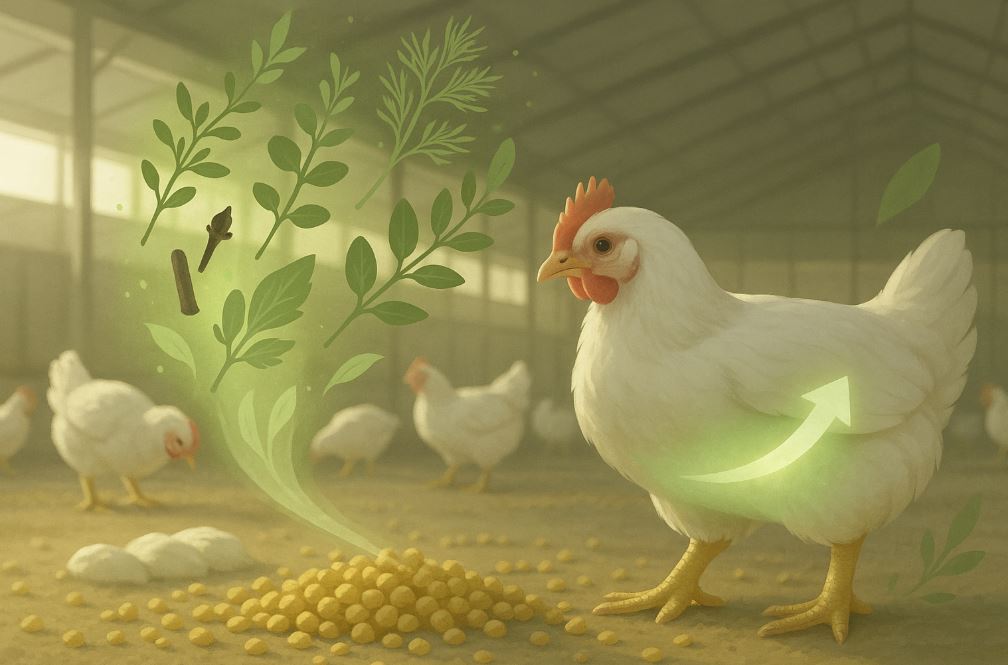
Among the benefits of including plant extracts in broiler diets, the positive impact on the reduction of Salmonella spp. stands out significantly.
The meta-analysis found a significant decrease in Salmonella spp. counts in broilers supplemented with plant extracts. This result is specified with an SMD (standardised mean difference) of −0.37 (log10 cfu/g), a 95% confidence interval of −0.72 to −0.02, and a p-value of .04. A reduction in Salmonella spp. bacteria is considered beneficial for gut health, improving the digestive system and promoting the growth of beneficial bacteria, thereby reducing the risk of infections caused by this bacterium. The results suggest that plant extracts may be a natural and effective alternative to antibiotics in broiler feed.
The study discussion notes that a decrease in intestinal Salmonella levels was observed following consumption of various plant extracts. The specific plant extracts identified as leading to this reduction include:
- fennel
- anise
- lemon balm
- thyme
- mint
- oak
- clove
- Achyranthes japonica
- silymarin
These findings are based on previous studies, including those of Wati et al. (2015) for various extracts, Park J and Kim (2020) and Muniyappan et al. (2022) for A. japonica, and Shanmugam et al. (2022) for silymarin. It is postulated that plant extracts reduce intestinal pH, which favours the growth of beneficial bacteria and creates a hostile environment for pathogenic bacteria such as Salmonella.
The meta-analysis and the studies comprising it identified that the inclusion of plant extracts in broiler diets significantly reduces Salmonella spp. counts, with specific extracts such as fennel, anise, lemon balm, thyme, mint, oak, clove, A. japonica and silymarin associated with this reduction.
The use of plant extracts supports sustainable poultry production
Practical implications and the way forward:
This meta-analysis significantly reinforces the evidence that plant extracts have potential to serve as natural alternatives to antibiotics. Their use in poultry diets supports sustainable poultry production by offering a strategy to help mitigate concerns related to antimicrobial resistance and improve bird health naturally.
For poultry nutritionists, these findings suggest that the inclusion of plant extracts can be a valuable tool for improving production efficiency (by reducing FCR), strengthening gut health by controlling pathogens and promoting beneficial bacteria, and improving certain metabolic and immune health aspects reflected in blood parameters. These combined effects lead to an improved overall health status in the bird.
However, it is crucial to acknowledge that the meta-analysis found considerable heterogeneity among studies for most parameters. This variability may be attributable to differences in extract doses, the specific types of plant extracts used (herbs, spices, bark, fruits, seeds, roots or blends), broiler strains, trial duration, environmental conditions and research methodologies. This heterogeneity means that generalisation of findings can be challenging and underscores the need for further research to determine optimal doses and the most effective types of extracts for specific conditions. The lack of consistency in sample sizes and potential publication bias (favouring positive results) are also limitations noted.
The future of plant extracts lies in standardisation, identification of active compounds and the application of nanotechnology to enhance their efficacy.
To maximise the potential of these nutraceuticals and overcome variability, the authors suggest that the application of advanced technologies is required. In particular, nanoencapsulation and nanoemulsions are mentioned as innovative approaches that can improve the stability, solubility and bioavailability of bioactive compounds. These technologies would allow targeted release of extracts in the intestine, potentially improving their efficacy in a more consistent manner. The development of standardised extraction methods and the conduct of rigorous safety and efficacy trials are also essential steps for their widespread adoption.
In conclusion, although challenges remain to be addressed to ensure consistent application, the strategic incorporation of plant extracts into broiler diets presents itself as a promising tool for nutritionists and poultry producers seeking to improve gut health, productive performance and the overall health status of birds, advancing towards more efficient, healthier and sustainable poultry production. These natural additives help mitigate concerns related to antimicrobial resistance and support a more natural and environmentally responsible approach to animal production.
Source:
-. The dietary inclusion of plant extracts improves growth performance, gut microbiota and blood parameters of broilers: a meta-analysis. Hayat, Z., Marij, & Riaz, T. (2025). Italian Journal of Animal Science, 24(1), 1028–1045. https://doi.org/10.1080/1828051X.2025.2491754
Further reading:
-. Nutritional advantages of medicinal plants in poultry diets
-. POULTRY NUTRITION at NeXusAvicultura