
On 6 December 2024, the EU and the South American Mercosur bloc announced that they had concluded negotiations on a trade agreement between the two blocs.
A number of steps still need to be taken before the agreement is ratified. This process could take some time to complete and may encounter resistance from some EU Member States that disagree with the agreement’s increased market access to the EU for certain agricultural products, such as beef and poultry meat.
For Mercosur, the proposed agreement contains new access to the EU market through tariff-rate quotas for beef, poultry and ethanol. It also includes the gradual reduction or elimination of tariffs on certain fruits, orange juice and instant coffee. It also envisages the partial or total elimination of tariffs on some existing quotas (e.g. for beef and sugar).

Where do we stand now and what happens next?
The EU and the Mercosur bloc, comprising Brazil, Argentina, Paraguay, Uruguay and Bolivia, began negotiating a trade agreement in 1999. The conclusion of negotiations in this lengthy stop-start process was announced on 6 December 2024 at the Mercosur summit in Uruguay. Rabobank’s February 2025 report entitled “EU-Mercosur agreement: Implications for food and agribusiness” provides a thorough assessment of the agreement’s implications.
The negotiated agreement will be translated into all EU Member State languages and subjected to legal review. Adjustments may be suggested during this process.
Assuming no obstacles arise, the agreement must be ratified by all 27 EU Member States (i.e. the European Parliament and the national parliaments of all Member States) before it can enter into force. To accelerate the ratification process, the European Commission may split the agreement into a trade pact and a political agreement.
The core trade agreement could be fast-tracked with the approval of a simple majority of European Parliament members and a qualified majority of the Council of the European Union, meaning 15 countries representing at least 65% of the EU’s population.
To block this process, at least four EU members representing more than 35% of the EU’s population would need to object. France, one of the countries strongly opposed to the agreement, may find support from Austria, Poland and Italy, but whether a blocking minority can and will be formed remains to be seen.
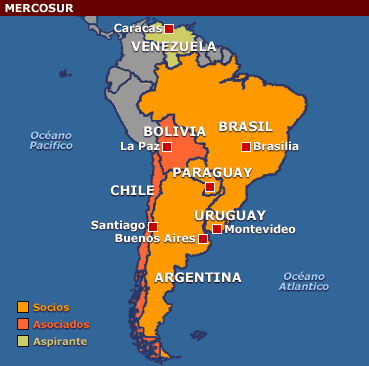
Mercosur was founded in 1991. The original quartet of Brazil, Argentina, Paraguay and Uruguay was joined by Bolivia in mid-2024. Venezuela became a member of the bloc in 2012 but was suspended indefinitely in 2016.
How much food and agri-produce is the EU actually importing from Mercosur countries ahead of the agreement being signed? And how much are those countries buying from the EU?
In 2023, Brazil was the leading exporter of food and agri-industrial products to the EU, accounting for a 10.9% share of the EU’s food and agri-product imports, worth a total of €158 billion. Argentina accounted for 2.9%, Uruguay 0.5%, Paraguay 0.2% and Bolivia less than 0.1%.
Meanwhile, the Mercosur countries collectively imported just 1.4% of the EU’s €229 billion in food and agri-product exports in the same year.
Impact of MERCOSUR on the EU poultry sector
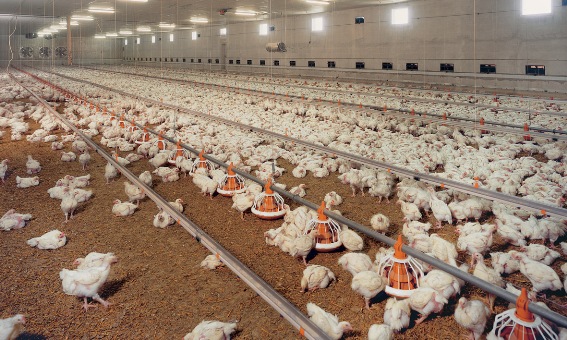
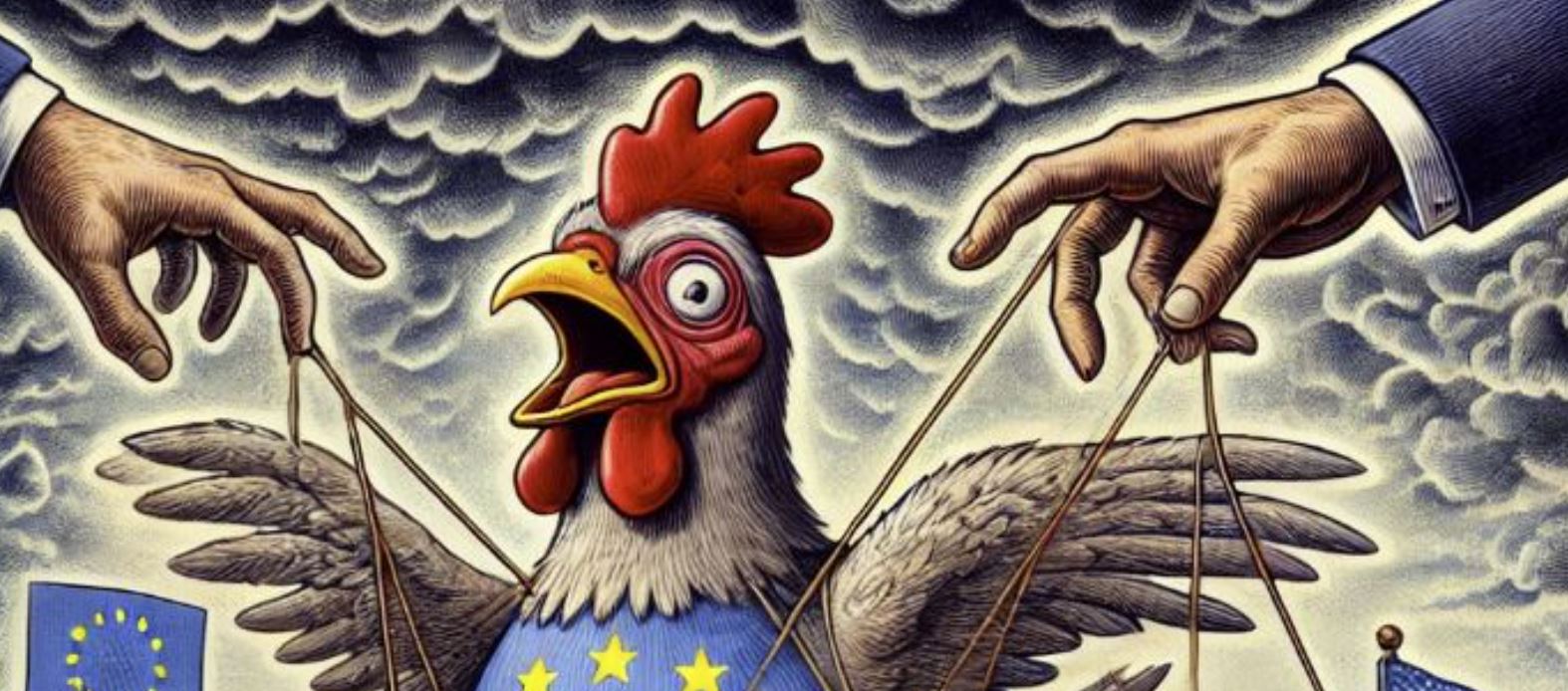
The EU-Mercosur trade agreement, negotiated on 6 December 2024, includes market access concessions for agricultural products, among them poultry meat. While the agreement seeks to liberalise trade and provide new opportunities for both blocs, it raises concerns for EU poultry producers due to the anticipated increase in imports from Mercosur, particularly from Brazil.
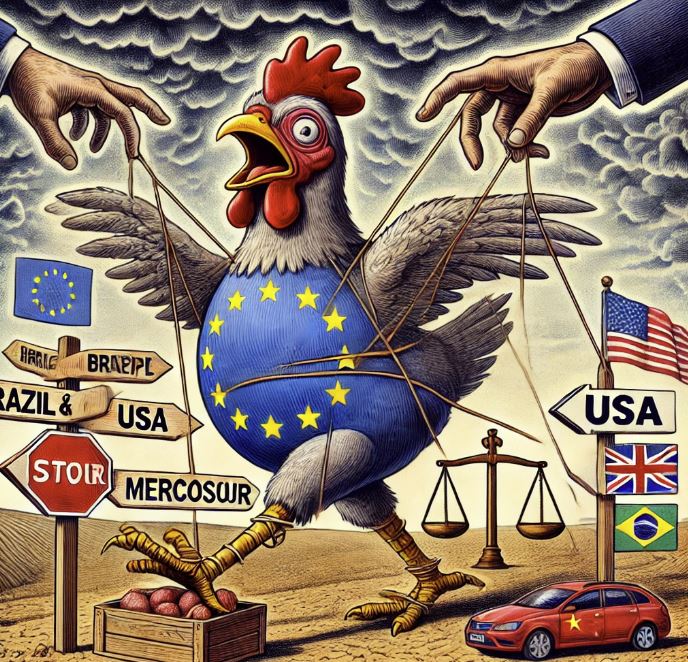
The following are some of the main concerns:
Increased competition: The agreement provides for the creation of an additional import quota of 180,000 tonnes of duty-free poultry meat from Mercosur. This increase in imports could put pressure on prices and reduce the profitability of EU poultry producers.
- Brazil’s cost advantage: Brazil has a clear production cost advantage in poultry meat compared with the EU. This means that Brazilian producers can offer lower prices on the EU market, making it difficult for European producers to compete.
- Impact on margins: Imports of chicken breast meat are expected to increase significantly, affecting the highest-margin segment of the EU market.
Details of the import quota
The new 180,000-tonne import quota for Mercosur poultry meat will be divided into two categories:
50% bone-in cuts.
50% boneless cuts.
The allocation of this quota will be agreed among the four founding Mercosur partners (Brazil, Argentina, Paraguay and Uruguay). Brazil is expected to receive the largest share of the quota, as it is the world’s largest poultry meat exporter.
Concerns from EU producers
European poultry producers have voiced concerns about the impact of the agreement on their incomes and the sustainability of their operations. They fear that the increase in cheap imports from Mercosur will force them to reduce production or even close their businesses.
Factors influencing trade
EU regulations, particularly those related to sustainability and food safety, should in theory influence trade flows. The EU Deforestation Regulation (EUDR) imposes stricter requirements on imports of certain commodities into Europe. The EU’s sustainability ambitions, such as the Green Deal and the Farm to Fork strategy, will also affect the competitiveness of European sectors, shaping the future of food and agri-product trade.
In some EU food and beverage sub-sectors, the agreement could present certain opportunities:
- Increased exports: The elimination of tariffs on products such as olive oil, energy drinks and other value-added products could boost EU exports to Mercosur.
- Brand strengthening: European companies can leverage their strong brands and the regional and specialised nature of their products to gain market share in Mercosur.
Source:
-. Rabobank: “EU-Mercosur agreement: Implications for food and agribusiness”
Further reading:
-. EU and Mercosur agree to create the world’s largest free trade zone after 25 years of negotiations
-. Implications of an EU-Mercosur trade deal (by John Polga-Hecimovich)
3 possible Scenarios:
Less likely: The EU-Mercosur deal dies
Most Likely: The EU-Mercosur agreement is ratified
Possible: The EU-Mercosur deal remains in limbo
-. The MERCOSUR agreement and its implications for the poultry sector