
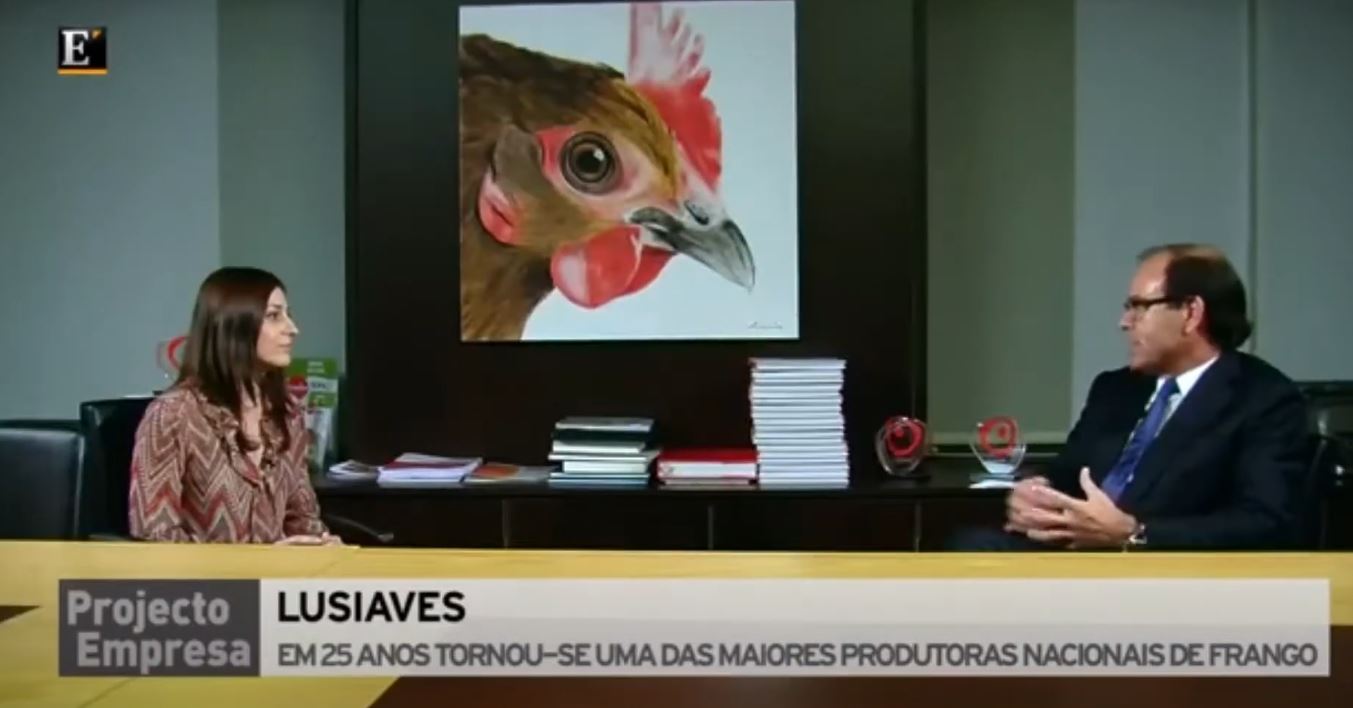
On the occasion of the recent inauguration of a Hatchery by GRUPO LUSIAVES on 30 September 2024, we have decided to revisit an interesting interview (from August 2022) with the CEO of Portugal’s largest poultry producer, in which he anticipated the international growth strategy — beyond Spain and Europe — that is now already being executed.
Lisbon, Portugal — Avelino Gaspar, founder and president of Grupo Lusiaves, Portugal’s largest poultry producer, has outlined his company’s growth philosophy and international ambitions against a backdrop of persistent bureaucracy and the need to incentivise domestic investment.
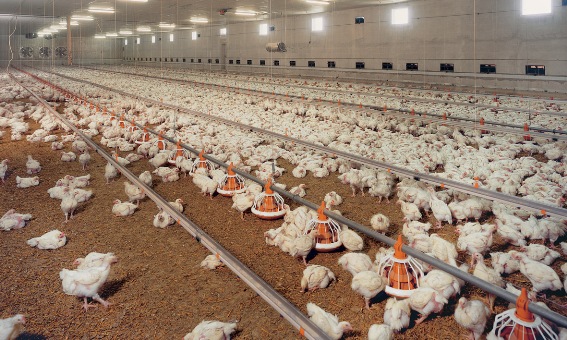
From its humble beginnings in the 1980s, when Lusiaves started with 16,000 broilers per week, the company has scaled up to produce more than 60 million chickens per year today.
Avelino’s vision for poultry leadership is built on Investment, Verticalisation and Cost Control
Gaspar attributes the company’s success over more than 25 years to an intensive investment strategy. He emphasises the importance of believing in what you do, producing with quality and, above all, building a great team. Indeed, Gaspar considers that the greatest asset and wealth he has created to date has been the team that has accompanied him and grown alongside him over the years.
To remain competitive, Lusiaves has continuously strived to improve at both national and global level, adopting the best technologies and creating units of superior scale. This means having large feed mills, slaughterhouses with high throughput capacity, and inoculation rooms producing millions of chicks per year. The primary objective is to produce at controlled costs in order to sell competitively in the market and outperform rivals.
For Avelino Gaspar, the founder and president of Grupo Lusiaves, the success of his company has been due to continuous investment, building a strong team, and a business verticalisation strategy to ensure quality and control costs.
A defining feature of his management approach is the verticalisation of the business, controlling virtually every stage of the production chain. This includes a feed mill and a hatchery. This strategy serves three main purposes: controlling costs, guaranteeing quality by knowing with 100% certainty what is placed on consumers’ tables, and adding value.
Gaspar identifies the most significant production costs for Lusiaves: first, raw materials (cereals and oilseeds); second, staff; and third, energy, which accounts for a very large share of expenditure.
Investment and financial strength
Lusiaves had scheduled an investment plan of 127 million euros to be completed by the end of 2012. Although the majority was carried out, some projects were delayed, though these were offset by other investments in different areas.
Regarding financing, Gaspar explains that Lusiaves has never distributed dividends; earnings have been capitalised over 26 years. This capitalisation of results is what has allowed them to build the equity they hold today. Furthermore, the company enjoys consistent support from the banking sector. At a time when many companies are struggling with financing, Lusiaves experiences no such difficulties and holds approved credit lines of several million euros to cover day-to-day operations and planned investments.
Bureaucracy: a persistent obstacle
Despite investment plans, bureaucracy remains a major impediment. Project delays stem from difficulties in obtaining licences (PDMs, environmental licences, environmental impact assessments). Although the country has improved, a long road still lies ahead, and the lack of coordination between ministries (such as the Ministry of the Environment and the Ministry of Agriculture) is a problem. Gaspar is confident that politicians and the Directorates-General are committed to unblocking these situations swiftly.
International expansion and market outlook
The increase in Lusiaves’ production capacity, resulting from investments across every stage of the chain (from chick and feed production through to processing and packaging), has enabled the company to turn towards export markets.
Although exports currently represent a small percentage of turnover, the targets are ambitious:
- In the first half of 2022 (the interview was conducted in August 2022), they managed to multiply their export sales fivefold compared to the first half of the previous year.
- They expected to close 2022 with export sales three times higher than those of 2021.
- They aim to add several million in sales each year across various global markets.
Although the ambition in the past was to become leaders in Spain, the current economic situation in that country (possibly equal to or worse than Portugal’s) has led the company to diversify. Today, Lusiaves does not look only to Spain, but also to England, France, Germany and Italy, where it is already selling. The company also has a presence in Macau (selling to China through this territory) and in almost every African country. It has had a physical presence in Angola for five years which, although difficult at the outset, is now operating very successfully. Currently, the company is awaiting bureaucratic clearance in Portugal to enter Colombia, where it already has customers waiting.
Gaspar emphasises the importance of expanding into international markets, and not just Spain or Europe, particularly given the continued growth of the poultry market worldwide and the need for constant innovation in new products
Regarding the domestic market, Gaspar is optimistic. He asserts that there is no contraction in the poultry market. The poultry market has grown over 50 years worldwide and will continue to grow, even in Portugal.
The central argument is that there is no sustainable alternative to poultry meat, as it is the cheapest and healthiest option. The efficiency of poultry is unmatched: Lusiaves requires only 1.800 kg of raw material to produce 1 kg of poultry meat. Furthermore, poultry consume half the raw materials, proportionally less water, and generate less pollution. While a reduction in household incomes could affect growth, the Portuguese will continue consuming animal protein. Gaspar anticipates residual growth in the domestic market (2–3%), although Lusiaves needs to grow considerably faster than that.
Political and fiscal outlook
Gaspar holds strong convictions about the economic policies the country needs:
- Opposition to reducing the Single Social Tax (TSU): He is categorically opposed to reducing the TSU, as he believes it would lead to the complete demotivation of workers and would drastically reduce their purchasing power, which makes no sense.
- Incentivising investment: Austerity measures must be accompanied by others that incentivise production and the country’s development. The destruction of Portuguese jobs must not be allowed.
- Reduction of IRC: Gaspar is confident that the Government is preparing economic stimulus measures. He considers that a corporate tax (IRC) rate of 10% for investing companies with significant-value projects would be an excellent measure to stimulate growth. He argues that IRC is a residual tax for the State and that if companies pay less, they will certainly invest that money. He points out that Portugal has one of the highest rates in Europe, while countries such as Ireland, which went through difficulties, recovered with very low corporate tax rates.
- Political stability: He considers it vital that the governing coalition remains united and serves its full term, as it was elected by the votes of the Portuguese people.
Innovation and raw material self-sufficiency
Innovation and the launch of new products are a constant at Lusiaves. Every year they launch new products — more elaborate, further processed and with greater added value — to drive sales growth. Recently, the company began producing processed products such as burgers and meatballs.
Looking ahead, Lusiaves is increasingly focusing on upstream production to reduce costs. The company is learning to grow cereals: last year they planted 60 hectares of maize, this year 120, and they plan to considerably increase the area under cultivation.
Gaspar maintains that Portugal has the conditions to produce far more and could be self-sufficient, at least in maize, which accounts for 70% of the raw materials incorporated into animal feed. There are thousands of hectares suitable for irrigation and vast tracts of uncultivated land that could be productive. The CEO concludes that all sectors have potential and are competitive, provided production is carried out at controlled costs, the business is thoroughly understood, and the necessary scale is achieved.
To find out more: